
Aquaculture is a booming industry, as farmed fish is set to become a key part of the world's food production. Danfoss is a leading provider of advanced technology and our experienced team helps fish farmers around the world feed their business potential.
Contact our fish farming experts
The rapidly growing world-population has an increasing appetite for fish. This demand cannot be met with wild fish alone, as many fish populations are in decline; several wild salmon populations, for instance, are on the brink of extinction.
Fish farming has the potential to supply much-needed animal protein to the world and create new business opportunities. But there is a call to ensure that the growing number of fish farms raise fish in a sustainable manner.
As a close partner to the fish farming industry since day one, Danfoss have developed the technology and know-how to support a sustainable future for fish farming. With our unmatched technology and experience in aquaculture, we can help you design efficient solutions to feed your aquaculture operation's potential in an environmentally friendly manner.
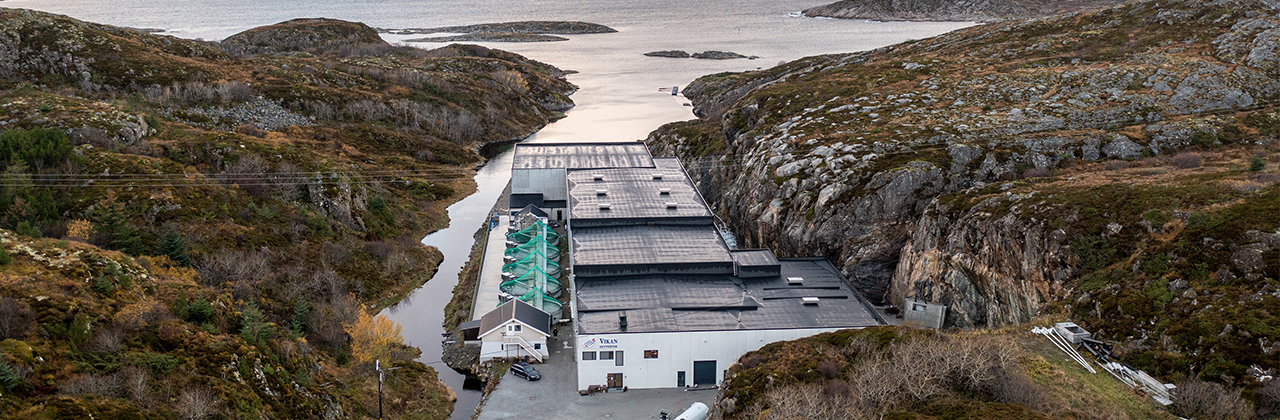
Danfoss has been a close partner to the fish industry since day one and offers the technology needed to support a sustainable future for fish farming.
Learn how
Our advanced aquaculture technologies cover the entire value chain from egg to plate and can be used in any type of fish farming operation.
Create a profitable and sustainable operation with advanced technologies developed in collaboration with leading fish farms.
Go to sections about:
Get advanced temperature control and power distribution technology for sustainable and efficient RAS facilities.
Get durable and efficient solutions for wellboats, workboats and more on your offshore fish farming operation.
In a recirculating aquaculture system (RAS) for landbased and smolt farms, fish are reared at high density in indoor tanks. In this carefully monitored and closely controlled environment, precision pump control is essential for optimizing fish health and efficient energy consumption.
The volume of flow in the RAS system tanks must be controlled to prevent excess ammonia and ensure adequate oxygen, depending on fish age. Larger, mature fish pollute more than small fish; hence the larger fish have a higher flow requirement. The same principle applies to blowers and pumps in the purification system.
Maintaining exact flow rates requires precise control, and this is where Danfoss can support you with technology compatible with any pump type, designed for long-term durability in harsh environments, and the connectivity required for modern IoT systems.
In a recirculation system using centrifugal or rotodynamic pumps and characterized by friction loss, you can achieve both precision and major energy savings by applying Danfoss technology to control pump speed. As little as 20% reduction in pump speed (20% lower flow rate) can reduce energy consumption in a recirculating aquaculture system by up to 50%.
20% reduction in pump speed reduces energy consumption by up to 50%
Outstanding cooling concept conducts up to 90% excess heat away from the electrical room, significantly reducing air conditioning load
Edge Analytics embedded in the drive automatically defines operating baseline parameters corresponding to specific applications, for condition-based monitoring giving improved uptime
Embedded deragging function keeps impellers clean for consistently high pumping efficiency
Automatic adaptation to the motor and the application delivers additional 2-3% energy savings over the whole load range
Save space due to compact design with integrated sensors
Improve uptime with reliable IP66/NEMA 4X performance in harsh environments
Reduced installation costs with cable lengths up to 150m (unscreened) or 300 m (screened) with no additional components required
In all aquaculture farms, a stable clean power supply with efficient harmonic mitigation is an essential aspect of running a profitable operation. Harmonic interference in the power supply can cause unnecessary power loss and result in extra wear and tear reducing equipment life. Therefore, good harmonic mitigation is a valuable investment in optimizing efficiency in the entire fish farm facility.
So, can we even speak of cost-efficient harmonic mitigation at all? We certainly can, and here is why: The presence of harmonics escalates risk, affects product quality, and increases operating costs. Mitigating harmonics delivers indirect energy savings by reducing the losses in transformers, cables, and devices. These indirect savings are the reason systems equipped with harmonic mitigation solutions, independent of the technology used, demonstrate better overall system efficiency.
When it comes to harmonic mitigation, there is no single solution on the market that does it all, however the aim is to balance the best performance, at lowest cost with highest system efficiency. At the same time, the system must satisfy all norms and fit all sizes of equipment, and work equally well in new and retrofit installations. Select the most economical and technically superior solution for a given installation based on the application requirements, the severity of harmonics, the costs, and the benefits associated with the various technologies.
The Danfoss advanced active filter (AAF) solution takes up less space than traditional harmonic mitigation solutions, and costs less to install.
Operating costs are low since advanced active filters use less energy in operation.
The Danfoss design for harmonics mitigation combines AAF technology with our unique back-channel cooling concept to achieve a 50% reduction in heat loss in the system, compared to a traditional AFE setup.
Harmonic mitigation with active filter solutions ensures higher uptime.
Temperature is a critical control element in the overall process operation for recirculated aquaculture systems (RAS) as it not only contributes to optimum fish growth, as well as significantly reduces operational energy costs.
Temperature is generally controlled by a heat pump or chiller system which provides heating or cooling across the full fish grow out process from smolt to full grow out production. Sizing of the heat pump needs to consider the entire energy balance to maintain a stable water temperature, therefore, the cooling capacity calculation must meet the heat gains from a variety of heat sources:
Focusing on the application as a complete system enables Danfoss to provide customers the opportunity to control the cost per kilo of produced fish, by focusing on the following key technologies:
Recirculating aquaculture systems use both fresh and varying salinity levels to seawater of which can be corrosive if the temperature between the farming process and building are not accurately controlled. Therefore, a precise control of the HVAC system is critical to maximize energy efficiency and minimize replacement and maintenance costs.
Danfoss provide customers the opportunity to control the entire process, by focusing on the following key technologies:
The aquaculture industry relies on wellboats to transport smolt to sea, sort and move fish between sites, and for sea lice treatment.
The world’s leading wellboat designers choose Danfoss APP oil-free pumps for off-shore aquaculture for energy efficiency and reliability, of course, but also because they present zero risk of oil contamination and easily adapt to pressure changes.
The industry is driven by a high level of technological innovation to ensure sustainability and minimize environmental impact. Boosting productivity and complying with the world’s strictest environmental regulations, Danfoss high-pressure pumps and energy recovery devices are at the heart of a new pioneering sea water reverse osmosis (SWRO) solution to remove sea lice from salmon gently, sustainably, and effectively.
Highest efficiency rates in the industry
High reliability due to highly corrosion resistant materials
Simple design ensures low maintenance
Fewer parts and a compact design save space for other purposes onboard a wellboat
Oil free lubrication eliminates the risk of contamination
Fully electric or hybrid vessels allow operators to use the most optimal energy source for the required task, giving a range of benefits from less environmental emissions over noise reductions to reduced maintenance efforts.
Electrical power supported by power conversion technology is used to drive large electric motors connected to the propeller shafts.
Fully-electric vessels deliver full performance with zero emission of CO2 and NOx gases, for optimal protection of the fish from pollution. The noise reduction reduces stress levels in the fish.
Hybridization allows fuel-driven engines to run closer to the design point, resulting in fuel economy. Excess energy is stored in batteries for later use, ensuring that fuel-driven engines see smooth running curves. With hybrid solutions, batteries and smaller diesel generators operate in collaboration to provide energy to the vessel when it is idling, transiting, turning, starting, or stopping. Main engines can be stopped.
Noise reduction reduces stress levels in the fish
Full performance with zero emission of CO2 and NOx gases
Hybridization delivers better fuel economy
Vessel electrification and shore power supply ensure cleaner harbors
Using energy storage gives the capability to integrate renewable energy sources and reduce reliance on fossil fuels
Hybridization offers flexible ways to make supply and demand meet by bridging the lag between energy generation and consumption, dampening peak loads and bridging outages
Discover how our advanced technology has helped global fish farming productions.

Norwegian fish farmers have blazed the trail for the aquaculture industry in terms of management practices and technology. Today, the country's Atlantic salmon farms have made the Norwegian aquaculture industry one of the world's largest. Danfoss has helped the Norwegian salmon aquaculture industry ensure sustainability and minimize environmental impact with a new integrated aquaculture solution.
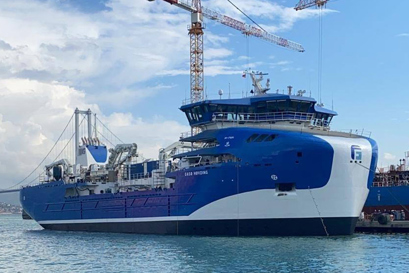
Learn how Quantum Water selected Danfoss APP high-pressure pumps, iSave ERDs, and VFDs for the SWRO plant on the world's largest wellboat to save space, energy, and maintenance.
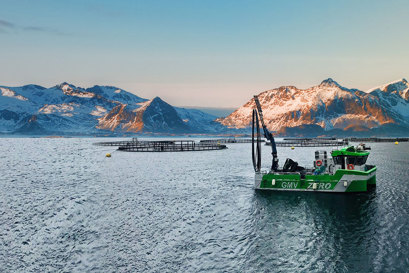
The leading Norwegian aquaculture company, Northern Lights Salmon, has turned to fully electric work boats in their operations. The company believes electric boats are perfect for fish farming and will play a key role in marine aquaculture's future.
Besides the obvious environmental gains, electrical boats also benefit operators and fish. With no engine noise, the crew enjoys a better work environment, and the fish experience reduced stress levels.
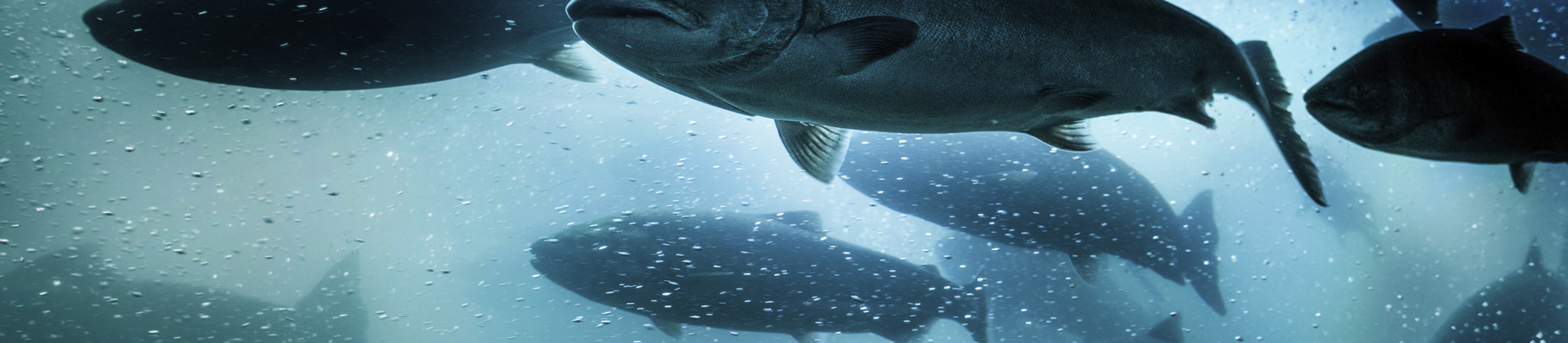
We offer technology and know-how that helps fish farmers and other aquaculture businesses feed the potential with sustainable and energy-efficient solutions.
Learn more about aquaculture solutions

A recirculating aquaculture system (RAS) is a water treatment system for fish farming. It recycles and reuses water while it helps maintain water quality with a biological and mechanical filter. You can use a recirculating aquaculture system to raise various species of fish in land-based fish farms or for breeding fish for introduction to net pens.
A recirculating aquaculture system removes fish waste from system water or converts it to non-toxic substances. It then saturates the water with oxygen and directs it back to the fish tanks - everything in a closed circuit.
There are several advantages of implementing a recirculating aquaculture system. It offers a healthy environment for the farmed fish where everything is carefully monitored allowing fish farms to handle fish waste, fish feed, fish grading, fish harvesting and disease control optimally. Furthermore, it takes up very little space and consumes a minimal amount of water and energy, allowing fish farms to produce many fish with very little waste.
Salmon is widely considered to be one of the fish species which is most economically feasible to produce. But several different fish species are farmed around the world, and choosing the best fish to raise is often closely linked with local climate and other factors.
Danfoss technology are used in the entire aquaculture value chain around the world: For fish farming at sea, on land and offshore; for the production of smolt, fish meal and fish food used to feed farmed fish; and for transporting and storing fish and fish products.
Please read our data privacy policy.