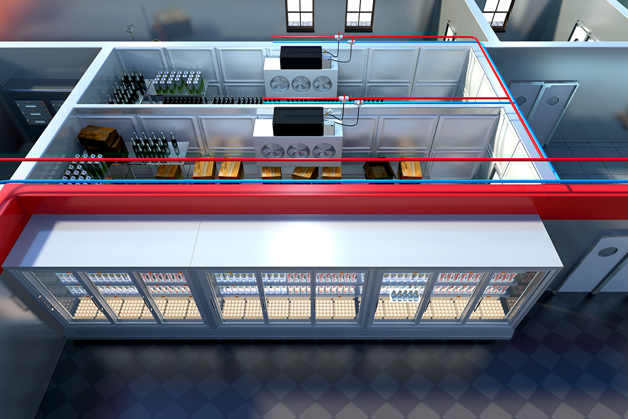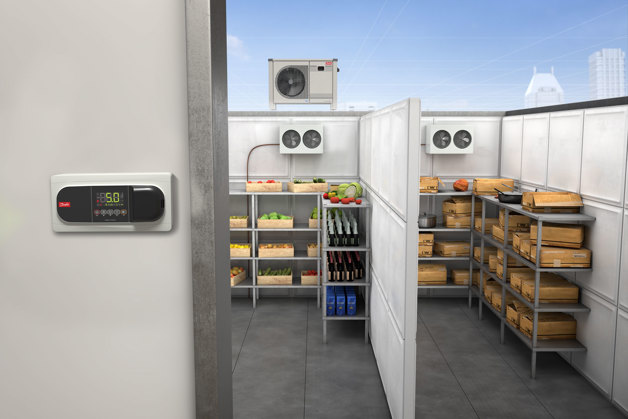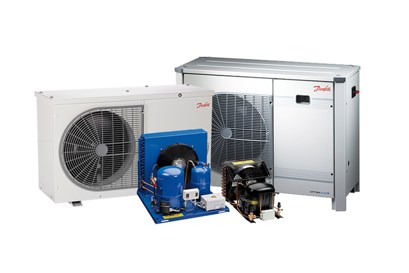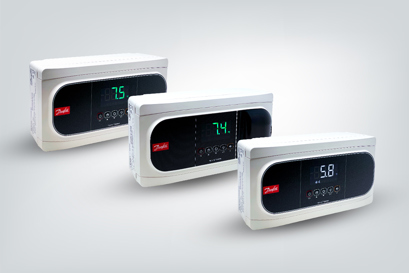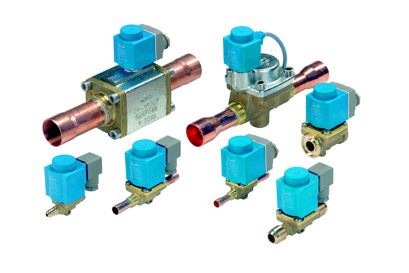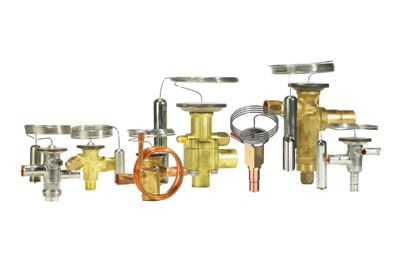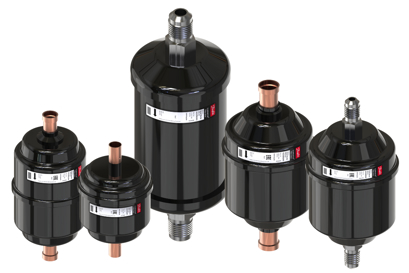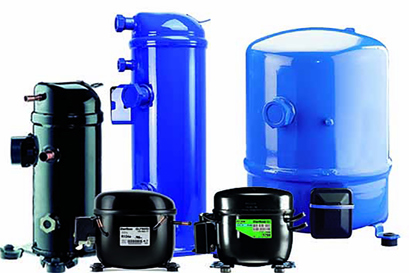
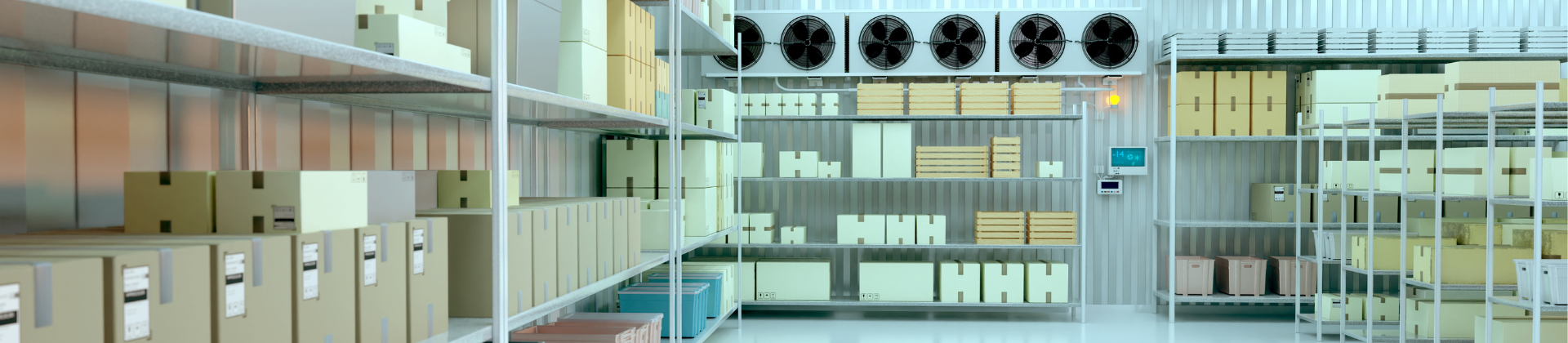
From temperature controls, evaporators, solutions for condensing units, or heating cables in floors and entrance doors, Danfoss has built a broad portfolio of products designed to deliver optimum protection of perishables, ensure efficient operation & extend the lifespan of your walk-in cooler / freezer system.
View video
Everything you need to know about our extensive range of products and solutions for cold rooms and their benefits.
Read more
Found within the cold chain are cold storage facilities such as cold rooms. These facilities store or process both refrigerated and frozen products. They can be at the actual process facility or part of the distribution chain.
Compliance with hygiene and food safety regulations, but also energy regulations, is critical. Whether for a new installation or renovation, other parameters that must be considered when purchasing a cold room include ease of selection, refrigerant choice, installation options, reliability, maintenance, and operating costs.
Danfoss offers the widest portfolio of solutions for cold rooms to suit the diverse capacities, temperatures, and processes – for plug-in or remote installations, in small and larger sizes.
We offer contractor-friendly products & cold room solutions built with market leading expertise that are available everywhere and enable you to comply easily with regulations and save on installation and maintenance of walk-in refrigerators. Make the right choice for optimum protection of perishables, efficient operation and long lifespan.
Danfoss is a trustworthy partner for the cold room storage industry, with an extensive range of refrigeration monitoring solutions, experience and know-how. Our solutions for reliable walk-in cold rooms are specially developed to cover the extensive range of commercial refrigeration applications within; food service (restaurants, catering), specialty retail (butchers, bakeries etc.), process cooling (lab, medical, fruit ripening etc.), convenience stores, discount stores, and pharmacies.
Our extensive low GWP portfolio for cold rooms is compatible with a broad spectrum of refrigerants — from A2L to CO2 and propane.Find the cooling solution that matches your needs.
Check it out
Widest portfolio for all types of cold room and walk-in refrigeration applications
Reliable and highly energy efficient solutions
Long service life, low operation and maintenance costs
Compliance with refrigerant and energy regulations
Products suitable for use with lower GWP and natural refrigerants
Global and local application expertise
Simple product selection with Coolselector®2 software
With the widest product portfolio for cold rooms, we offer a powerful combination of expertise and options that will enhance your cold room design and installation.
Find out about how you can find the best match for Danfoss components in your cold roomand also how to help prevent food waste with our solutions.
A2L refrigerants offer eco-friendly cold room upgrades, maintaining simplicity and safety for a seamless transition.
Transition to eco-friendly CO₂ refrigeration for energy efficiency, safety, and environmental responsibility with Danfoss's expert support.
Danfoss offers a complete system for monitoring and optimizing any commercial refrigeration solution, such as for instance glass door merchandisers, air dryers, cold rooms, trucks and trailers.
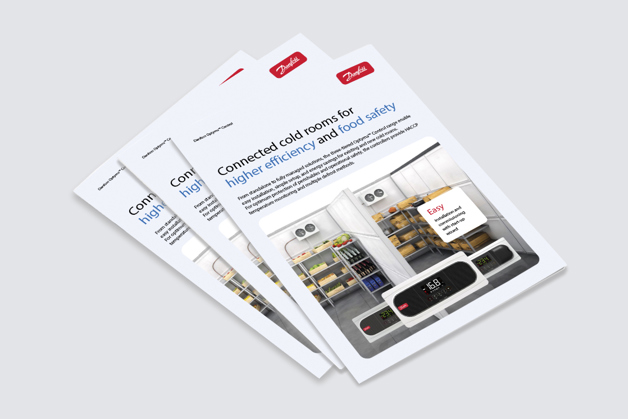
Optyma™ Control is a cold room controller specifically designed for safety, protection, control, and ease of installation.
The Optyma™ Cooler is an efficient unit cooler for walk-in coolers and freezers, designed for quick and easy installation. This compact unit uses cross-rifled heat exchanger tubing with a corrugated fin design and comes equipped with a maintenance-free, factory-balanced variable-speed EC fan motor to ensure high efficiency. Compliant with US DOE AWEF and NRCan standards and regulations.
Built to reduce installation and maintenance costs, these smart designs and components save valuable time and money while making production even more efficient with the minimum impact on the neighborhood.
Energy efficient, sustainable, and smart refrigeration compressors for a varied range of commercial applications such as walk-in coolers and freezers, display windows, ice machines, glass door merchandisers, process cooling, and more. Most models are qualified for use with low GWP refrigerants, making them compliant with the majority of modern refrigerant regulations.
Danfoss, to meet the needs of G&D Chillers, used the microchannel heat exchanger and DSH inverter scroll with intermediate discharge valve to customize the Optyma™ Slim condensing unit, making it compatible with the high-efficiency refrigerant R-410A.
As authorities and customers focus on energy efficiency standards and ratings to understand not just what a commercial refrigeration unit costs to buy, but what it costs to operate, the refrigeration design engineer needs to look again at the fundamentals and consider new approaches.
Use this list to learn what goes into making an efficient walk-in cooler or freezer.
This is the sixth in our series of articles on walk-in coolers and freezers.
As seen throughout this article series, walk-ins are only as good as the components that are included in it. An important piece of the puzzle is the thermostat. A walk-in’s main job, not to put too fine a point on it, is to be cold. Maintaining the internal temperature is critical for meeting food safety standards and keeping product fresh for as long as possible. To do this, while also improving the energy efficiency of the system, a reliable thermostat is required.
This is the fifth in our series of articles on walk-in coolers and freezers.
As with any refrigeration system, controlling the flow of refrigerant is vital in making a walk-in cooler or freezer operate properly. Two of the most common types of refrigerant control valves are thermostatic expansion valves and solenoid valves.
This is the fourth in our series of articles on walk-in coolers and freezers.
As seen in the previous articles in this series, each component of a walk-in cooler or freezer plays a vital role in ensuring optimal performance. In this article, we will examine how regulating small aspects of a walk-in’s refrigeration system, like fan speed, can have a major impact on performance.
Designed for fast and easy installation, the Optyma™ Cooler is a compact and efficient unit cooler for walk-in cooler and freezer applications.
Introducing the new Danfoss AK-RC 251 Optyma™ Control electronic controller, which eliminates the need for mechanical thermostats in cooling applications and defrost timers in freezer applications.
The new CO2 MiniPack Solution makes it easy for the owners of small stores to harness the benefits of CO2 by combining five 100% compatible products into a single solution.
Low-GWP (Global Warming Potential) refrigerants are substances used in cooling systems that have a reduced impact on global warming compared to traditional refrigerants if they are released to the atmosphere. The GWP of a refrigerant measure’s its ability to trap heat in the atmosphere over a specific period, relative to carbon dioxide (CO2), which has a GWP of 1. Low-GWP refrigerants typically have a GWP of less than 150, making them more environmentally friendly options.
Importance of Low-GWP Refrigerants for Cold Rooms
1. Environmental Impact:
2. Sustainability Goals: Using low-GWP refrigerants aligns with sustainability initiatives and corporate social responsibility goals.
3. Future proofing: Choosing low-GWP refrigerants helps future-proof installations against evolving environmental regulations and potential phase-outs of high-GWP substances.
Importance of Considering Energy Efficiency and Local Market Readiness
1. Energy Efficiency and Operational Costs: Energy-efficient refrigerants can reduce operational costs by lowering energy consumption in cold rooms.
2. Local Market Readiness:
Low-GWP refrigerants are crucial for reducing the environmental impact of cold rooms and ensuring compliance with regulations. Considering factors like energy efficiency and local market readiness is essential for selecting the most suitable refrigerant, optimizing system performance, and ensuring economic viability. By addressing these considerations, businesses can achieve sustainable and efficient cold room operations.
Achieving sustainable refrigerant solutions requires a holistic approach, considering environmental, economic, and social factors. Key considerations include:
2. Energy Efficiency: Select refrigerants that enhance energy efficiency and reduce energy consumption.
3. Regulatory Compliance: Ensure compliance with existing and anticipated regulations to avoid costly changes.
4. Safety:
5. Initial & Maintenance Costs: Consider initial investment, maintenance, and Total Cost of Ownership.
6. Market Availability & Stability: Ensure refrigerant availability and supply chain reliability.
7. System & Material Compatibility: Check compatibility with existing systems and materials.
8. Skilled Workforce: Ensure technicians are trained to handle refrigerants safely.
Sustainable refrigerant solutions require balancing environmental, economic, and social considerations. By evaluating these factors, businesses can develop efficient and sustainable refrigeration systems.
The Global Warming Potential (GWP) of a refrigerant and its flammability are distinct properties, but both play a crucial role in cold room applications. Understanding their relationship helps in selecting refrigerants that balance environmental impact and safety.
Global Warming Potential (GWP)
GWP measures how much heat a greenhouse gas traps in the atmosphere over a specific period (typically 100 years) compared to carbon dioxide (CO₂). The higher the GWP, the greater its contribution to global warming. Refrigerants with high GWP pose a significant environmental threat if released, leading to a push for lower-GWP alternatives to reduce climate impact.
Flammability
Flammability refers to a substance’s ability to catch fire and sustain combustion. Refrigerants are classified into different flammability categories according to standards such as ASHRAE Standard 34. Highly flammable refrigerants require strict safety measures to prevent fire hazards, making flammability a key consideration in refrigeration system design.
Balancing GWP and Flammability in Cold Room Applications
There is often a trade-off between environmental impact and safety risks when choosing refrigerants for cold rooms:
Although GWP and flammability are separate factors, both must be considered when selecting refrigerants for cold rooms. The goal is to find a balance between environmental responsibility and safety, ensuring compliance with regulations while maintaining efficient and secure refrigeration operations.
Hydrofluoroolefins (HFOs) are synthetic refrigerants offering low-GWP solutions for cold rooms. Examples include:
HFOs play a crucial role in low-GWP refrigerants for cold rooms due to their environmental benefits, efficiency, safety, and adaptability. Their low global warming potential (GWP) makes them a more sustainable alternative to traditional HFCs and CFCs, helping industries comply with regulations aimed at reducing greenhouse gas emissions.
HFOs also offer strong thermodynamic performance, providing efficient cooling while consuming less energy.
In terms of safety, HFOs are mildly flammable (Classified A2L by ASHRAE) but safer than hydrocarbons. With proper system design, flammability risks can be managed. They are also generally low in toxicity, making them a safe choice for various refrigeration applications.
HFOs are widely used in cold rooms for food storage and pharmaceuticals, offering precise temperature control across different applications.
When selecting an alternative to R404A/R507 for commercial cold rooms, it is essential to consider factors such as GWP, energy efficiency, safety, and compatibility with existing systems or if it is a new installation HFOs and HFO blends, hydrocarbons, and natural refrigerants like CO2 offer viable options that balance environmental impact with performance and safety. Each alternative has its own set of benefits and challenges, so the choice will depend on the specific requirements and constraints of the application.
A - R448A and R449A are two popular alternatives to R404A and R507 in commercial refrigeration, including cold room applications. Here's a detailed comparison of their performance:
1. Energy Efficiency
2. Cooling Capacity
3. Operating Pressures
4. Temperature Glide
5. Compatibility and Retrofitting
R448A and R449A are both excellent alternatives to R404A and R507 for cold room applications. They offer significantly lower GWPs, improved energy efficiency, and similar operating pressures, making them suitable for retrofitting existing systems with minimal modifications. While they do have moderate temperature glide, proper system design and operation can manage this aspect effectively. Overall, transitioning to R448A or R449A can lead to environmental benefits and potential cost savings in commercial refrigeration.
Read more here.
When replacing R404A/R507 in refrigeration systems, only non-flammable (A1) refrigerants should be used for retrofitting. While there are no perfect "drop-in" replacements that require zero modifications, R448A and R449A are common alternatives that can be implemented with minimal system adjustments.
When transitioning from R404A/R507 to R449A, several technical considerations need to be considered to ensure a smooth and efficient conversion:
1. Compatibility and System Modifications
2. System Performance
3. Temperature Glide
4. Regulatory Compliance and Environmental Regulations: Transitioning to R449A helps meet regulatory requirements for reducing high-GWP refrigerants. Ensure compliance with local and international regulations regarding refrigerant use and disposal.
While R449A is not a true drop-in replacement for R404A/R507, it can be used with minimal system modifications. Key technical considerations include compatibility of system components, adjustments to expansion devices and heat exchangers, and ensuring safety and regulatory compliance. Proper planning and execution of the transition can lead to improved energy efficiency and reduced environmental impact.
Retrofitting refers to the process of modifying an existing refrigeration system to use a different refrigerant than the one it was originally designed for. This process is often necessary to comply with environmental regulations, improve energy efficiency, or address the availability and cost of refrigerants.
When is Retrofitting Necessary?
1. Regulatory Compliance:
2. Reducing Carbon Footprint: Use lower-GWP refrigerants to enhance sustainability.
3. Economic Considerations:
Retrofitting is essential for compliance, efficiency, and economic reasons. It involves evaluating the system, selecting a suitable refrigerant, and ensuring safety and compliance. Proper retrofitting can reduce environmental impact, lower costs, and improve performance.
Retrofitting systems designed for R404A/R507 to use lower-GWP, non-flammable refrigerants like R448A, R449A, and R452A is feasible but requires careful planning to ensure compatibility, safety, and performance. Never retrofit a R404A / R507A system to flammable refrigerants. Only retrofit to other non-flammable refrigerants like R448A, R449A; R452A.
Key Steps in Retrofitting:
1. Assessment and Planning:
2. Preparation:
3. Conversion:
4. System Optimization:
5. Testing and Validation:
Retrofitting to lower-GWP refrigerants offers environmental and economic benefits, enhancing energy efficiency and extending system life. Proper execution ensures safety and compliance.
It is very dangerous to retrofit a refrigeration system from a non-flammable refrigerant to a flammable refrigerant such as R290 (propane) which has an A3 classification are highly flammable and require stringent safety measures, including proper ventilation, leak detection, and the use of explosion-proof equipment. They are often used in applications where environmental impact is a priority, and safety measures can be effectively implemented.
Low GWP (Global Warming Potential) refrigerants have a significant impact on the efficiency and capacity of cold room systems.
Here are the key points:
1. Energy Efficiency:
2. Cooling Capacity:
3. Regulatory Compliance:
4. Market Trends:
When transitioning from R404A to R448A or R449A, you can expect several changes in cooling performance. Here are the key points based on the available documents and general knowledge about the cooling performance:
3. Discharge Temperature:
4. Pressure Levels:
5. System Adjustments:
Maintaining CO₂ (R744) refrigerants in cold rooms comes with unique challenges due to their high-pressure operation and complex system requirements.
One key issue is high operating pressure, requiring specialized compressors, piping, and heat exchangers to ensure system safety and durability. Additionally, transcritical operation, common in warmer climates, complicates system control and design, necessitating gas coolers and high-pressure valves for efficiency.
Heat rejection is crucial, as CO₂ systems rely on effective gas coolers. In hot climates, adiabatic cooling or parallel compression may be needed to maintain performance. The complexity of system design also demands careful selection of high-pressure components and efficient layout planning.
Training and expertise are essential, as technicians must understand CO₂’s unique properties. Regular leak detection and safety checks are necessary since CO₂ operates at high pressure, posing potential risks.
While CO₂ systems can be highly efficient, especially in cooler climates, achieving optimal performance requires advanced controls and system optimization. Despite these challenges, proper design, training, and maintenance can ensure reliable, energy-efficient operation.
Refrigerant classifications A1, A2L, and A3 are part of the safety classification system defined by ASHRAE Standard 34 and ISO 817. These classifications are based on the flammability and toxicity of the refrigerants. Understanding these classifications is crucial for selecting the appropriate refrigerant for specific applications and ensuring safety.
Refrigerant Classifications:
1. A1 Classification:
Importance: A1 refrigerants are considered the safest in terms of flammability and are commonly used in a wide range of applications. They are suitable for environments where flammability is a major concern.
2. A2L Classification:
Importance: A2L refrigerants have low flammability and are often used as alternatives to higher GWP refrigerants. They require specific safety measures and equipment designed to handle mildly flammable substances.
3. A3 Classification:
Importance: A3 refrigerants are highly flammable and require stringent safety measures, including proper ventilation, leak detection, and the use of equipment that is not an ignition source They are often used in applications where environmental impact is a priority, and safety measures can be effectively implemented.
Why Refrigerant Classifications Matter
Refrigerant classifications are essential for safety, compliance, system design, environmental impact, and training.
Safety is crucial, as different refrigerants vary in flammability and toxicity. Proper classification ensures the right choice for specific applications, reducing risks.
Regulatory compliance helps avoid legal issues, as different regions have specific laws and standards for refrigerant use.
System design and maintenance depend on classification. A2L and A3 refrigerants require leak detectors, ventilation, and ignition-free equipment for safe operation.
Environmental impact is another factor, as A2L and A3 refrigerants often have a lower GWP than A1 options, making them more eco-friendly.
Finally, training and expertise are key. Technicians must be certified and trained to handle different refrigerants safely and effectively.
When dealing with flammable refrigerants such as propane (R290), there are several safety and handling considerations to keep in mind, but this is not an exhaustive list:
1. Training: Only trained personnel should handle flammable refrigerants. No training means no handling.
2. Regulatory Compliance: Adhere to regional regulations and standards to ensure safe operation and avoid legal issues.
3. Flammability:
4. Ventilation:
5. Leak Detection: Install leak detection systems and regularly inspect equipment to prevent leaks.
6. Storage:
7. Equipment Compatibility:
By following these guidelines, the risks of using flammable refrigerants like R290 can be effectively managed.
When using CO2 (R744) as a refrigerant in cold rooms, there are specific pressure and temperature considerations to keep in mind:
Pressure Considerations
1. Regulatory Compliance: Different regions have regulations and standards that dictate the use of certain refrigerants based on their classification. Compliance with these regulations is necessary to avoid legal issues and ensure safe operation
2. High Operating Pressure: (up to 140 bar)
3. Pressure Relief:
Temperature Considerations
1. Critical Temperature:
2. Low-Temperature Performance: CO2 is well-suited for low-temperature applications, such as cold rooms, due to its excellent thermodynamic properties.
3. Transcritical Operation:
By addressing these pressure and temperature considerations, CO2 can be effectively used as a refrigerant in cold rooms, offering benefits such as high efficiency and low environmental impact.
The primary safety differences between flammable and non-flammable refrigerants relate to fire risks, system design, handling requirements, and regulatory compliance.
Flammable refrigerants, such as propane (R290) and isobutane (R600a), pose a fire and explosion risk if leaked and exposed to an ignition source. To minimize this danger, refrigeration systems must be leak-tight and designed to prevent refrigerant accumulation in flammable concentrations. Specialized equipment, such as explosion-proof electrical components, or located outside of areas where flammable concentrations can occur are required. Handling and storage demand extra precautions, and personnel must be trained in safe handling and emergency response. Additionally, strict regulations govern the use of flammable refrigerants, including charge size limits and installation requirements.
In contrast, non-flammable refrigerants, such as R134a and R410A, do not pose fire or explosion risks under normal conditions. This allows for more flexible system design without the need for explosion-proof components. While handling and storage are generally safer, proper leak prevention, ventilation, and environmental compliance remain important. Some non-flammable refrigerants may have ozone depletion or global warming potential, requiring careful disposal and adherence to environmental guidelines.
By understanding these safety distinctions, refrigeration systems can be designed and maintained to ensure safe operation, whether using flammable or non-flammable refrigerants.
When evaluating whether an A2L refrigerant is suitable for your cold room, consider the following factors:
1. Safety Standards: Ensure compliance with local and international safety standards for A2L refrigerants, which are mildly flammable. Check regulations such as ASHRAE 15 and ISO5149/EN378.
2. System Compatibility: Verify that your refrigeration system is compatible with A2L refrigerants. This includes checking the compressor, valves, heat exchangers, electrical system and other components for compatibility with the refrigerant's pressure and temperature characteristics.
3. Leak Detection and Ventilation: Implement appropriate leak detection systems and ensure adequate ventilation to mitigate the risks associated with the mild flammability of A2L refrigerants.
4. Performance Efficiency: Evaluate the energy efficiency of the refrigerant in your specific application. A2L refrigerants often offer improved efficiency, which can lead to cost savings.
5. Environmental Impact: Consider the Global Warming Potential (GWP) and Ozone Depletion Potential (ODP) of the refrigerant. A2L refrigerants typically have lower GWP compared to traditional refrigerants.
6. Cost Implications: Assess the cost of the refrigerant itself, as well as any potential modifications needed for your system to accommodate the refrigerant.
By considering these factors, you can make an informed decision about the suitability of an A2L refrigerant for your cold room.
Using flammable refrigerants like R32 or R290 requires careful attention to installation and maintenance to ensure safety and efficiency.
During installation, compliance with local and international safety regulations such as ISO 5149, EN 378, ASHRAE 15, and ISO 60335-2-family is essential. The system design must support flammable refrigerants, using approved components and ensuring appropriate pressure ratings. Proper ventilation is crucial to prevent the accumulation of flammable gases, and leak detection systems should be in place to identify and address leaks promptly. Electrical safety measures, including the use of explosion-proof or spark-free components, help reduce ignition risks. Additionally, it is important to follow refrigerant charge limitations to stay within safe usage levels.
For maintenance, regular inspections are necessary to ensure the system operates safely. Training of personnel in the handling, storage, and emergency response for flammable refrigerants is crucial. A clear leak management plan should be in place, including the use of proper personal protective equipment (PPE) and tools. Maintaining detailed documentation of refrigerant use, maintenance activities, and incidents ensures regulatory compliance and efficient troubleshooting. When replacing components, only manufacturer-approved parts should be used to maintain system compatibility and safety.
By addressing these installation and maintenance considerations, flammable refrigerants like R32 and R290 can be safely and effectively used in refrigeration systems.
The IEC 60335-2-family is a crucial standard that sets safety requirements for commercial refrigeration appliances using flammable refrigerants.
One of its key aspects is safety requirements, ensuring that refrigeration appliances are designed and built to operate safely in environments where flammable refrigerants are present. The standard also sets refrigerant charge limits, defining the maximum allowable amount based on the type of refrigerant, application, and operating environment.
To mitigate risks, IEC 60335-2 family specifies safety measures such as ventilation requirements, leak detection systems, and the use of non-sparking components. It also includes testing and compliance guidelines for checking refrigerant leakage, electrical safety, and mechanical integrity to ensure appliances meet strict safety standards.
Design considerations are another key focus, requiring manufacturers to integrate safe component selection, system layout, and safety features from the early design phase. As an internationally recognized standard, IEC 60335-2 family promotes global trade by ensuring consistent safety regulations across different markets.
Industry Importance
By following IEC 60335-2 family, manufacturers and operators can ensure the safe, compliant, and efficient use of flammable refrigerants in commercial refrigeration.
The effectiveness of CO₂ (R744) depends on factors like climate, application, system design, cost, expertise, and regulations.
CO₂ is most efficient in cooler climates, where it operates in a subcritical cycle, but in warmer climates, a transcritical cycle may reduce efficiency. It is well-suited for low-temperature applications like freezing, though systems with variable loads may need advanced controls.
High operating pressure requires components that can withstand these higher pressures up to 140 Bar. Initial costs can be high due to specialized equipment, but energy savings may offset expenses over time. Skilled personnel are needed for installation and maintenance.
From an environmental standpoint, CO₂ is attractive due to its low GWP and zero ODP, making it a strong option for regulatory compliance.
While CO₂ is efficient and eco-friendly, its suitability depends on climate, infrastructure, and cost considerations. A thorough evaluation is necessary to determine if it's the best choice or if alternatives would be more practical.
R290 (propane) offers notable advantages and challenges compared to synthetic refrigerants, particularly in terms of efficiency and safety.
In terms of efficiency, R290 has excellent thermodynamic properties, resulting in high energy efficiency and lower energy consumption compared to some synthetic refrigerants. It also performs well across a wide operating range, making it suitable for domestic and commercial refrigeration. Additionally, its superior heat transfer characteristics enhance system performance and reduce energy costs.
However, safety remains a critical concern. R290 is highly flammable (A3 classification), requiring careful handling, installation, and maintenance to mitigate fire and explosion risks. Systems using R290 must incorporate safety measures such as leak detection, proper ventilation, and non-sparking components. Compliance with safety standards and regulations is essential, as restrictions on R290 use may apply in certain regions.
When compared to synthetic refrigerants, R290 often matches or exceeds efficiency levels but carries higher flammability risks. However, these risks can be managed through proper system design and adherence to safety protocols. Additionally, R290 is more environmentally friendly, as it has zero ozone depletion potential (ODP) and low global warming potential (GWP).
R290 is a highly efficient and eco-friendly alternative to synthetic refrigerants, provided that safety concerns are properly addressed. The choice between R290 and synthetic options should consider application needs, regulatory requirements, and infrastructure availability to ensure both efficiency and safety.
When using natural refrigerants like CO2 (R744) and propane (R290), there are several regulatory considerations to ensure compliance with safety and environmental standards. Here are the key aspects to consider:
General Regulatory Considerations
1. Safety Standards:
2. Flammability and Pressure:
3. Refrigerant Charge Limits: Regulations may impose limits on the allowable charge of flammable refrigerants like propane in certain applications to minimize risk.
4. Installation and Maintenance:
Environmental Regulations
1. Global Warming Potential (GWP): Natural refrigerants like CO2 and propane have low GWP, aligning with regulations aimed at reducing greenhouse gas emissions, such as the European F-Gas Regulation.
2. Ozone Depletion Potential (ODP): Both CO2 and propane have zero ODP, making them compliant with regulations focused on protecting the ozone layer, such as the Montreal Protocol.
6. Regional and National Regulations
1. European Union:
2. United States:
3. Other Regions:
Regulations may vary by country, with some regions having specific requirements for the use of natural refrigerants in certain applications.
When using natural refrigerants like CO2 and propane, it is essential to understand and comply with relevant safety and environmental regulations. This includes adhering to standards for system design, installation, and maintenance, as well as meeting documentation and training requirements. By doing so, businesses can ensure safe and environmentally responsible use of these refrigerants.
In general transitioning means building new systems with low GWP refrigerants. Transitioning from high-GWP refrigerants like R404A/R507 to lower-GWP alternatives involves several key steps to ensure a smooth and effective conversion. Here are the key steps:
2. Regulatory Compliance:
3. System Modifications:
4. Training and Safety:
Transitioning to a lower-GWP refrigerant requires careful planning, technical adjustments, and adherence to safety and regulatory standards. By following these steps, businesses can achieve a successful transition that reduces environmental impact while maintaining system performance and efficiency.
Moving to A2L refrigerants requires designing new systems specifically for their properties. Unlike A1 refrigerants, which are non-flammable, A2L refrigerants are mildly flammable, necessitating additional safety measures. Ensuring system compatibility involves several critical steps to address these differences and maintain safe, efficient operation.
Steps to Ensure System Compatibility
1. System Assessment:
2. Refrigerant Selection: Select based on cooling needs, efficiency, and environmental impact.
3. Component Compatibility:
4. Safety Measures:
5. System Modifications:
6. Training and Documentation:
Ensuring compatibility with A2L refrigerants requires careful planning, system modifications, and adherence to safety protocols to maintain safety and efficiency.
When using flammable refrigerants like R290 (propane), it's crucial to consider system charge limits to ensure safety and compliance with regulations. Here are the key considerations:
2. Application Type:
3. Safety Measures:
4. System Design and Components:
5. Conduct Risk Assessments: Perform thorough risk assessments to evaluate the potential hazards associated with the refrigerant charge and implement appropriate mitigation measures.
6. Training and Procedures: Ensure that all personnel involved in the installation, maintenance, and operation of the system are trained in handling flammable refrigerants and understand the associated risks.
By considering these factors, you can safely manage system charge limits for flammable refrigerants like R290, ensuring compliance with regulations and minimizing risks. Proper system design, safety measures, and training are essential to safely utilize flammable refrigerants in various applications.
Future-proofing is a critical consideration when selecting refrigerants for new cold room installations. It involves choosing refrigerants and system designs that will remain viable and compliant with evolving regulations, technological advancements, and market demands. Here is how you can future-proof your refrigerant selection:
2. Environmental Impact: Align refrigerant choices with sustainability goals and corporate environmental responsibility initiatives, which may prioritize low-GWP and natural refrigerants.
3. Technological Advancements:
Operational Efficiency:
Cost Considerations:
Safety and Training:
Future-proofing in refrigerant selection involves a strategic approach that considers regulatory trends, environmental impact, technological compatibility, and economic factors. By choosing refrigerants that align with these considerations, businesses can ensure that their cold room installations remain compliant, efficient, and competitive in the long term. This proactive approach helps mitigate risks associated with regulatory changes and market shifts, providing a sustainable and resilient solution.
A cold room is an insulated or cold-air room that keeps a specified temperature range. Cold rooms are for storing various kinds of goods across different sectors. Typical product types are food and beverages, biologics, textiles, and pharmaceuticals.
A cold room allows precise control of temperatures in commercial spaces where constant and efficient refrigeration or freezing is needed. Food or chemical storage means extended temperature control for perishable or unstable materials, lowering degraded rates, and the assurance the items will remain in optimal condition. The FDA recommends that pharmaceutical products should be kept in a suitable temperature, humidity, and light environment and be labeled as identifying and retaining their purity.
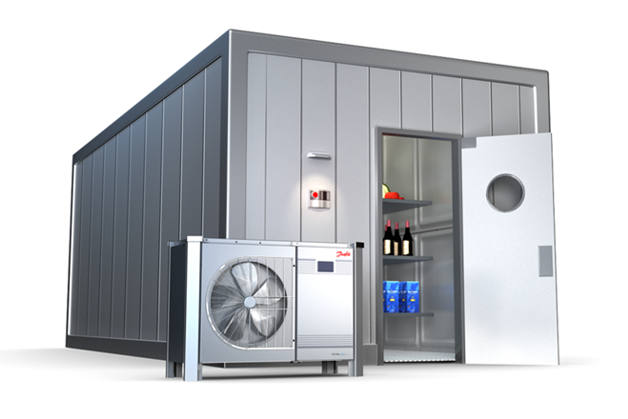
The way a cold room works is like a domestic refrigerator. You have an insulated box and a refrigeration system that extracts unwanted heat from the inside and expels it to the outside. It is controlled by a thermostat that turns on when the temperature inside the insulated box is too high and turns off when it is the correct temperature.
The main components are the insulated panels that make up the room complete with a door. The refrigeration system is normally made up of a condensing unit which houses the compressor, condenser, receiver, and associated electrics that is located outside the cold room and then the evaporator, which is placed inside the cold room along with the expansion device to remove the heat from within the cold room. The whole system is then controlled by a thermostat to start and stop the refrigeration system, so the correct temperature is maintained within the cold room.
Easily select your cold room refrigeration components with Coolselector® 2
There are many different applications which range from farm to fork in the whole food chain such as removing field heat from produce in agricultural areas, food factories, food distribution, supermarkets, convenience stores, commercial kitchens, fast food. Other notable areas include pharmaceutical, floristry, mortuary, and production process.
There is no one specific answer due to the many varied requirements and different product types that require cooling.
Generally:
a. High Temperature Cold Room – an example could be to remove field heat from food produce such as tomatoes with a room temperature at approximately 12 °C
b. Walk-in Cold Room – an example could be a cold room in the back room of a commercial kitchen to store fresh food stuff with a room temperature of approximately 2 to 5 °C
c. Walk-In Freezer Room – an example could be a freezer room in the back room of a supermarket to store frozen food stuff with a room temperature at approximately -18 °C, or for longer term storage the temperature can be as low as -28 °C.
It is important to ensure the cold room structure and the refrigeration equipment has periodic maintenance, because when they are being used regularly, there are many different things that can go wrong or deteriorate over time.
For instance, the fabric of the cold room structure gets a lot of use, opening and closing of the door etc.
The refrigeration system components such as the condenser can get blocked with debris, the fins of the evaporator can get blocked with ice, the mechanical components such as fan motors, defrost heaters or compressor can fail, or the performance can deteriorate. The initial symptom of a failure would be that the cold room is not maintaining the correct storage temperature.
There are many ways to ensure the cold room is running as energy efficiently as possible, these include:
Yes, the floor should be insulated and have a heater mat or other systems to ensure the negative temperature in a freezer cold room does not freeze the natural moisture present in the sub floor foundations. Otherwise, the floor of the cold room could crack and become unstable. The effects of this are known as frost heave and can be severe.
For further information, please contact us.