
Two-pipe heating and cooling systems are characterized by changing conditions due to valves opening and closing depending on the demand for heating or cooling. This continuously causes flow and differential pressure changes.
Without proper measurements, such systems suffer from uneven heat distribution, noise and energy inefficiency. Automatic balancing valves are the best option for these types of systems. Once installed, they optimize the system under all possible loads by controlling the differential pressure. In combination with pre-setting valves ensuring the correct flow through each radiator, and floor heating loop or cooling Terminal Unit, the system is optimized for the best possible temperature control, energy savings and noise reduction.
Danfoss offers a broad range of automatic balancing valves, partner valves and related accessories.
- Return pipe mounted differential pressure controllers type ASV-P and ASV-PV
- Flow pipe mounted partner valves for ASV, type ASV-BD, ASV-M and ASV-I
- Flow pipe mounted combined automatic balancing, flow limiter and zone control valves type AB-PM
Features and benefits
-
Less complaints
The right balance will be there under all loads, resulting in less to no complaints regarding uneven heat distribution or system noise.
-
Better temperature control
With the automatic balancing you will achieve better temperature control in the rooms.
-
Energy savings
No overflows will occur in the system anymore, resulting in no waste of energy.
-
Save on commissioning
There will be no measuring needed for adjustments, which will mean significant savings on commissioning costs.
-
Effective project planning
Projects can be handled and handed over in stages, making project planning and execution easier.

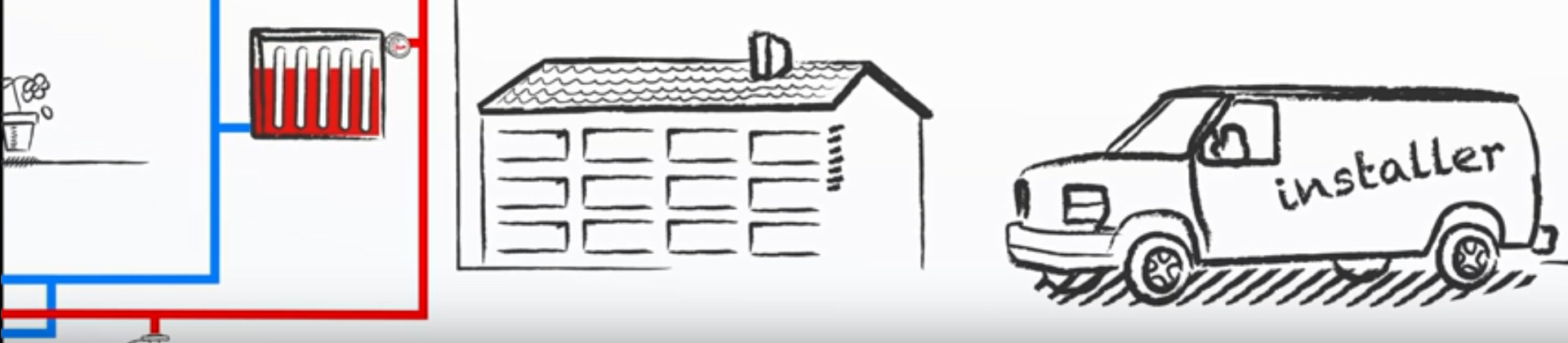
Automatic balancing valves video
This animation shows how automatic balancing valves can be a great solution to improve the performance of a heating system and reduce costs at the same time.
Product range

AB-PM is a combined balancing valve providing both differential pressure control and flow limitation. The valves eliminate pressure fluctuations at full load and partial load conditions and can be equipped with an actuator to allow zone control.

ASV automatic balancing valves provide a dynamic balancing solution for two-pipe heating or cooling applications. The riser-mounted valves eliminate pressure fluctuations occurring in variable flow systems at partial load conditions. For a proper hydronic balance the valves should be combined with pre-setting valves.
Documents
| Type | Name | Language | Valid for | Updated | Download | File type |
|---|---|---|---|---|---|---|
| Application guide | Application guide | Italian | Italy | 06 Mar, 2021 | 10.1 MB | |
| Application guide | Application leaflet | Lithuanian | Lithuania | 17 May, 2021 | 19.0 MB | |
| Brochure | Energy saving solutions for renovation of heating and cooling systems | Polish | Multiple | 18 Feb, 2019 | 5.9 MB | |
| Brochure | Energy saving solutions for renovation of heating and cooling systems | English | Multiple | 09 Sep, 2014 | 5.9 MB | |
| Brochure | Energy saving solutions for renovation of heating and cooling systems | Hungarian | Hungary | 31 Aug, 2014 | 6.4 MB | |
| Brochure | Energy saving solutions for renovation of heating and cooling systems | Romanian, Moldavian, Moldovan | Romania | 31 Aug, 2014 | 6.4 MB | |
| Brochure | Grow your business and discover the value of working with one partner (International version) | English | Multiple | 19 Nov, 2015 | 5.6 MB | |
| Brochure | Grow your business and discover the value of working with one partner (International version) | Slovak | Slovakia | 23 Mar, 2021 | 16.4 MB | |
| Application guide | HVAC Application guide | English | Multiple | 25 Oct, 2020 | 19.4 MB | |
| Application guide | HVAC Application guide | Latvian | Latvia | 20 Apr, 2021 | 20.2 MB | |
| Application guide | HVAC Application guide | Czech | Czech Republic | 17 Nov, 2014 | 7.3 MB | |
| Application guide | HVAC Application guide | Polish | Poland | 13 Jun, 2021 | 11.3 MB | |
| Application guide | HVAC Application guide | Spanish, Castilian | Spain | 01 Feb, 2022 | 8.7 MB | |
| Application guide | HVAC Application guide 2021 | Hungarian | Hungary | 20 Sep, 2021 | 11.7 MB | |
| Brochure | Hydronic Balancing & Control product overview | Italian | Italy | 06 Mar, 2021 | 1.0 MB | |
| Brochure | Hydronic Balancing & Control product overview | German | Switzerland | 14 Oct, 2022 | 1.8 MB | |
| Brochure | Hydronic Balancing & Control product overview | English | United Kingdom | 10 Nov, 2014 | 7.1 MB | |
| Brochure | Hydronic Balancing & Control product overview | Czech | Czech Republic | 17 Nov, 2014 | 1.0 MB | |
| Brochure | Hydronic Balancing & Control product overview | English | Multiple | 11 Dec, 2016 | 1.1 MB | |
| Brochure | Hydronic Balancing & Control product overview | German | Multiple | 30 Aug, 2022 | 1.6 MB | |
| White paper | Practical guidelines for creating energy efficient multi-family residential heating systems | English | Multiple | 15 Oct, 2015 | 4.3 MB |
Tender texts
ASV-PV (4th gen.) – Differential pressure controller/Automatic balancing valve DN 15-50
Branch should be balanced with a differential pressure controller for dynamic hydronic balance, with following characteristics:
- Valve should keep stable differential pressure across the branch by membrane driven controller
- Valve should have variable Differential pressure setting.
- Minimum needed differential pressure over the valve should not be higher than 10 kPa, independently from Dp setting
- Valve should have metal to metal (valve cone and seat) sealing to ensure optimal performance of differential pressure control at low flows
- Differential pressure setting should be linear via visual scale and without tool, locking function should be integrated to prevent unauthorized change of setting
- The setting range should be adaptable via spring replacement. Spring should be exchangeable under pressure
- Valve should provide differential pressure setting range fit to application to ensure optimal system performance (such as 5-25 kPa setting range for radiator based systems)
- Valve capacity per valve size should cover flow range according to VDI 2073 Standards (with water velocity of up 0.8 m/s)
- Valve should have shut-off function separated from the setting mechanism. Shut-off service function should be possible to do by hand / without tool
- Drain function should be integrated in valve
- Valves should have integrated flushing service function. Flushing can be done with flushing accessory
- Valve should be delivered with impulse tube. Inner diameter of impulse tube should not be bigger than 1.2 mm to ensure optimal performance within the system
- Valve should be delivered with thermal insulation caps, up to 120°C
- Valve should be delivered in reliable packaging for safe transport and handling
Product characteristics:
- Pressure class: PN 16
- Temperature range: 0 … +120 °C
- Connection size: DN 15-50
- Connection type: Internal thread ISO 7/1 (DN 15-50), External thread ISO 228/1 (DN 15-50)
- Δp setting range: 5-25 kPa, 20-60 kPa
- Max differential pressure across valve:1.5 bar
- Installation: differential pressure controller should be mounted on return pipe with connection via impulse tube to supply pipe.
ASV-PV (3rd gen.) – Differential pressure controller/Automatic balancing valve
Branch should be balanced with a differential pressure controller for dynamic hydronic balance, with following characteristics:
- Valve should keep stable differential pressure across the branch by membrane driven controller
- Valve should have variable Dp setting. Setting should be hidden or lockable to prevent unauthorized changes
- Setting accuracy should be within ±10% of set differential pressure, proven by independent accredited third party
- Minimum needed differential pressure over the valve should not be higher than 10 kPa, independently from Dp setting
- Valve should have metal to metal (valve cone and seat) sealing to ensure optimal performance of differential pressure control at low flows
- Differential pressure setting should be linear throughout the setting range (1 turn 1 kPa or 1 turn 2 kPa depending on dimension)
- The setting range should be adaptable via spring replacement in dimensions DN 15-40. Spring should be exchangeable under pressure
- Valve should provide Dp setting range fit to application to ensure optimal system performance (such as 5-25 kPa setting range for radiator based systems)
- Valve capacity per valve size should cover flow range according to VDI 2073 Standards (with water velocity of up 0.8 m/s)
- Valve should have shut-off function separated from the setting mechanism. Shut-off service function should be possible to do by hand / without tool
- Drain function should be integrated in valve in dimension range of DN 15-50
- Valve should be delivered with impulse tube. Inner diameter of impulse tube should not be bigger than 1.2 mm to ensure optimal performance within the system
- Valve in DN 15-40 range should be delivered with thermal insulation caps, min. 80°C
- Valve should be delivered in reliable packaging for safe transport and handling
Product characteristics:
- Pressure class: PN 16
- Temperature range: -10 … +120°C
- Valve size: DN 15-100
- Installation: on return pipe with connection via impulse tube to supply pipe
DN 15-25:
- Connection type: Internal thread ISO 7/1 and External thread ISO 228/1
- Dp setting range: 5-25 kPa, 20-60 kPa
- Max Dp: 1.5 bar
DN 32-40:
- Connection type: Internal thread ISO 7/1 and External thread ISO 228/1
- Dp setting range: 5-25 kPa, 20-60 kPa, 35-75 kPa
- Max Dp: 1.5 bar
DN 50:
- Connection type: External thread ISO 228/1
- Dp setting range: 5-25 kPa, 20-40 kPa, 35-75 kPa, 60-100 kPa
- Max Dp: 2.5 bar
DN 65-100:
- Connection type: Flange EN 1092-2
- Dp setting range: 20-40 kPa, 35-75 kPa, 60-100 kPa
- Max Dp: 2.5 bar
ASV-I
Automatic balancing partner valve with shut-off and flowlimitation to be mounted in the supply line and connected to automatic balancing valve with impulse tube.
- Valve should be delivered with threaded impulse tube connection.
- Valve should have integrated shut-off function
- Valve should incorporate flow limitation to set required maximum flow in the riser
- Valve should be delivered with test plugs for flow verification
ASV-M
Automatic balancing partner valve with shut-off to be mounted in the supply line and connected to automatic balancing valve with impulse tube.Valve should be delivered with threaded impulse tube connection.
- Valve should be delivered with threaded impulse tube connection.
- Valve should have integrated shut-off function
- Option to install test plugs for flow verification
ASV-BD
Automatic balancing partner valve with presetting, flowverification and shut-off to be mounted in the supply line and connected to automatic balancing valve with impulse tube.
- Valve should be delivered with threaded impulse tube connection.
- Shut-off function with position indicator separate from setting function
- Visible presetting from all sides
- Valve should have tamper proof locking of the handle
- 360 °rotating measuring station (drain tap and test plugs)
- Possibility of draining and filling the system on both sides of the valve
- Bi-directional flow possible
- Self sealing, parallel test plugs for flow verification
- Valve can be installed inside or outside the control loop.
- Flow limitation functionality on valve can be disabled without draining the system
Software
Danfoss SET 365 software
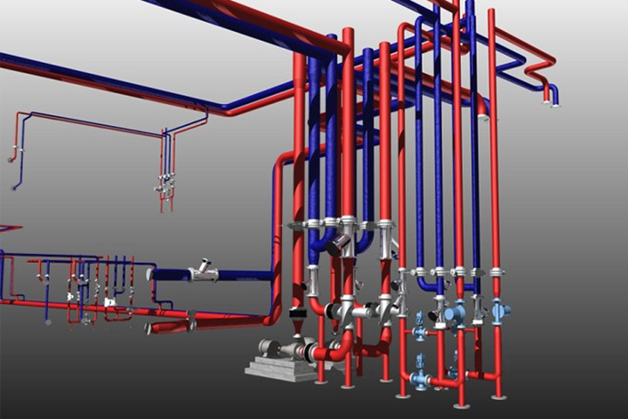
Our advanced Danfoss SET 365 3D design software will help you to design and calculate HVAC systems with Danfoss products. A 1-year subscription is FREE available for students, designers and other interested professionals.
Videos
Case stories

Centrally heated apartment buildings often suffer from variations in room temperatures due to inefficient and unbalanced heating systems. This can lead to unhappy residents complaining about lack of comfort or high energy bills. Swedish cooperative organization HSB aimed to use an intelligent monitoring and control solution to improve the energy efficiency and indoor comfort of a 12-apartment block that is connected to district heating.

Too warm, too cold, and no chance to regulate the heating inside the individual apartments—those were the issues facing the residents in a 9-storey apartment building in Tallinn, Estonia. By upgrading the existing one-pipe system into a two-pipe system with automatic hydronic balancing, the residents now enjoy improved comfort and 25 percent savings on the energy bill.

Some years ago, the radiators in five 9-storey apartment buildings in Milan, Italy were equipped with thermostatic radiator valves. Not until the system was fitted with automatic balancing valves, however, did the benefits of the new TRVs materialize in terms of 14 percent energy savings, less noise from the heating system, and improved indoor comfort for the residents.

Energy efficiency and indoor comfort are top of mind among building owners today. In Sweden, the housing association Bostadsbolaget AB in Mjölby took action when they were confronted with a rising energy bill due to insufficient heat distribution in a 10-storey residential building.

During the past few years a huge demand for sustainable living has emerged. The pressure on creating environmental friendly or green buildings is higher than ever. Also for existing buildings the need for not leaving a big blueprint on the globe is becoming increasingly important. In Jönköping, Sweden, the community living in the Västerkåkar neighborhood is going forward. In 2013 substantial changes to the communal heating system in the buildings in four streets showed that a green example can be set, in just a couple of steps.

The tallest building of the EU now resides in Wroclaw in Poland. As a beautiful landmark to modern architecture, high user comfort and sustainable practice, the 212 meter high Sky Tower forms the pleasant setting for thousands of people living and working in the building.
3D models and drawings

BIM library for MEP designs
Get your 3D BIM objects and start design dynamic HVAC solutions.
Read more and Download