Our thirsty world requires an increasing amount of water for homes, industry, and agriculture. And the more water we use, the more wastewater we must treat. All this water usage requires energy: our global water-use cycle uses an estimated 1,000 TWh of electricity annually.
The “water-energy nexus” underscores the carbon impact of how we manage our water resources from conservation and sourcing to treatment and reuse. The decisions we make here are crucial both environmentally and financially.
Some water treatment methods, though energy-intensive, are essential for supporting millions of lives and livelihoods. Due to climate change and increasing water scarcity, for example, many communities rely on membrane processes to desalinate seawater. Similarly, we depend on membrane processes to treat some of our most highly polluted wastewater.
As our use of these processes grows, so does the importance of reducing their related carbon emissions. Conserving water and improving the energy efficiency of water treatment are both vital decarbonization strategies. At Danfoss, we’re continually working to reduce our own water consumption. And we’ve made it our business to help others reduce the energy intensity of their membrane-based water treatments.
Reverse osmosis, nanofiltration, ultrafiltration, and microfiltration all force water at high pressure through semi-permeable membranes to remove impurities. Applications of these high-pressure membrane processes include seawater reverse osmosis (SWRO) desalination and zero liquid discharge (ZLD) wastewater treatment and many other purification processes widely used in the food, beverage, dairy, mining, and other industries.
While highly effective at removing dissolved salts and other contaminants, these advanced filtration techniques are energy-intensive, primarily due to the high pressure required to send water through membranes. The electricity needed for pressurization typically accounts for up to 70% of these process’s total energy consumption.
Improving the energy efficiency of these membrane processes is an effective way to reduce their carbon footprint. Fortunately, it also lowers their financial costs. Three technologies in particular can considerably reduce the energy required to pressurize water:
More energy-efficient water systems are a vital step towards climate change adaptation and decarbonization
Read more

By choosing high-efficiency pumps, ERDs, and membranes, equipment specifiers can significantly advance decarbonization efforts. These technologies not only reduce the carbon footprint of plants throughout their lifetimes but also substantially reduces operating expenditures for plant operators and end users. For new plant constructions, incorporating these technologies from the design phase ensures energy-efficient operations and compliance with evolving environmental regulations. For existing facilities, upgrades that improve energy efficiency are equally vital. Retrofitting existing plants with energy-saving technology can lead to considerable reductions in greenhouse gas (GHG) emissions and operational costs. The return on investment for such updates is often realized within a surprisingly short payback period due to lowered energy expenses.
Learn how to improve SWRO’s energy efficiency in both new and existing plants.
To minimize energy consumption and greenhouse gas (GHG) emissions in water treatment, it’s crucial to adopt a comprehensive perspective that extends beyond direct operational energy use. Decision-makers must also consider the full lifecycle of components, including the energy and emissions involved in their production and end-of-life disposal. By evaluating the environmental impact of processes and components across the value chain, decision makers can gain insights into direct emissions from owned or controlled sources, indirect emissions from the generation of purchased electricity, and all other indirect emissions, including those associated with the manufacturing and disposal of equipment that has reached the end of its lifecycle. Collaboration with vendors who prioritize reuse, repair, and refurbishment extends equipment lifecycles throughout the value chain, contributing further to decarbonization efforts. Danfoss is committed to decarbonization, not only by advancing energy-efficient solutions for our customers across multiple industries, but also by decarbonizing our own global operations thorough our “Reduce, Reuse, Re-source” approach. Danfoss pledges to cut 46.2% of total scope 1 and 2 GHG emissions by 2030, using 2019 as the baseline year. Additionally, Danfoss aims to decrease absolute scope 3 GHG emissions by 15% within the same period. Learn more about Danfoss’ decarbonization efforts here.
For more information, please see our blog on why the world will need even more desalinated water in the future.Watch Ana Lopez answering the question: "Why is water scarcity a growing global concern?"
The “water-energy nexus” refers to the interdependent relationship between water and energy resources. This interdependence means that changes in the availability or efficiency of one resource directly affect the other.
Supplying, treating, and distributing water – and treating wastewater – all require energy. The amount of energy required depends on the type of water supply and treatment. Conversely, water is essential for producing energy, whether for cooling in power plants, hydropower generation, or extraction of fossil fuels.
The type of energy used impacts greenhouse gas (GHG) emissions. Renewable energy sources, such as solar and wind, produce very low emissions compared to carbon-based energy sources like coal and natural gas. Thus, utilizing renewable energy for water-related processes can significantly reduce their carbon footprint. Actual GHG emissions depend on the mix of energy sources used in a particular region.
For further insights, please see our blog about renewable energy and SWRO and our case story on how an SWRO plant runs exclusively on solar power.
Decarbonizing high-pressure membrane processes such as seawater reverse osmosis (SWRO) used for desalination and zero liquid discharge (ZLD) used for wastewater treatment is crucial due to three key reasons:
For more information, please see our blogs on the carbon footprint of potable water and why energy-efficient membrane processes will drive ZLD and MLD growth.Watch Darren Williams answering the question: "Why is it essential to decarbonize water treatments like desalination and ZLD?"
Desalination, including seawater reverse osmosis (SWRO), uses significantly more energy than other sources of fresh water, such as surface water and groundwater.
To compare energy needs, industry stakeholders use Specific Energy Consumption (SEC) data. SEC is a measure of the energy required to produce a specific amount of treated water, usually expressed in kilowatt-hours per cubic meter (kWh/m³). It is a key metric for understanding the energy efficiency of water treatment processes.
Using SEC, we can easily compare the energy requirements of different water sources:
The SEC of SWRO varies depending on factors such as the quality of the source water, plant design, and the technology used. Cutting-edge technologies and optimized processes can substantially reduce the energy required. For instance, the DESALRO 2.0 project set a new world record in SWRO energy efficiency with an SEC of 1.8 kWh/m³.
For more information, please see our blog on the carbon footprint of potable water.
One of the primary challenges in SWRO processes is the significant energy required for high-pressure pumps that force seawater through membranes. This high-pressure requirement represents the largest energy usage of SWRO plants, accounting for approximately 70% of a typical plant’s total energy consumption. Intake pumps and pre-treatment processes make up most of the remainder.
SWRO plants can, first and foremost, reduce their carbon footprint through strategies and component choices aimed at improving the energy efficiency of high-pressure processes. Three components in particular have the greatest influence on energy efficiency and minimizing greenhouse gas emissions:
Furthermore, automation and operational tweaks also contribute to energy savings. Marginal improvements through optimized operations, such as adjusting flow rates and pressure settings, can cumulatively result in significant energy reductions.
Finally, SWRO plants also reduce their carbon footprint by sourcing their energy from renewables such as solar and wind rather than using electricity generated from coal or gas.
For more information, please see our blog on how much energy and CO₂ can be saved by retrofitting existing desalination plants.
Positive displacement high-pressure pumps are more energy efficient than centrifugal high-pressure pumps for several reasons.
Fundamental design differences contribute to the superior efficiency of positive displacement pumps. They are designed to move a fixed amount of fluid with each cycle, which makes them inherently more efficient as they avoid the energy losses associated with the high-speed rotational motion of centrifugal pumps. This characteristic allows positive displacement pumps to achieve higher energy efficiency across various applications and sizes.
Another key advantage of positive displacement pumps compared to centrifugal pumps is that they maintain their high efficiency across a wide range of flow pressure rates. This means they can handle varying conditions (e.g., seasonal variations in seawater temperature and salinity) without a significant drop in performance.
By leveraging these advantages, positive displacement high-pressure pumps can significantly reduce the energy consumption of processes like seawater reverse osmosis (SWRO), ultimately contributing to a lower carbon footprint and financial burden.
For more information on the energy efficiency advantages of positive displacement pumps compared to centrifugal pumps, please see this article from Pumps & Systems.
Despite the potential for significant energy efficiency improvements in SWRO, many operators are hesitant to adopt these changes for several reasons.
A primary barrier is the lack of awareness about the water-energy nexus and the true financial and environmental costs associated with current practices. Some operators and most end users may not fully understand the actual costs of energy inefficiencies, nor are they aware of realistic alternatives to legacy solutions. This knowledge gap can prevent SWRO stakeholders from making informed decisions that could lead to reduced environmental impact and substantial financial savings.
Another significant factor is the focus on upfront costs (CAPEX) rather than operational expenditures (OPEX) and the total cost of ownership (TCO). Energy-efficient technologies often require higher initial investments, and without a clear understanding of the long-term financial benefits, operators may opt for cheaper, less efficient solutions. This short-term financial focus can be a major deterrent to adopting new, more efficient technologies that provide substantial long-term economic and environmental advantages.
Furthermore, the absence of carbon pricing or taxation to incentivize energy efficiency improvements also plays a role. Without financial incentives or penalties related to carbon emissions, there is less motivation for operators to invest in energy-efficient solutions. Carbon pricing mechanisms could provide the necessary economic motivation to drive the adoption of technologies that improve energy efficiency and reduce greenhouse gas emissions.
Calculating the environmental and financial impacts of retrofitting desalination plants with the most energy-efficient equipment involves several steps:
By following these steps, decision-makers can comprehensively evaluate the environmental and financial impacts of retrofitting their desalination plant, making it easier to decide on the best course of action.
For more detailed insights, please refer to our blog Retrofits: The key to improving energy and cost efficiency for SWRO’s installed base.
While maximizing the overall energy efficiency and sourcing electricity from renewable sources have the greatest impact on SWRO’s GHG emissions, a more comprehensive approach has additional advantages:
Choose quality components and designs: Investing in high-quality design and components is crucial. Buying and maintaining one good, durable item often saves GHG emissions and financial costs in the long run compared to repeated purchases of cheaper alternatives that break down and need frequent replacement. This approach not only reduces waste but also minimizes the carbon footprint associated with manufacturing and transporting multiple products over time.
Consider the entire value chain: SWRO decision-makers should look at the entire value chain to understand and mitigate scopes 1, 2, and 3 emissions, with a particular focus on refurbishment, repair, and end-of-life considerations:
Watch Georg Herborg answering the question: "In addition to the energy efficiency of key components, what else should decision makers consider to reduce the carbon footprint of SWRO?"
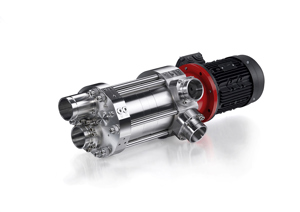
The first active ERD for medium and large plants, the MPE 70 integrates highly effective isobaric pressure exchangers with a low-voltage motor to eliminate the risk of rotor overspin, reduce mixing and biofouling, and facilitate smarter automation. Covering train sizes from 1,500 m3/day and above.
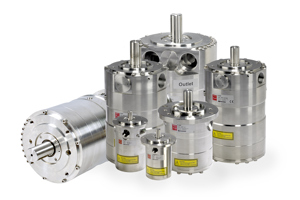
The range of high-pressure APP pumps is optimized for both landbased, off-shore and marine sea water reverse osmosis applications. Available with or without motor.
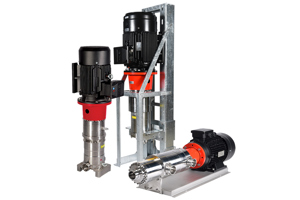
With a 3-in-1 design that integrates highly effective isobaric pressure exchangers with positive displacement booster pumps and electrical motors, active iSave® ERDs deliver big energy savings in small spaces. Covering train sizes from 200-3,000 m3/day
Read our latest news to stay up-to-date with latest developments of our products and solutions. Subscribe to our eNewsletter and receive news and articles in your email inbox.
Follow us to stay up with the latest high news, updates, announcements, and resources from High Pressure Pumps. Of course, we want to hear from you too - so jump in and join the conversation.