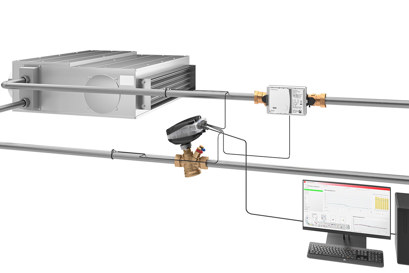

This is where HVAC 4.0 starts, The transition to HVAC 4.0 requires a close cooperation between many stakeholders. And in the end all of them benefit.

Play video
Modern HVAC is complex. Digitalization has changed the way we live, work, and interact with the world, and it’s changed the way HVAC systems are controlled. Danfoss is part of the smart HVAC transition, and we call it HVAC 4.0.
HVAC 4.0 is about providing comfort, economy, and sustainability through intelligent control of heating, ventilation, and air conditioning systems in buildings. With data from smart sensors, remote control makes it possible to optimize an indoor climate around occupancy patterns and usage profiles.
Because ultimately, the smartest buildings are the most energy efficient, comfortable, and convenient. The heart of this is HVAC data—vital for developing intelligent buildings that can become home to smart environments. We develop smart solutions that provide or use HVAC data for Active Energy Management (AEM). The data allows remote commissioning, predictive maintenance, and optimization of heating, ventilation, and cooling systems.
Danfoss provides technologies for improving the efficiency and quality of smart HVAC systems, gathering the key data to drive intelligent solutions for Building Management Systems (BMS) or cloud-based solutions that remotely control and monitor building heating, ventilation, and cooling.
Our smart HVAC systems provide the real-time data you need to make informed decisions about building performance. Our equipment complements cloud-based solutions and allows intelligent software to provide actionable insights. Our innovations help create more comfortable indoor environments, optimize energy usage, and assist in the management of your facilities.
Ultimately, the trend to develop smart buildings is all about making them more energy efficient for lower environmental impact, less strain on the local grid, and lower day-to-day costs to the building owners rather than eating into profits. And, of course, it makes the building more comfortable for people who spend around 90% of their time indoors.
The transition to HVAC 4.0 requires a close cooperation between many stakeholders, all of whom will greatly benefit from the change.
Modular hydronic HVAC solutions for smart buildings, scalable for all applications.
Learn more
Heating and cooling our buildings accounts for about 30% of the final energy consumption in the EU.
The optimization of HVAC systems in buildings requires more than simply improving the efficiency of the heating or cooling generation equipment (e.g. heat pumps, boilers, chillers).
It is also vital to look at how heating and cooling is distributed from the central generator to points of end use, the terminal units such as Fan Coil Units (FCUs) and radiant panels.
EU legislation, including the Energy Performance of Buildings Directive (EPBD) and Ecodesign, has put forward important provisions to optimize technical building systems. But these have not yet fully addressed market failures and therefore the potential of hydronic balancing remains largely unrealized.
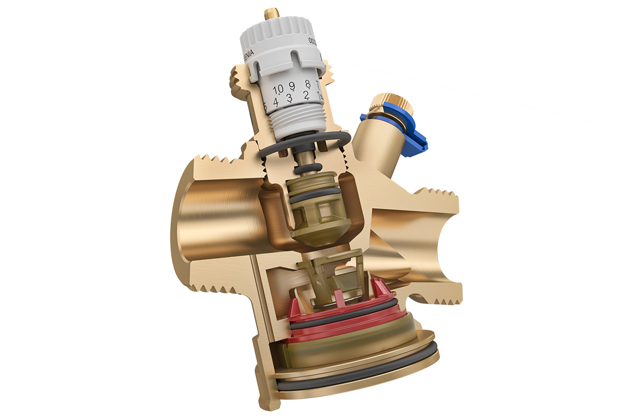
Danfoss AB-QM has been at the forefront of changing the market to more efficient solutions for balancing and controlling modern HVAC systems. The concept of combining a control valve and a built-in pressure controller has now been accepted as a standard in most markets worldwide.
The AB-QM PICV combines precise control with great convenience. It is simple to select, effortless to install and straightforward to set.
By combining multiple functions into one valve the AB-QM is also an extremely cost-efficient choice. Through shortening the design process, time saving during the commissioning stage and by efficiency gains during operation it is a financial no-brainer with either negative or extremely short pay-back times.
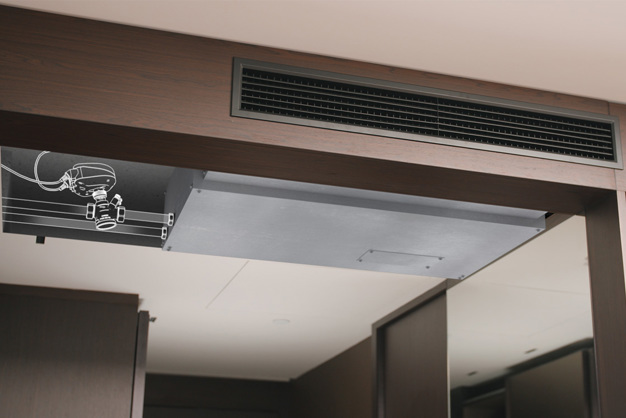
HVAC 4.0 systems are not just smart, they are clever. They know how to spot efficiency problems and how to reduce energy costs.
The key to success is actively using the information collected from building and HVAC data and stored in the Building Management System.
Digital IoT actuators provide substantial data and can be expanded with data from optional temperature and flow sensors.
This helps you to manage the energy flows and plan service and maintenance activities.
Image Copyright: Bert Teunissen/EDGE

Then have a look at our animation video about Danfoss Digital Hydronics.
Terminal units such as fan coil units, chilled beams, or radiant panels, provide heating and/or cooling in each room of a building. They require hundreds or thousands of control valves and actuators for the temperature control. Using smart digital actuators and Pressure Independent balancing and Control Valves (PICVs)passes the buildings’ BMS real-time HVAC data while the dynamic hydronic balancing ensures optimal energy-efficiency.
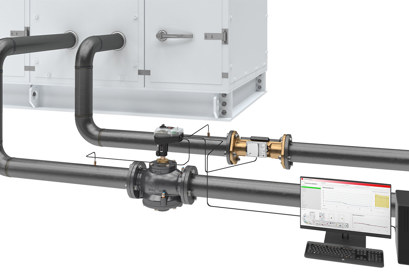
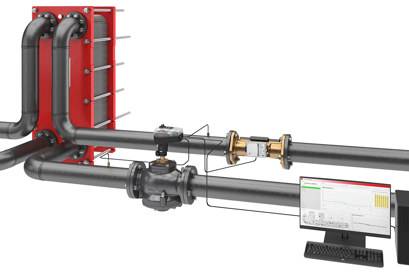
Air Handling Units provide the buildings with fresh air. The heating or cooling coils distribute a large amount of water. Optimizing the flows with large dimension PICVs equipped with smart digital control of supply and/or return temperatures, combined with AC-drives makes the units perform much more efficient.
Domestic Hot Water systems are a challenge to keep safe from legionella. By monitoring the main flow and temperatures at the source and using Thermal balancing valves you provide a safe and reliable solution. Equipped with electronic disinfection controls and connected to buildings’ BMS the data is easy to use for remote monitoring and preventive actions.

Reference case video about the modernization of the HVAC system in the I-tower of World Trade Center Amsterdam, the Netherlands.
MTCV Thermal balancing valves provide a dynamic, temperature based, balancing solution for drinking water applications. Combined with the CCR2+ a smart and energy-efficient electronic control solution for monitoring and disinfecting DHW systems is established.
AB-QM 4.0 Pressure Independent Control Valves (PICVs) are the successor of Danfoss AB-QM. They offer best-in-class specifications and easy installation. The scaling- and clogging resistant design secures and outstanding reliability and long lifetime. The required design flow can easily be established by turning the setting wheel on top of the valve to a presetting between 10-100% of the nominal flow. A wide variety of on/off, modulating and digital actuators is available to accurately control the flow through the valves.
With NovoCon® Danfoss revolutionizes the way hydronic balancing and HVAC control work together. The first of its kind digital HVAC actuators are directly connected with a Building Management System (BMS). This enables System Integrators to design state-of-art, Internet of Things (IoT) solutions.
Pressure Independent balancing and Control Valves (PICVs) provide both a control functionality and dynamic balancing solution for HVAC applications. The valves eliminate flow variations occurring in variable flow systems due to pressure fluctuations at partial load conditions.
This tough and savvy FC102 drive enhances pump and fan applications in building management systems, and runs outdoors in most climates.
The AI-powered software Leanheat® Building helped Hanover’s district heating utility systematically integrate the buildings side of the network and achieve a 5-10% reduction in energy consumption and a 20% reduction in peak loads.
In the city of Rotterdam, the Netherlands, a new education and rehabilitation center called ROeR (ROtterdam education and Rehabilitation center) is being built. Terberg Totaal installatie, responsible for the HVAC systems, choose Danfoss NovoCon® Energy for it’s pluggable daisy-chain cabling to minimize cable lengths. In addition the integrated I/O functionality of NovoCon® provided added value.
Building: Hotel/resort Application: Renovating the Domestic Hot Water (DHW) system to stabilize water temperatures Challenge: Reduce hot water wait times and improve energy efficiency Solution: Multifunctional Thermostatic Circulation Valves (MTCV) were installed on DHW branches for hydronic balancing.
GOTHENBURG, SWEDEN & HELSINKI, FINLAND – This heating season, European energy prices are expected to rise to record levels. One of the largest Swedish professional building owners, Willhem AB, has taken a proactive approach to cutting costs and reducing greenhouse gas emissions. Willhem has signed an agreement with Danfoss to implement the Leanheat Building software starting with 6,500 apartments.
Building: OfficeApplication: Hydronic balancing and remote control of 4-pipe heating/cooling change-over system.Challenge: Gaining BREEAM credits for energy monitoring and ensure fast, fail free installation.Solution: Digital NovoCon S actuator combined with AB-QM 4.0 PICVs and ChangeOver6 Energy. The combination balances the system hydronically, allow remote access via a BMS and provides actual energy consumption data per climate panel during both heating and cooling operation.
Malmegårds Fastighets AB has since the autumn of 2019 implemented a modern and innovative control system, which regulates the heat supply to the building by indoor temperature instead of traditionally controlling by outdoor temperature. By developing the existing control system, the energy optimization service Leanheat has helped Malmegårds to minimize the peak demand, lower the energy consumption and improved the indoor climate for the residents.
Get regular updates about HVAC 4.0 directly to your inbox.