GERMANY: Murrelektronik is a global provider of automation and installation technology with a strong focus on decentralized system architectures. As machine builders look for more flexible alternatives to traditional cabinet-based robot architectures, the company set out to explore a different approach. Together with Danfoss, Murrelektronik developed a robotics concept demonstrating how robotics can be integrated into a decentralized automation architecture. The company autonox Robotics contributed with support in mechanics and commissioning.
The challenge: Extending decentralized automation into robotics
As part of its Vario-X automation platform, Murrelektronik wanted to develop an application test case demonstrating how decentralized automation principles using machine-integrated industrial robotics, and servo drives could be extended into robotics. Vario-X is designed to bring control, power distribution and I/O closer to the machine, providing a modular field-level alternative to conventional cabinet-based automation architectures. The goal was to provide machine builders and system integrators with a practical reference for future modular machine designs.
Traditional industrial robot systems typically rely on centralized architectures, with the robot controller and servo drives installed inside a control cabinet. In a conventional centralized servo solution each motor requires dedicated power and feedback connections, resulting in complex wiring and long cables between servo drives and motors. This increases installation effort, requires larger cabinet space, and can limit flexibility for modular machine design.
To bring the concept to life, Murrelektronik needed a motion solution that could support decentralized installation directly on the robot while providing the precision, safety, and communication capabilities required for robotic applications. Finding a platform capable of combining all these requirements in a single solution proved to be a key challenge.
The solution: Decentral servo drives mounted directly on the robot
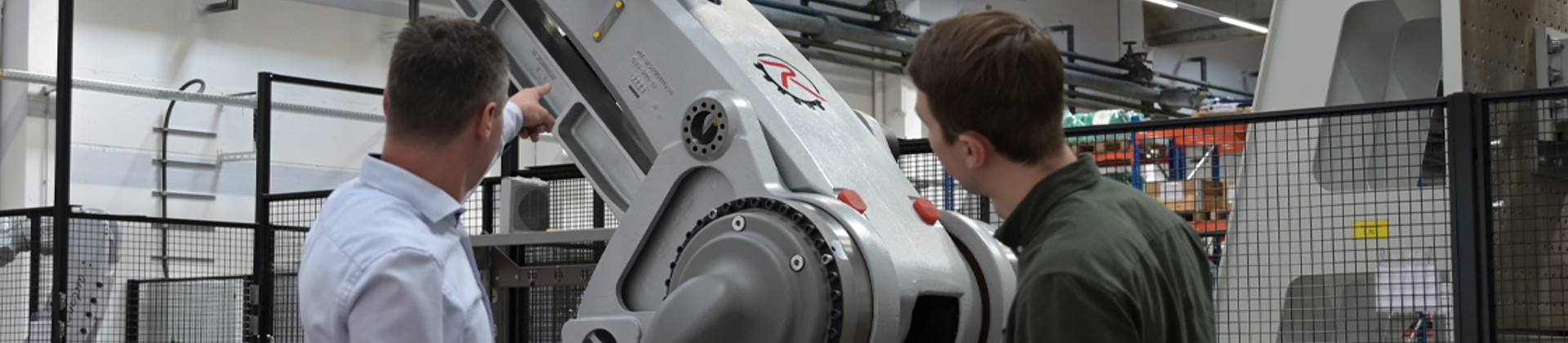
Murrelektronik selected VLT® FlexMotion™ as the motion platform for the project and partnered with Danfoss to develop the concept, and autonox Robotics for support on mechanics. The solution was demonstrated on a 6-axis industrial robot designed for applications such as material handling, assembly, dispensing, and welding.
A key requirement was finding a decentralized servo platform that could be mounted directly on the robot while still providing advanced motion control, functional safety, and open communication. According to Murrelektronik, the Danfoss servo offering stood out by combining these requirements in a single solution.
We evaluated the market for a decentralized servo solution, and the VLT® Integrated Servo Drive ISD® 520 was an excellent fit for our concept. For modern robotic applications, Safe Torque Off alone is not enough. We need advanced safe motion functions that allow us to combine flexibility, productivity, and machine safety.

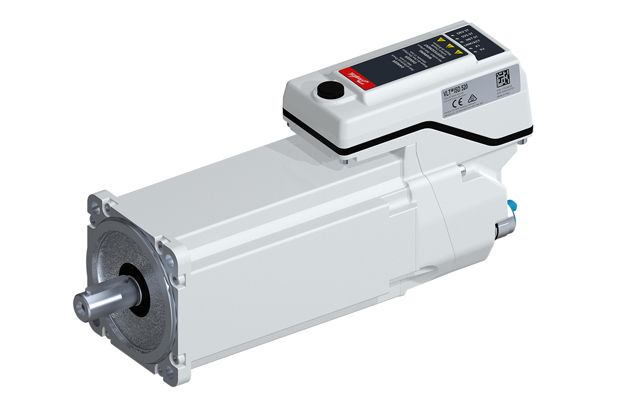
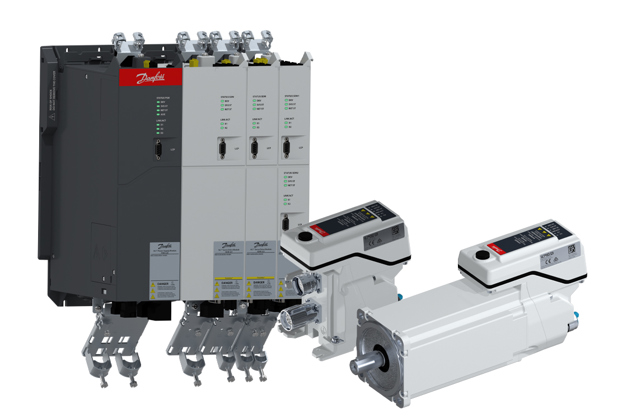
Danfoss provided motion control technology from the VLT® FlexMotion™ portfolio, including the VLT® Integrated Servo Drive ISD® 520, the VLT® Power Supply Module PSM 520, and integrated Decentral Access Module (DAM) option board which supplies centralized power supply for decentralized drives - along with hybrid cables. Together, these components provided the high-precision and dynamic motion control required for the robotic application while supporting Murrelektronik's ambition to demonstrate decentral architecture and reduced cabinet footprint in robotic automation.
The VLT® Integrated Servo Drive ISD® 520 combines a servo drive and servo motor in one compact unit. By locating the servo drives directly on the robotic arm, the solution eliminates the need for traditional cabinet-based servo installations and supports a fully decentralized machine architecture with daisy-chain wiring. Motion control is integrated into the drive, with easy connectivity enabling Murrelektronik to easily integrate the Danfoss solution into their engineering environment.
Seamless integration with Murrelektronik's PLC environment helped simplify system integration and enabled faster commissioning, making it easier to validate the concept.
Although the concept study features an articulated-arm mechanism, the daisy-chain principle truly comes into its own with delta kinematics. From autonox's perspective, the combination of parallel mechanics and drive technology inherent in the daisy-chain principle underscores the clear trend toward decentralized architectures: integrated servo drives, reduced hybrid cabling, and open interfaces enable superior dynamic performance while significantly lowering integration and maintenance requirements.

The VLT® FlexMotion™ portfolio stood out and was selected due to several key advantages:
- Decentral servo drive enabling direct installation of servos on the machine, reducing the space required for control cabinet installation
- High-precision and dynamic motion control required for robotic applications
- Clean and minimal cabling through the daisy-chain concept
- Open communication supporting multiple industrial protocols and new decentralization approach
- Built-in advanced safety features and integrated safety brakes ensuring operator safety while reducing system complexity
- Compact drives enabling direct mounting on the robotic arm
- Broad portfolio with a wide range of servo drive sizes and motor torque variants for each robot axis
- Strong support for modular and flexible machine architecture
- Silicon carbide (SiC) modules for optimized thermal efficiency and performance
A strong engineering collaboration
This was not a standard robot installation, but a strategic validation project aimed at demonstrating a new approach to robotics architecture.
Over a six-month period, Murrelektronik, autonox Robotics, and Danfoss combined their respective expertise in decentralized automation, robot mechanics, and motion control to develop a fully operational robotics platform. Close engineering collaboration between the three partners was key to making the concept work in practice.
By uniting our VLT® Integrated Servo Drive ISD® 520 servo drives with the expertise of Murrelektronik and autonox Robotics, we created a revolutionary robotics solution that reduces installation footprint to a minimum. I'm driven by forging powerful partnerships that solve customer problems and redefine what's possible in automation. Together, we're not just selling components; we're delivering the future of machine building.

The outcome: Scalable blueprint for robotic automation architecture
The project resulted in a tested and fully operational compact decentralized automation architecture, providing a working reference solution for machine builders, OEMs, and system integrators exploring decentralized machine designs. By moving the servo drives directly onto the robot and eliminating cabinet servo drives, the solution reduced control cabinet footprint by 60%. The daisy-chain cabling concept further reduced cable length by up to 80%, helping lower cabling costs while creating a cleaner and more compact machine architecture.
The ISD® 520 supports most major industrial communication protocols, making it easy to integrate into a wide range of automation environments and enabling fast, simple commissioning.
Together, these capabilities demonstrate how decentralized motion control can help machine builders reduce complexity, increase flexibility, and extend decentralized machine architectures into robotics.
Related products

VLT® Integrated Servo Drive ISD® 520 combines a high-performance decentral servo motion drive with a servo motor in one compact unit. It is ideal for applications such as turntables, labelling, capping, and packaging in food, beverage, pharmaceutical, metal forming, material handling, and textile industries.
Related case stories

NETHERLANDS: To meet growing demand for pipe repair clamps and modernize the manufacturing process, Huwa International Pipeline Products set out to automate its pickling line. Pickling is a method of reinforcing welded joints in steel products where the metal is immersed in a bath of nitric acid and then cleaned.
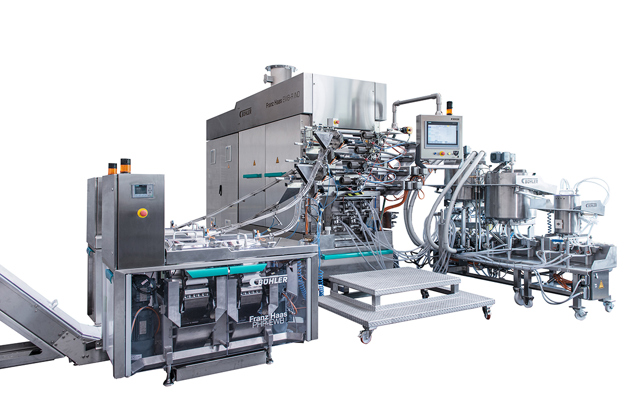
Directly integrated into the VLT® AutomationDrive series, IMC very easily performs positioning and synchronization tasks with and without encoders. At the Bühler Group wafer machine factory in Leobendorf, Lower Austria, the technicians already appreciate these advantages - in particular, the resulting motor independence.