

Sustainability in supermarkets
Unlock the full potential of your supermarket’s sustainability journey. Gain the insights and strategies you need to drive meaningful change and achieve your ESG goals.
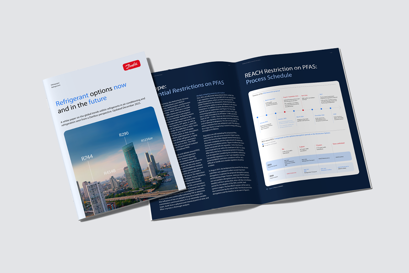
Download the expert paper
Today, sustainability is more than a trend—it's a necessity. Supermarkets around the world are under increasing pressure from consumers and regulators to adopt environmentally friendly practices and demonstrate their commitment to Environmental, Social, and Governance (ESG) criteria. As leaders in the industry, supermarkets have a unique opportunity to make a significant impact on climate change by reducing their greenhouse gas (GHG) emissions.
Our expert paper dives into the latest trends and best practices that supermarkets can implement to meet these demands head-on. Explore the latest trends and best practices in:
- Phasing out high GWP refrigerants such as R-404A
- Moving to natural refrigerants whenever possible from a safety, energy efficiency, and cost perspective
- Increasing energy efficiency
- Implementing maintenance strategies
Acknowledging the different stages of refrigerant transitions globally, this paper highlights universal pathways to reduce energy consumption, emissions, and cost. From mandatory sustainability reporting to voluntary initiatives like the Science Based Targets Initiative (SBTi) and refrigerant and energy-related policies, we cover all the bases to help you navigate the complex landscape of sustainability regulations and expectations.
The paper provides a comprehensive guide to cutting-edge solutions for reducing emissions from refrigeration systems, which are the largest source of on-site GHG emissions for supermarkets. By transitioning to low GWP refrigerants, enhancing maintenance practices, and adopting energy-efficient technologies, supermarkets can not only comply with regulations but also unlock opportunities for innovation and long-term value creation.
Whether you're an investor looking to support sustainable businesses or a supermarket executive aiming to lead your company towards a greener future, this expert paper is an invaluable resource. Download it now to equip yourself with the knowledge and tools necessary to drive meaningful change in your operations.

Cases and resources



Want to know more about refrigerants?
Danfoss is a world leader in the supply of compressors and controls, and has one of the most extensive and complete product ranges in the HVAC/R industry. Our products are found in numerous business areas and applications. We are at the forefront in developing products using refrigerants and in evaluating the viability of new refrigerants as they are introduced.
Learn more about refrigerants