
According to the UN, water scarcity is one of the major challenges facing the world today and tomorrow. The need to find sustainable solutions for new freshwater supplies is urgent; solutions that take the straight road from saline to fresh water at low cost and with minimum impact on climate and nature.
Due to its high energy efficiency and reliability, Sea Water Reverse Osmosis (SWRO) is one of the most sustainable and cost effective solutions for converting sea water to potable fresh water. At the same time, SWRO technology undergoes rapid development to improve energy efficiency and support large-scale freshwater production.

Extremely low energy consumption
Ultra-low maintenance costs
Simple to operate
Minimal service and long service intervals
Small footprint but effective, compact and light in weight
Danfoss is committed to supporting the sustainable desalination industry with energy efficient SWRO solutions. The product offering includes four core technologies, comprising high-pressure pumps, AC drives, energy recovery devices and pressure and fluid control devices. These combine into highly efficient and lasting water purification solutions that return energy savings of up to 65% compared to traditional centrifugal pump systems without energy recovery devices and drives.
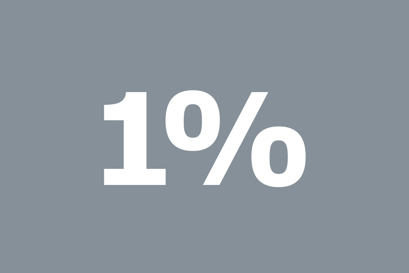
Today, 1% of the global water supplies come from desalination. The share of desalination is expected to grow significantly.
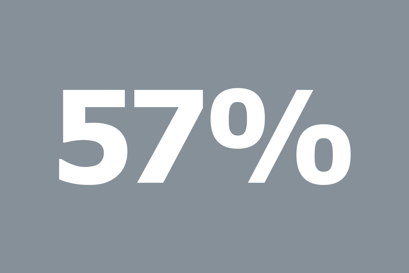
The past five years have seen a 57% increase in desalination plant capacity.
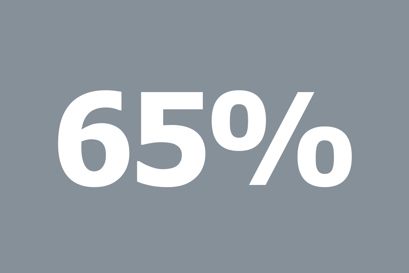
Optimized technologies combined with salt water reversed osmosis experience can increase energy efficiency by up to 65%

At large scale, reverse osmosis plants are capable of providing freshwater to entire cities while compact solutions are ideal for supplying hotels and resorts, ships, and offshore facilities with clean water.
Download brochure
Water is vital for life. Shortage of fresh water has spurred innovation to find efficient and climate-friendly solutions that turn seawater into fresh, clean water.
Reverse osmosis is the leading technology. It is simple, reliable and requires less energy than other desalination techniques.

65% savings on your desalination systems with Danfoss high-pressure pumps, Danfoss pressure transmitters, Danfoss drives and Danfoss energy-recovery devices (iSave) compared to desalination plants with centrifugal pumps and without energy-recovery devices and drives.
Read the full article
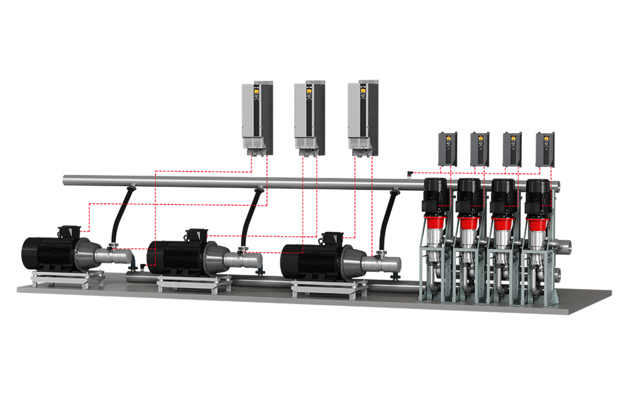
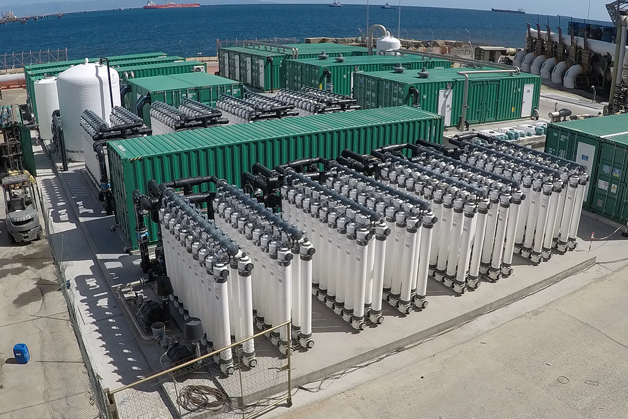
Technologically advanced solutions allowed Acciona to create an innovative sea water reverse osmosis (SWRO) modular desalination plant for the Sarlux refinery in Sardinia, Italy, reducing energy consumption compared to traditional solutions.
Read the full case story
VLT® AQUA Drive FC 202 controls all types of pumps and comes equipped with a cascade controller.
The first active ERD for medium and large plants, the MPE 70 integrates highly effective isobaric pressure exchangers with a low-voltage motor to eliminate the risk of rotor overspin, reduce mixing and biofouling, and facilitate smarter automation. Covering train sizes from 1,500 m3/day and above.
The range of high-pressure APP pumps is optimized for both landbased, off-shore and marine sea water reverse osmosis applications. Available with or without motor.
With a 3-in-1 design that integrates highly effective isobaric pressure exchangers with positive displacement booster pumps and electrical motors, active iSave® ERDs deliver big energy savings in small spaces. Covering train sizes from 200-3,000 m3/day
For use in corrosive environments and with aggressive media, Danfoss offers the robust DST P40I pressure transmitter made of Titanium and with ceramic pressure sensing element. DST P40I is optimized for use in applications such as desalination systems, seawater cooling, and chemical processing.
Norwater’s modular SWRO systems are tailored for land-based aquaculture, combining compact design with oil-free, energy-efficient operation. With Danfoss APP pumps and iSave ERDs at their core, the systems deliver clean, reliable water at scale for fish farms in Norway and beyond.
In Spain’s Canary Islands, DESALRO® 2.0 achieves record-low energy use of 1.794 kWh/m3 using Danfoss APP 65 pumps. Developed by the Canary Islands Institute of Technology, this modular SWRO system is designed for replication across water-scarce regions with minimal redesign.
After Cape Town’s water crisis, the V&A Waterfront invested in a new SWRO plant to ensure self-sufficiency. PROXA designed the two-train, 6,000 m³/day system using Danfoss APP pumps and iSave ERDs to deliver energy-efficient output in a compact existing space.
Hyrec has pioneered a large-scale OARO brine mining plant that produces 220,000 tons of food-grade salt annually. By using Danfoss APP pumps and iSave ERDs for pre-concentration, the innovative solution optimizes energy efficiency, reduces costs, and ensures reliable operation in a remote location.
Salt Separation Services boosted capacity by 75% and significantly reduced SEC by retrofitting a luxury cruise ship’s SWRO plant with a Danfoss APP pump and iSave ERD – all in the same tight space in the ship’s engine room.
When a Spanish engineering company needed one compact, reliable, and energy-efficient SWRO solution for three separate end users, Gefico’s engineers proposed a compact, modular train design that could be both containerized and built on skids. Danfoss’s ceramic APP pumps and iSave ERDs are at the heart of the seven trains that Gefico designed and produced
Danfoss APP and iSave® platform enhance brine mining efficiency by using advanced reverse osmosis (RO) technology to reduce costs and emissions. With high-efficiency APP pumps and iSave ERDs, operators achieve precision control and adaptability, making brine mining economically viable and environmentally friendly.
The mining of SWRO brine for valuable chemicals has begun – and has the potential to disrupt the entire SWRO industry.
In this blog, we examine what makes brine mining interesting for SWRO operators and provide an overview of the key issues that might affect its adaptation.
Aquaculture is growing worldwide, and we now eat more farmed salmon than wild-caught.
Read our latest blog to learn how SWRO plays an innovative and important role in keeping salmon raised in marine aquaculture free from parasites through freshwater treatment on specially built wellboats.
Maintenance of high-value assets is critical to mitigating operational risks. As the SWRO industry evolves, more owners and operators will transition from simple corrective and preventative maintenance strategies and increasingly apply data-supported insights to optimize performance and profits.
The world’s increased use of renewable energy sources has the potential to reduce SWRO’s carbon footprint and increase its affordability and availability.
Energy efficiency has a minor impact on SWRO’s CAPEX but a huge impact on OPEX & TCO
For further information, please contact us.