
Danfoss Impact Issue No. 8
Our latest Impact paper outlines the opportunities to leverage data centers to strengthen global energy systems.
Download the Impact paper now
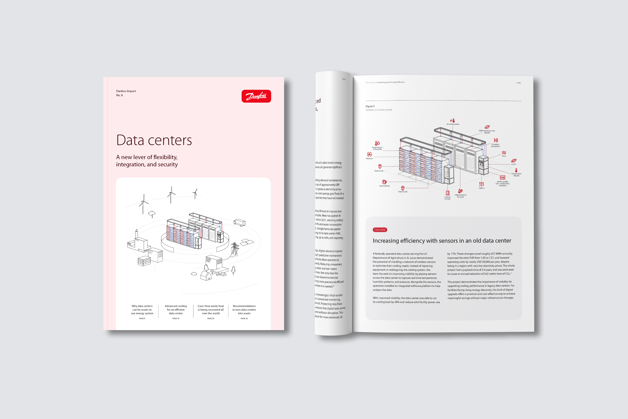
Why data centers can be assets to our energy system
Digitalization is advancing at an extraordinary pace, and the rapid adoption of AI is reshaping every part of society. At the heart of this transformation are data centers, providing the digital backbone that enables modern society to progress.
Demand for data center capacity is accelerating far beyond historical rates. Careful planning and integration of data centers into our energy system is, therefore, more important than ever and represents an opportunity to build a smarter, more resilient energy system.
Data centers are a prerequisite to future technological advancements and for developing the solutions needed to decarbonize our economies. They hold the power to significantly improve energy efficiency in virtually all sectors, from transport to heavy industry.
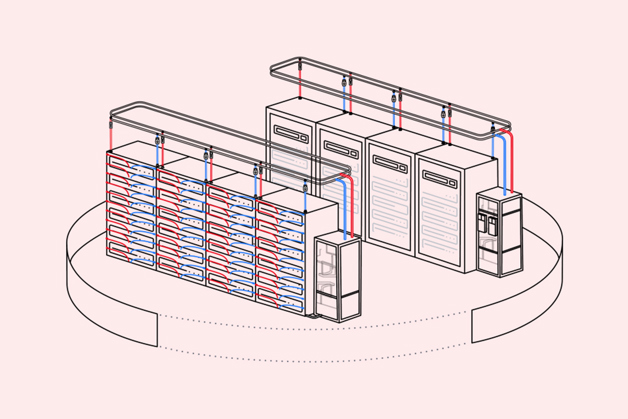
We know that data centers consume significant resources as they carry out the essential work of delivering the digitalization that we’re reliant on. Their impact on the energy system is already significant and will intensify further unless we redefine the way we handle their rapid expansion.
Seeing data centers solely as resource consumers only tells part of the story. In reality, data centers represent one of the greatest untapped opportunities to strengthen global energy systems. Through flexible operations, integration with other industries, recovery and reuse of waste heat, and resource efficiency, we can turn these resource-hungry facilities into great assets.
If done right, data centers can reduce grid investment needs, strengthen energy resilience, and protect consumers from surging electricity prices. Ultimately, they can transform and innovate our industry, thereby strengthening our combined efforts to boost competitive decarbonization.
Now, we must act with both urgency and vision. We must make resource efficiency a non-negotiable foundation of data center operations and plan for data centers to become key partners in the flexible, efficient, and resilient energy system of the future.
Only got two minutes?
These are the key takeaways

While AI consumes a lot of energy, it can also be deployed as a useful tool for making our entire energy system more resilient and efficient. According to the International Energy Agency (IEA), AI has the potential to deliver emission reductions equivalent to around 5% of global energy-related emissions in 2035 through energy efficiency gains across transport, buildings, and heavy industry.

Most of the energy used inside a data center comes from servers and cooling, making these the most important areas for reducing energy consumption. Digital tools like sensors, AI-supported controls, and variable speed drives have the potential to lower energy for cooling by 10%-20% with short payback times.

Every unit of electricity used in a data center eventually turns into heat, and most of that is wasted instead of being reused today. With the right location and planning, this heat can be captured and used to heat nearby homes, businesses, and industries from other important institutions.

Moving non-urgent computing tasks out of peak hours when the grid is most stressed can free up capacity across the grid. The flexible operation of data centers can cut grid costs by up to 5% while reducing emissions by as much as 40%. If data centers operated flexibly even 1% of the time, today’s long grid connection queues would shrink dramatically.
If done right, data centers can reduce grid investment needs, strengthen energy resilience, and protect consumers from surging electricity prices.

Data center solutions
Danfoss Impact Series
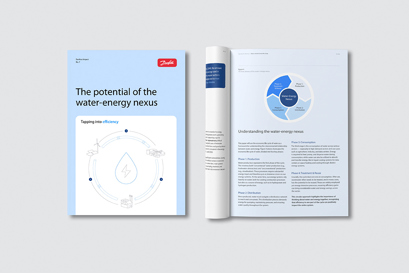
Our latest Impact paper emphasizes the critical importance of seeing water and energy as interdependent resources.
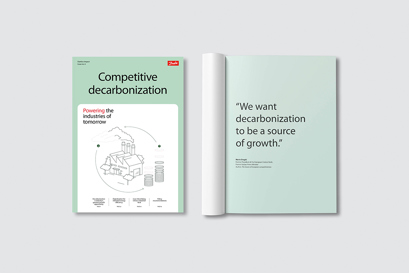
This Impact paper provides a clear guide on how companies can strengthen their competitive advantage through decarbonization, electrification, and energy efficiency.
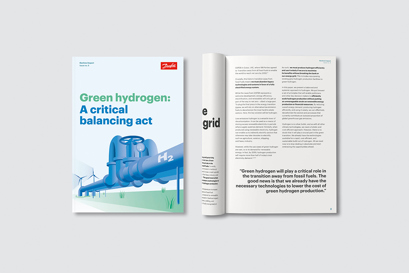
Green hydrogen will play a critical role in the transition away from fossil fuels and in decarbonizing hard-to-abate sectors, such as long-distance shipping and international aviation.