
Special Issue
By increasing efficiency, electrifying, and integrating industrial processes with existing technologies, the EU can decarbonize industry while increasing economic growth, innovation, and energy independence.
Download the full Special Issue
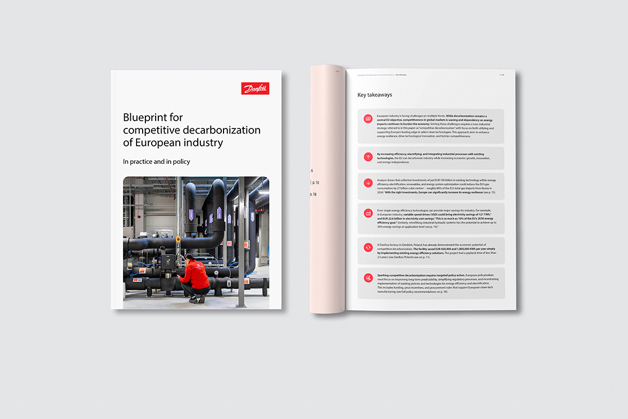
Key takeaways

While decarbonization remains a central EU objective, competitiveness in global markets is waning, and dependency on energy imports continues to burden the economy.

By increasing efficiency, electrifying, and integrating industrial processes with existing technologies, the EU can decarbonize industry while increasing economic growth, innovation, and energy independence.

Analysis shows that collective investments of just EUR 100 billion in existing technology within energy efficiency, electrification, renewables, and energy system optimization could reduce the EU’s gas consumption by 27 billion cubic meters.

Even single energy efficiency technologies can provide major savings for industry. For example, in European industry, variable speed drives (VSD) could bring electricity savings of 121 TWh, and EUR 22.6 billion in electricity cost savings.

A Danfoss factory in Grodzisk, Poland, has already demonstrated the economic potential of competitive decarbonization. The facility saved EUR 420,000 and 1,800,000 kWh per year simply by implementing existing energy efficiency solutions.

European policymakers must focus on improving long-term predictability, simplifying regulatory processes, and incentivizing the implementation of existing policies and technologies for energy efficiency and electrification.
Case story
Policy recommendations
Danfoss Impact Series
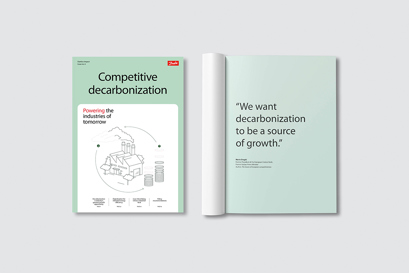
Our latest Impact paper provides a clear guide on how companies can strengthen their competitive advantage through decarbonization, electrification, and energy efficiency.
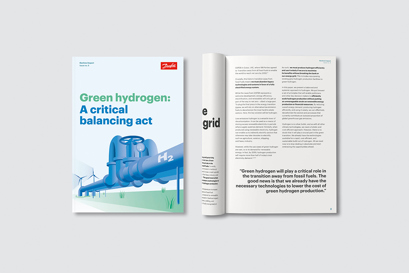
Green hydrogen will play a critical role in the transition away from fossil fuels and in decarbonizing hard-to-abate sectors, such as long-distance shipping and international aviation.
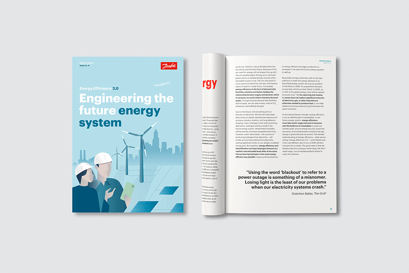
Energy efficiency, electrification, demand-side flexibility, conversion, storage, and sector integration are integral for a future energy system enabling an energy grid powered by renewables.