What is renewable energy?
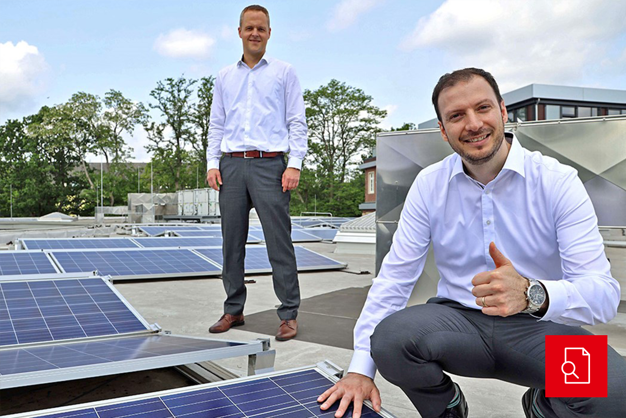
Renewable energy comes from carbon neutral sources, which are naturally replaced on a human timescale. Renewable energy sources include:
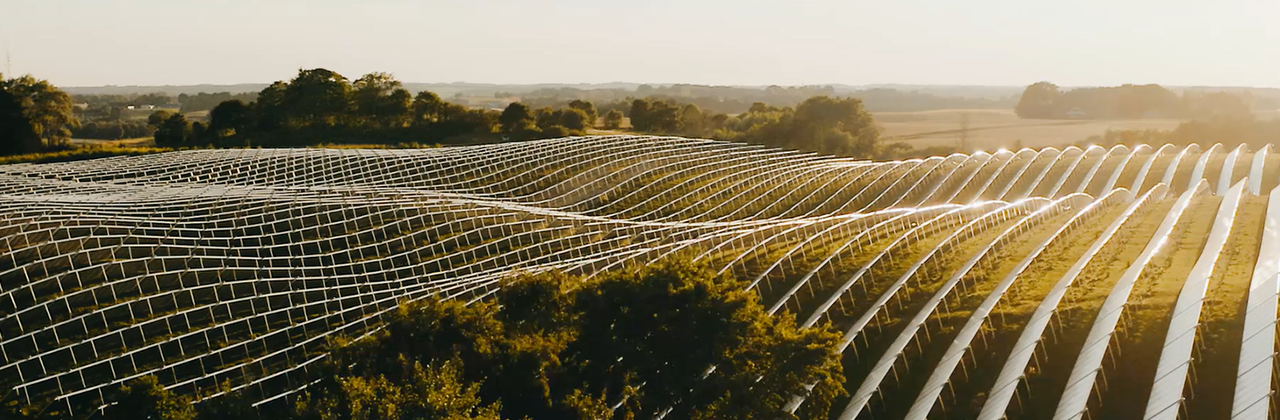
- solar energy
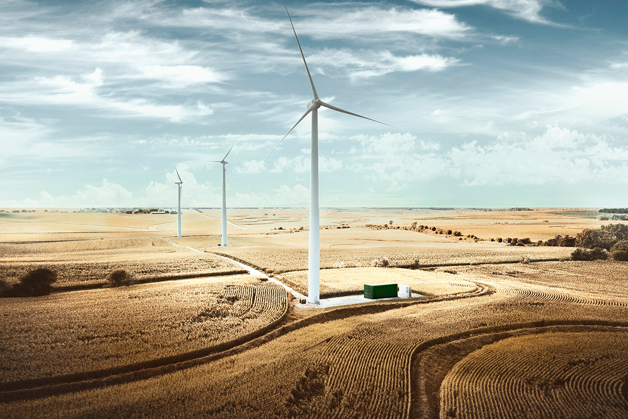
- wind energy
- hydropower
- tidal power
- geothermal energy
These natural resources can deliver clean energy – and along with energy efficiency technologies, they can help free us from fossil fuels and drive the fight against climate change.
Why is renewable energy important today?
Renewable energy sources have an increasingly large share of our global final energy consumption and prices are coming down rapidly – this is good news for the planet. Energy accounts for two thirds of all CO2 emissions and can provide 90% of emission reductions needed to achieve our Paris Agreement ambition. This means a complete transformation of the energy system as we know it today and will require substantial, upfront investment. To achieve climate neutrality, we need substantial action and an ambitious strategy that includes a fast renewable energy roll out.
The potential for renewable energy is already here
The share of renewables in power generation is expected to reach 30% in 2022, up from 24% in 2016. Wind and solar together will represent more than 80% of global renewable capacity growth in the next five years, making system integration and sector integration increasingly important to ensure a stable grid.
What are the challenges to a higher level of renewable energy?
Nature is not always reliable: Sometimes the wind stops; sometimes it gets cloudy - so what do we do when there is no wind or sun? The challenge with intermittent renewable electricity is to match energy supply and energy demand.
With the fluctuating nature of renewable energy, the first priority it is not how much renewable energy we can generate but how much we can integrate into our energy system. With a growing share of renewables and electrification and renewable energy being central to many countries’ decarbonization strategies, the IEA foresees an increased need for grid robustness and flexibility, to avoid weak grids becoming the Achilles heel of electrification (IEA, 2020).
| Renewables account for 95% of the increase in total power capacity from 2020 through 2025 (IEA, 2020) |
What solutions are there to decarbonize energy?
Renewable energy sources provide a sustainable and carbon-neutral way to generate energy, but around 40% of our opportunity to decarbonize comes from energy efficiency initiatives. These include sector integration, waste heat, district heating systems, sustainable heating and cooling, and a variety of other energy efficiency technologies.
So, both energy generation and energy efficiency must work together to create an overall sustainable energy program for the future.

What is sector integration?
Sector integration, in essence, is about creating a smart energy system that connects energy-consuming sectors to the power grid in a way that ensures that the balance between energy production and energy use can be optimized.
This integration is going to be a key instrument in decarbonizing energy systems and reducing CO2-emissions in order to combat climate change. It offers flexibility and functional storage capacity to alleviate the challenges of renewable energy fluctuation.

Can sector integration save costs?
Enabling interaction between the energy usage and supply sectors will minimize the cost of the energy system, improving its overall efficiency and allow an increased use of renewable energy sources. In this way it can help decarbonize the energy system in a cost-efficient way. For example: Electricity produced at night from wind can be efficiently and cost-effectively converted and stored in the form of hot water, which is then used to heat and cool buildings next day. This is referred to as functional or thermal energy storage.


How does district energy work to increase the uptake of renewables?
At times of excess electricity production, heat can be generated using large-scale heat pumps and electric boilers. When this heat exceeds the heat demand, the energy can be stored with very high efficiency in thermal storages for later use. The district energy system can then act as a virtual battery.
Combining heat and power solutions can add much needed flexibility to power grids.

District energy adds flexibility to the energy system
An optimal solution, both in terms of cost and energy efficiency, is to channel excess electricity generation into district energy systems. This also boosts the use of renewable energy in district heating systems. District energy can also be directly powered by renewable energy, for example with solar heating.

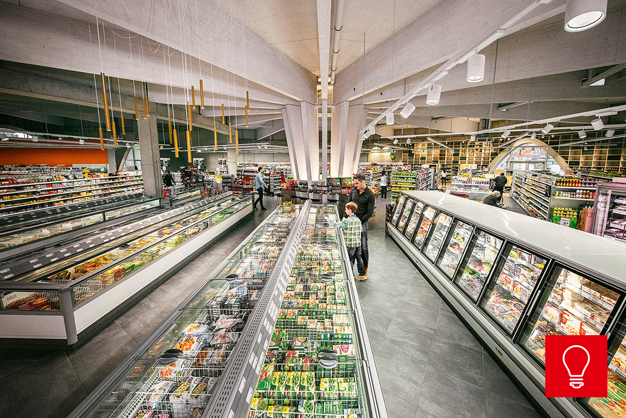
Supermarkets offer great green savings!
A supermarket has a high thermal capacity due to the amount of food it cools or freezes. This means it can play a part in a stabilizing role as ‘virtual power plant’ by adjusting its electricity consumption. Most supermarkets are energy managed by a central controller connected to multiple cooling cases to control temperature levels.

How does digitalization help reduce energy consumption?
Digitalization can help give us a more energy efficient, resilient and sustainable energy system. In the heating and cooling sector, digital technologies will help manage the increasingly complex district energy systems by integrating a multitude of intermittent renewable and low carbon energy sources as well as connecting thermal and electricity infrastructures.

What needs to be done to get us to 100% renewable energy?
- We must apply an ‘energy efficiency first’ principle because it is the most cost-efficient way to decarbonize the energy system, and enables a quicker, and cheaper, renewables roll-out.
- GHG reduction targets should first and foremost rest on a strong regulatory framework and targets on energy efficiency and renewable energy. In addition, CO2 pricing is an important, supplementary tool to put a price tag on emissions and further trigger a fuel switch.
- We need to ensure that power price signals incentivize/reward energy storage and other flexibility services. For example, electricity should be cheaper when there is a lot of renewable energy and more expensive when there is not - and it should be attractive to store and sell back energy to the grid.
- We need to ensure that electricity prices reflect the energy mix to encourage the uptake of renewables, for example, through CO2 pricing.
What Danfoss is doing to increase the uptake of renewable energy?
In December 2019, Danfoss was the first global technology company to join all three business action initiatives under The Climate Group, an international non-profit organization dedicated to accelerating climate action. EP100, EV100 and RE100, committing to doubling energy productivity, having a 100% electric company car fleet, and using 100% renewable electricity.
Renewable energy FAQ
Explore related articles