
Videos
Videos from the booth

Join us at the EuroHeat & Power Congress in Rotterdam as we dive into the future of district energy with Anton Koller, our divisional president for HydronicS. Anton shares his insights on the challenges and solutions for the heat transition, highlighting the importance of CO2 pricing, energy efficiency, and sector integration. Discover how digitalization and waste heat can drive the journey towards a carbon-neutral society. Don't miss this discussion on the transformative potential of district heating and the role of advanced optimization software.

Join us as we explore the incredible opportunities and challenges in accelerating the decarbonization process. In this video, we discuss how integrating traditionally siloed sectors can create efficient and innovative energy solutions. Discover how waste heat from data centers can support district energy networks and how hospitals are utilizing integrated heat pumps to manage heating and cooling needs, while sharing the hospital's excess heat throughout the district energy network.

Decarbonizing buildings is essential for reducing emissions and meeting our energy and climate objectives. The heat transition is a critical part of this effort.
In this video, Olivier Rapf, Executive Director from the Building Performance Institute discusses the importance of aligning heating supply decarbonization with demand reduction in buildings. Developing solutions in isolation could lead to failure; instead, we must synchronize renovation plans with heating supply decarbonization.

Carbon pricing, emissions trading scheme and the Fit for 55 package all have significant roles in transforming the economics of clean heating and we talk about it all in this interview with Andreas.
He explains how carbon pricing supports decarbonization and alleviates energy poverty, the role of the emissions trading scheme in strengthening existing policies and making clean heating more affordable over time and the importance of government preparation to ensure a smooth transition, inform citizens, and support households in making the right investments.
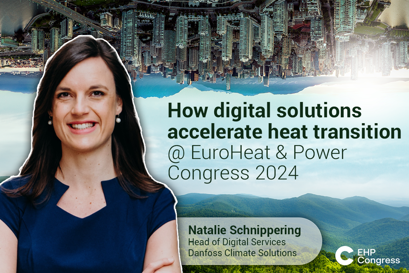
Digital solutions can make a significant difference by integrating different heat sources efficiently and optimizing energy use from demand to supply. Join us in this conversation with Natalie, our Head of Digital Services, as we touch upon the complexities of decarbonizing heat and accelerating the heat transition.
We discuss the challenges involved in decarbonizing heat, how we’re thinking from end to end—from demand to supply—and helping our customers bridge the gap with effective solutions, and how breaking down silos and connecting various sectors can lead to global optimization.
As we strive to meet global climate goals, the integration of renewable energy sources and digital solutions becomes crucial. In this video we highlight the necessity of collaboration among district heating utilities and building owners to fully utilize the benefits of renewables such as geothermal and solar thermal energy.
Here we are faced with a lot of challenges—like the current slow pace of electrification in Europe and the need to accelerate the deployment of renewable energy technologies—and opportunities—harnessing waste heat from industrial processes and municipal sources and integrating it into district energy networks.

Join us as we discuss the challenges and opportunities in decarbonizing heat at both EU and local levels and the important role of district heating.
We cover key topics like the role of cities in heat transition and the implementation of the Green Deal, taking proactive measures to alleviate energy poverty and the necessity of guaranteed funds at the EU or national level to finance district heating investments and make it accessible.

Join us as Andrea shares insights on the transformation of district energy and the impact of ESG (Environmental, Social, and Governance) policies.
ESG is a key policy, requiring municipalities to map heat availability and needs, which is crucial for optimizing energy use. We also highlight the various opportunities that renewable and alternative energy sources present and the importance of ESG compliance for companies, including Danfoss, in achieving carbon neutrality.
Andrea emphasizes the exciting opportunities for companies to not only create jobs but also generate heat, supporting local communities and enhancing their sustainability efforts.

Join us as Lennart from TU Delft shares insights on the university’s ambitious project to transform their heating systems in the campus buildings—transitioning from gas to geothermal heating—and their collaboration with Danfoss.
He talks about TU Delft’s commitment to becoming a sustainable campus by 2030, their focus on significant CO2 reductions, and their efforts to reduce heating network temperatures to accommodate geothermal heat. We were selected as a key supplier for the project, ensuring reliability and consistency in the heating system.
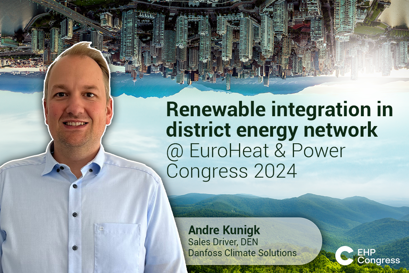
Major transformations are happening in district energy networks. Learn about the importance of integrating more renewables, decarbonizing the grids, and the role of Danfoss solutions in optimizing district energy systems.
Andre talks about reducing grid temperatures to accommodate renewable energy sources effectively, the use of software tools to optimize grid balancing and planning, and the role of AI-driven solutions like our Leanheat in optimizing the heating curve of buildings.

Micro grids have a growing importance within district energy and hold big potential for rural areas. Discover the benefits, challenges, and success criteria of implementing micro grids, and how our technologies are supporting this transformation.
Some of the key topics we cover are the idea of micro grids and their significance in extending district heating to rural areas, the use of local heat sources and how Danfoss supports micro grids with both mechanical solutions and digital tools.
Saška also emphasizes the transformative potential of micro grids in providing decentralized heating solutions and the importance of integrating digital solutions for efficient operation and optimization.

Unlock the grid
Unlock the grid’s full potential with end-to-end district energy solutions and get actionable insights enabling continuous optimization and optimal temperature control on both the demand and supply side.
Learn more about district heating
Meet the Experts

On June 4, Anton Koller, Divisional President, HydronicS, Danfoss Climate Solutions will participate in the opening session, “Scale-up, CO2 down!” A strong advocate for ambitious policies within energy efficiency and renewable energy, Anton will address how we can make our buildings more energy efficient to meet the Fitfor55 targets.
Anton has decades of leadership experience from global industrial companies within IT, district energy, green cities, energy-optimized buildings and engineering. He joined Danfoss in 2003.

Andrea Voigt, Vice-President, Head of Global Public Affairs & Sustainability, Danfoss Climate Solutions will conduct the session, “Navigating through transformation” on June 4. The panel discussion will focus on ESG and digitalization and feature essential stakeholders from across the value chain, including Danfoss Head of Digital Services, Natalie Schnippering.
Prior to joining Danfoss in 2021, Andrea was Director General of the European Partnership for Energy and the Environment (EPEE). She is a member of the Refrigeration and Technical Options Committee (RTOC) under the United Nations’ Montreal Protocol, Vice-President of the European Heat Pump Association (EHPA) and member of the Executive Board of the UN-hosted Alliance, The Cool Coalition.
Natalie Schnippering has a background in high-tech and IT markets with a focus on IoT, AI and Digital Services. Natalie holds a dual degree in International Business from DHBW in corporation with IBM, as well as an Executive MBA from ESCP Europe.
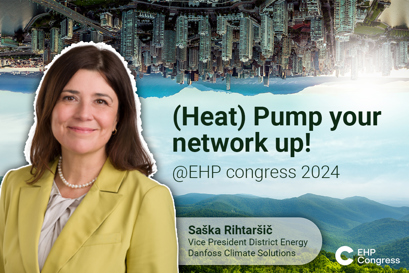
On June 5, Saška Rihtaršič, Vice-President, District Energy, Danfoss Climate Solutions will participate in the session, “(Heat) Pump your network up!”, focusing on the impact of the European Heat Pump action plan and the role large heat pumps will play in decarbonizing district energy networks.
Saška joined Danfoss in 1999 and has a background in mechanical engineering. She is passionate about digitalization, end-to-end optimization and modernization of district heating technology.
News

Danfoss Heat Selector
The Danfoss Heat Selector is a best-in-class online selection tool that optimizes planning process for heating application experts.
Learn more about Heat Selector
Danfoss addresses how to scale up decarbonization efforts with district heating at Euroheat & Power Congress 2024
Danfoss is once again participating in the Euroheat & Power Congress, taking place in Rotterdam, Netherlands from June 3-5, 2024. This year’s theme, “Scale up, CO2 Down!”, will examine the most promising pathways for decarbonizing district heating and cooling, and how to spur local change for global impact.