
We have dealt with SWRO’s carbon footprint in two other blogs. As we pointed out in The carbon footprint of potable water, desalinated water is indeed the most energy-intensive water source. However, as discussed in A brief history of the energy intensity of desalination, SWRO’s energy consumption and resultant carbon footprint have decreased significantly over the last few decades as energy-efficient designs and components have become increasingly commonplace, and renewable energy sources power a growing share of electricity needs.
But we have not yet looked at SWRO’s environmental impact on marine environments. This occurs primarily at intakes and outfalls, the points at which SWRO plants come into direct contact with the sea. However, attributes of the feed seawater and its pretreatment also play a role.
The quality of seawater matters to SWRO’s pretreatment and impact on marine environments
Seawater is not just seawater. Its inorganic and organic constituents vary significantly according to location and influence SWRO’s environmental impact and operating costs due to membrane fouling.
Membrane fouling is a significant challenge for SWRO. When membranes are blocked, flux decreases and permeate production declines, reducing the plant’s output of desalinated water over time; more pressure is required, which consumes more energy and increases the demands on high-pressure pumps; membranes must be cleaned and replaced more frequently. And, as we will see below, some strategies to combat membrane fouling have environmental consequences.
After H2O, dissolved inorganic chemicals constitute the largest share of seawater, typically 35,000 – 40,000 mg/L. These inorganic constituents are primarily salt, i.e., sodium and chloride. While the salinity of most oceans ranges between 34-36 ppt, it averages about 38 ppt throughout the Mediterranean and climbs as high as 40 ppt in its eastern end during summer. In addition to sodium chloride, seawater also contains a range of other dissolved inorganic chemicals, including magnesium, sulfate, calcium, potassium, and inorganic carbon – all of which are removed during the RO process and then returned to the sea in more concentrated form as brine. As we will see below when we discuss outtakes, brine impacts marine organisms and environments.
But inorganic chemicals in feed water have other consequences for the environment. For example, crystalized salts, oxides, and hydroxides all contribute to scaling, or precipitation fouling. SWRO operators try to prevent inorganic fouling in pretreatment with scale inhibitors, which contain chemicals that can harm marine life.
Non-biological and inorganic particles, such as silt and clay, present another challenge for SWRO. These suspended solids and colloidal materials also foul membranes and must be removed in pretreatment via filtration or coagulation, processes that have environmental consequences of their own.
Finally, we must also consider seawater’s organic constituents. Plants, algae, and a range of microorganisms make up a much smaller share of seawater than inorganic constituents, averaging just 1-4 mg/L, but have a relatively greater effect on SWRO plants’ environmental impact because they are a major cause of membrane fouling. Biofouling on membranes is combatted in pretreatment filtration – intake towers, piping, etc. – but also with chlorine and other biocidals that impact marine environments.
In addition to the quality of the feed seawater, two other features of SWRO plant design are critical to the environment: intakes, where seawater is drawn into the plants, and outfalls, where the brine, SWRO’s highly saline waste by-product, is discharged back into the sea.
Intake location and design can mitigate SWRO’s environmental impact
SWRO plants rely on offshore intakes to provide feed water and at the same time keep marine life out of the treatment system due to impingement and entrainment.
- Impingement: Larger aquatic organisms, e.g., adult fish and crabs, get impinged (or stuck) in the mesh screens around the seawater inlet and are injured or die. According to a study undertaken in California, the magnitude of impingement varied significantly among the 19 desalination plants that were investigated, but the average impingement for a large desalination plant (50 MGD or 189k M3/day) was estimated to be 2 pounds (0.9 kg) per day, less than the daily food intake of one pelican, which consumes up to four pounds (1.8 kg) per day.
- Entrainment: Smaller organisms, e.g., fish and crustacean larvae and algae, tiny enough to pass through any mesh screen at the inlet, enter the SWRO system and die. According to the same Californian study, entrainment in an average large desalination plant removes an estimated 235 million larval fish annually. While the number is huge, so is the total number of fish eggs, fish larvae, and other zooplankton present in seawater. For example, a single female cod produces hundreds of millions of eggs in its lifetime; one female halibut can produce a billion eggs in its lifetime.
Intake location and design matter, both to decrease impingement and entrainment and to reduce the need for pretreatment to mitigate membrane scaling and biofouling. The good news is that there are a variety of intake design options that significantly reduce SWRO’s environmental impact:
- Locating intakes in areas with less marine life, for example, away from estuaries, reduces impingement, entrainment, and pretreatment
- Deterrents and barriers such as nets and passive screen intakes reduce impingement and entrainment
- Low-velocity intake designs reduce entrainment
- Subsurface vertical and slant wells reduce impingement, entrainment, and pretreatment, especially for small and medium-sized SWRO plants; however, over time the salinity in these wells often increases due to seawater infiltration if more water is withdrawn than natural replenishment can support
- Subsurface gallery intake systems reduce impingement, entrainment, and pretreatment, also for larger SWRO plants
Finally, let’s not forget that restocking affected species also mitigates the effects of impingement and entrainment. Of course, all of the above have pros and cons – and costs – that must be considered when designing SWRO plants.
Returning brine to the sea: The importance of outfall location and design to minimize SWRO’s impact on marine environments
SWRO plants produce an average of 1.5 liters of brine, SWRO’s highly saline by-product, for every liter of fresh water (permeate) they provide. Although it is possible to dispose of brine in other ways (e.g., evaporation, crystallization, and deep well injection) an estimated 90% of the world’s desalination plants return brine directly to the sea, in a process known as “surface water discharge”.
Brine’s main environmental impact is due to its salinity, which at 55-80 g/L is roughly twice as high as seawater and affects some plants and animals. However, SWRO brine’s slightly higher alkalinity, concentrations of chemicals used to combat scaling and biofouling, and metals from the SWRO plant’s pipes and pumps are also of concern, although to a lesser degree.
Brine disposal is especially critical in benthic (seafloor) ecosystems in areas with low circulation, i.e., those with poor hydraulic connection to oceans. This includes many regions where SWRO is prevalent, e.g., the Mediterranean Sea, the Arabian Gulf, and the Red Sea.
SWRO plant designers employ several strategies to mitigate brine’s impact on marine environments:
- Locating discharge pipes away from environmentally sensitive areas and in areas with greater circulation
- Using multi-port diffusers to spread the brine over a larger area than a single-port diffuser
- Discharging brine to injection wells or beach and offshore galleries and trenches
The need for pre-design environmental impact assessments for SWRO plants
As SWRO grows worldwide, so does its environmental impact. Therefore, it is natural that governments increasingly require environmental impact assessments (EIAs) before approving the construction of new SWRO plants – especially large ones.
However, as the United Nations Environment Program (UNEP) points out in a recent report, countries around the world legislate and govern EIAs quite differently. Some nations have tightened requirements for EIAs; others have not. Some encourage public participation in EIA processes; others do not. Some allow implementing agencies a high degree of discretion in applying regulations; others are more stringent.
While the UNEP report deals with EIAs in general and not those that apply to SWRO in particular, it is fair to say that environmental regulation of SWRO plants also varies significantly worldwide.
We hope a broader discussion of SWRO’s environmental impact and best-practice mitigation strategies can make this increasingly important source of fresh water more sustainable.
Related blogs

Our blog explores issues related to energy and cost efficiency in seawater reverse osmosis (SWRO). We’re investigating more topics and adding new blogs regularly.

As we’ll see, thermal distillation, though still used today, is just the first generation of technologies adapted and developed to desalinate water. In terms of energy intensity, much has happened since Aristotle walked the shores of ancient Greece.

The mining of SWRO brine for valuable chemicals has begun – and has the potential to disrupt the entire SWRO industry.
In this blog, we examine what makes brine mining interesting for SWRO operators and provide an overview of the key issues that might affect its adaptation.
Read more about our solutions for desalination
Explore our case stories
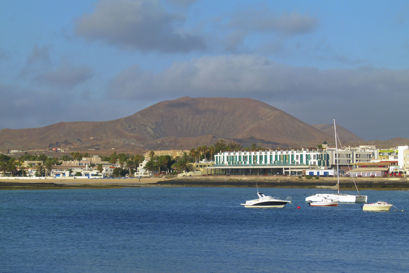
A reduction of 57% on the energy consumption was achieved by retrofitting with Danfoss pump and iSave ERD.
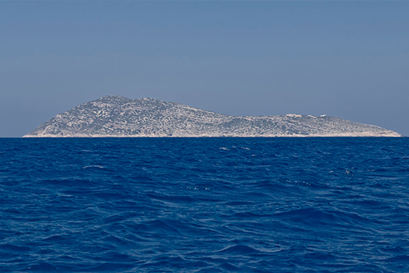
Running a SWRO plant in a remote Island with no electricity, no infrastructure and not permanent residents demands solid equipment. Learn how APP pumps solved this.
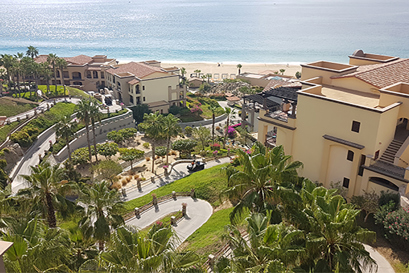
Simplified maintenance, high energy cost savings and low TCO are keeping fresh water flowing 24/7 - those are the advantages a luxury resort in Cabo San Lucas has achieved by retrofitting a reciprocating pump with the Danfoss APP pump.
Follow us to stay up with the latest high news, updates, announcements, and resources from High Pressure Pumps. Of course, we want to hear from you too - so jump in and join the conversation.