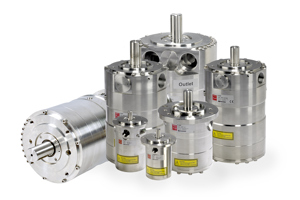
As land-based aquaculture continues to grow, the demand for energy-efficient and reliable seawater reverse osmosis (SWRO) is expanding rapidly. Norwater, a global leader in SWRO for aquaculture and marine applications, is meeting this need with modular systems built around high-performance components from Danfoss.
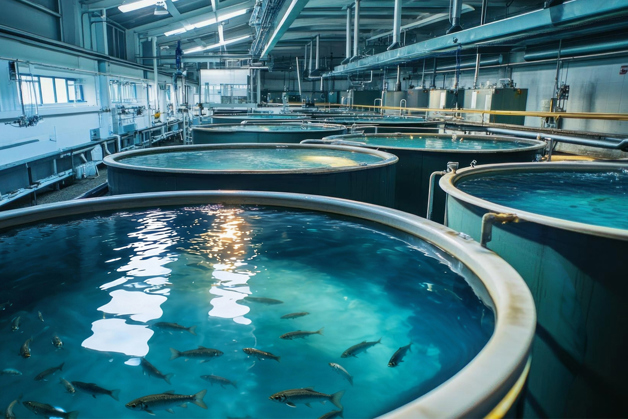
Norway has always been a frontrunner in aquaculture. What starts here – for example the movement towards more land-based salmon farming – tends to spread internationally. Indeed, we’re now seeing more land-based systems being built not only in Norway, but also in the U.S., China, and other key markets.
The shift toward land-based aquaculture, especially for species like salmon, is driven by several key trends. These include tightening environmental regulations, increased focus on biosecurity, and the benefits of locating production closer to markets. While some land-based facilities operate as fully recirculating aquaculture systems (RAS), many are hybrid systems that require large volumes of fresh water. In these hybrid systems, SWRO is the primary source of water.
“Municipal water is sometimes available but may be unreliable in terms of quality,” says Bjørn. “SWRO delivers consistently high-quality water, which is essential in fish farming.”
Designing SWRO systems for aquaculture comes with its own set of requirements. Operators demand energy efficiency to lower costs and emissions. The systems must be easy to maintain, compact in size, and completely free from any risk of contamination. Since many of these land-based set-ups are remote and lightly staffed, equipment reliability and long service intervals are especially important: unplanned downtime can have severe consequences for fish health.
Norwater has developed a modular 1,500 m³/day SWRO train, built around the Danfoss APP 65 high-pressure pump and iSave 70 energy recovery device, that is ideal for land-based aquaculture. The components in these standardized trains were selected for their energy-saving performance, reliability, compact design, and oil-free operation, eliminating the risk of water contamination. While the system is based on a proven, modular platform, Norwater remains flexible in meeting specific customer needs and can propose or design more customized solutions where required – offering the best of both worlds: standardization for efficiency and customization for site-specific demands.
“Our customers care about total cost of ownership, and they don’t like surprises,” explains Mathisen. “Danfoss components help us deliver on both counts. In addition to industry-leading energy efficiency, the APP pumps are clean, compact, and extremely dependable. And with iSave isobaric ERDs, we reliably recover significant energy from the brine stream to reduce power consumption in the high-pressure loop.”
Most Norwater installations for land-based aquaculture use three or four of these trains, providing a total daily capacity of 4,500 or 6,000 m³. The trains typically achieve a specific energy consumption (SEC) of around 2.5 kWh per cubic meter. For operators, this translates into lower operating costs and a reduced environmental footprint.
Norwater’s systems are modular and flexible by design. They can be deployed in containerized units or integrated into larger facilities. This approach allows the company to meet diverse customer needs using a standardized solution with proven performance.
“Our systems are designed to scale,” adds Mathisen. “We supply small, remote sites or large-scale farms – everything from hatcheries to smolt production, post-smolt farms, and full grow-out. Whatever the case, we build it around trusted technology to ensure our customers get the best in efficiency and reliability.”
Over the last few years, Norwater has delivered multiple land-based SWRO installations across Norway using this setup – all based on Danfoss high-pressure pumps and ERDs. With more projects planned internationally, the company is continuing to support the growth of energy-efficient aquaculture with a lower carbon footprint – at sea and on land.
“These systems are already running successfully in Norway,” says Mathisen. “They’ve proven their value, and we expect to see even more demand in the coming years.”
By designing modular SWRO trains built around Danfoss technology – and combining this with flexible implementation – Norwater offers a strong solution for land-based aquaculture facilities seeking energy savings, operational stability, and long-term value.
Norwater AS is a globally recognized provider of SWRO systems for the aquaculture and marine industries – and is one of the world’s leading, most innovative suppliers of SWRO systems for wellboats. Based on the Norwegian coast, the company designs and delivers high-quality, modular systems that are flexible, scalable, and easy to integrate across a wide range of applications. With installations in leading aquaculture markets such as Norway, Chile, Tasmania, and the UK, Norwater is a trusted partner for reliable freshwater production in challenging marine environments.
Learn more at http://www.norwater.no/.
The range of high-pressure APP pumps is optimized for both landbased, off-shore and marine sea water reverse osmosis applications. Available with or without motor.
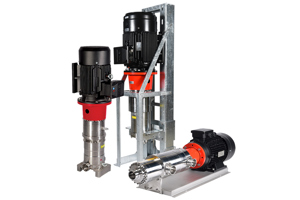
With a 3-in-1 design that integrates highly effective isobaric pressure exchangers with positive displacement booster pumps and electrical motors, active iSave® ERDs deliver big energy savings in small spaces. Covering train sizes from 200-3,000 m3/day