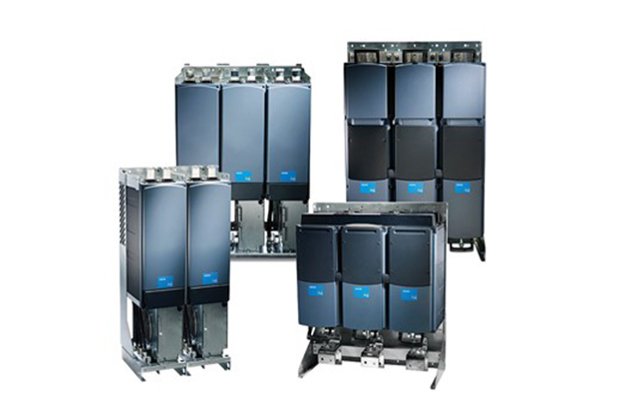
Discover how a Danfoss shaft generator solution cut emissions by up to 30% on board the Korean research vessel, by comparison with conventional technology.
Read case story
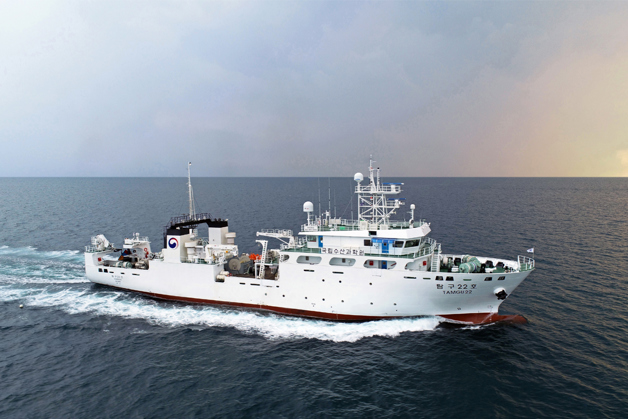
Optimal drive dimensioning saves space
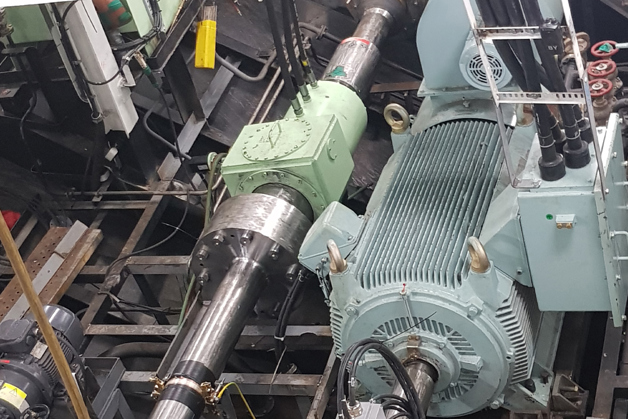
In vessels, shaft generators are classified as generators. The design challenge was to double the standard shaft generator capacity, to meet the short circuit current requirements.
Danfoss was able to deliver a low complexity, high-performance shaft generator design. Installing a shaft generator onboard helped to meet emission targets by improving operational efficiency, and enabling designers to downsize the engine.
Electric propulsion for lower emissions
The Danfoss Drives shaft generator solution offers many advantages for ocean-going vessels:
- It uses asynchronous generators. This requires conversion of specifications from synchronous to asynchronous mode, made possible by local engineering and site trials
- Since the generator and engine are powered up via the Danfoss drive to provide power to navigation and ships, the result is an eco-friendly standard of operation with less noise, low vibration, lower energy consumption and lower CO2 and NOx emissions compared to ordinary ships
- During low-speed or part load operation, ships can run in electric propulsion mode without starting up the engine, for lower noise levels and reduced energy consumption
When operating the winch onboard a vessel, electric propulsion mode also protects the generator from overload. This approach helps to maintain the stability of the vessel, and improves reliability by avoiding overload which could lead to blackouts. In turn this extends component life expectancy.
Engineering support and a working demo model
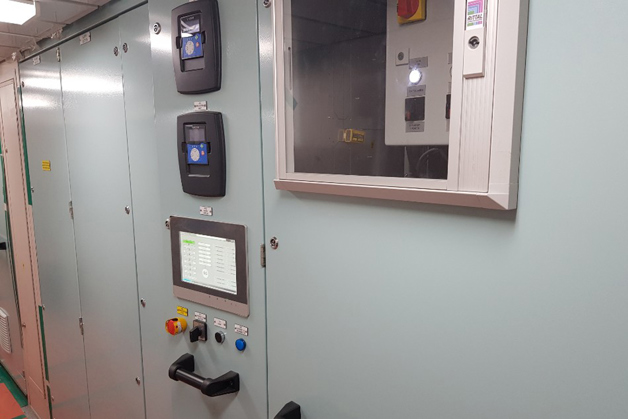
Danfoss conducted local engineering, project management, and local engineering commissioning. They ran a shaft generator demo system made by Danfoss Korea showing how to create an end-to-end system, and how to adapt the hybrid solution to this specific installation.
Since the shaft generator is classified as a generator onboard the ship, the conditions required for the general generator were applied.
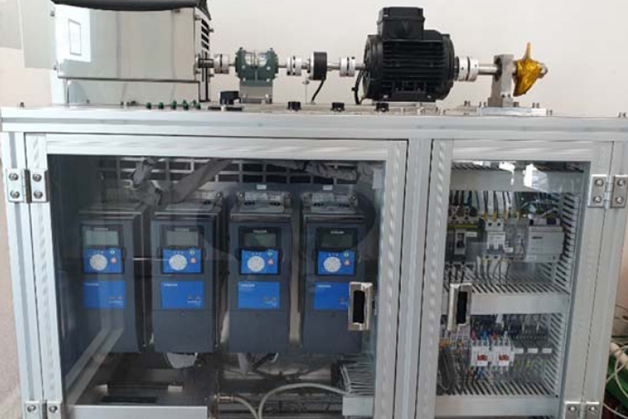
How does the shaft generator work?
The operation principle of conventional shaft generators used for controllable pitch propellers is to generate an electromagnetic field between stator and rotor using automatic voltage regulation (AVR) and an excitation unit. However, when running at low speed, the output voltage and frequency can reach such low levels that rated output voltage and frequency cannot be generated. Thus in order to drive the generator at rated speed, an excitation unit with an additional drive is required to boost the excitation voltage - and ensure the correct frequency.
An additional requirement of this project was power take in (PTI) functionality for the electric propulsion in order to control the speed of the propeller, which required an AC drive. Using an induction motor as generator combined with a Danfoss AC drive, the complexity of the synchronous generator with excitation system was eliminated, resulting in significant cost savings for commissioning and maintenance.
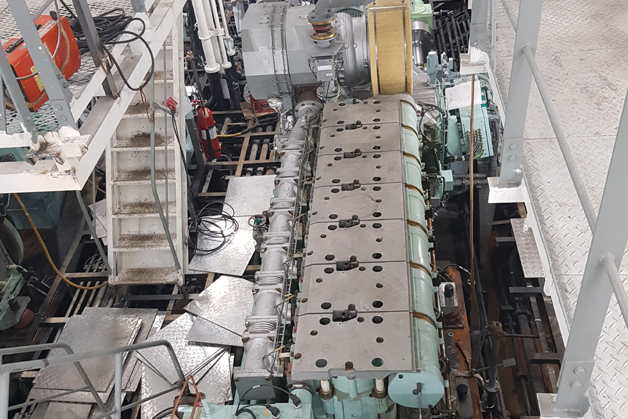
When applied to shaft generator solutions, this grid converter ensures that propulsion machinery is able to operate at various speeds. The shaft generator decouples the shaft from the mains, which allows better electrical quality and improved fuel economy. Additionally, power can either be taken from or entered into the propeller shaft. This is particularly useful for ships that often alternate their speeds as it creates fuel savings and minimizes exhaust emissions by up to 15%. It also creates an emergency mode meaning that the vessel can operate even if the main engine fails. Its importance cannot be overstated; use of a grid converter is a must in reaching emission targets.
Learn more about VACON® NXP Grid Converter