Data center sustainability – a more efficient future is needed
By 2025, every person in the developed world will have at least one ‘interaction’ with a data center every 18 seconds of their lifetime. Our demand for internet and smart technologies is increasing rapidly.
The numbers above highlight what is happening online in just 60 seconds, showing that in the near future our demand for internet services will be huge. At the same time, power usage within the information industry is growing rapidly. This makes it vital that we reduce electricity use in data centers and implement more efficient energy solutions to create data center sustainability and cut CO2 emissions.
So, what is a data center?
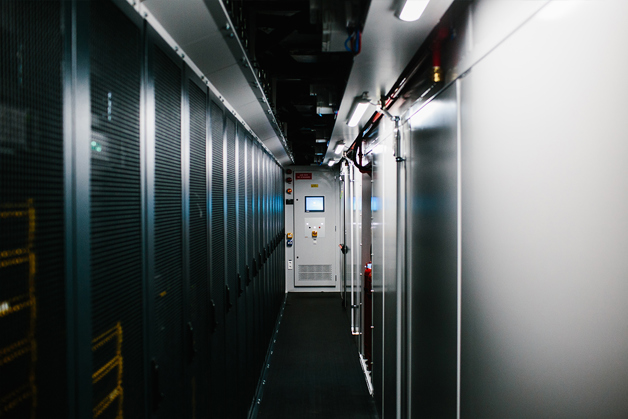
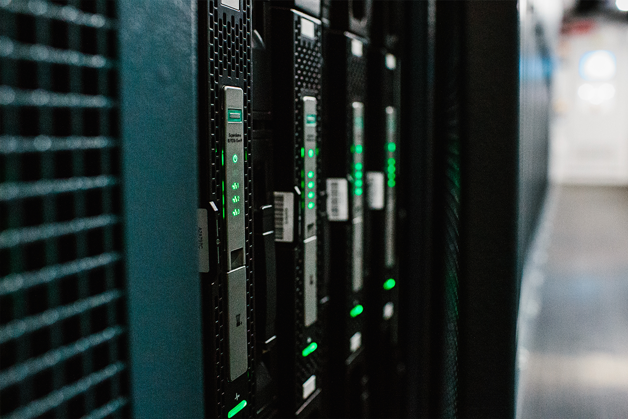
All data centers are simply buildings that provide space, power and cooling for network infrastructure and are filled with varying amounts of servers. Data center power consumption is directly related to the number of servers they have. Data centers store, share, and manage data and centralize key IT operations and equipment. They can be categorized by business model, ownership structure and location.
Of the five main types of data center, edge data centers – a data center that is strategically located in an area near where the data is being collected and analyzed – are expected to have the most significant growth in the data center market and is expected to nearly triple by 2024. By 2025, more than 75% of enterprise-generated data will be created and processed outside the traditional data center or cloud.

How is data center power consumption efficiency measured?
Data center power consumption performance is measured in units of Power Usage Effectiveness (PUE). PUE is a limited-focus design, real-time and annual measurement of the total facility power divided by the IT equipment power, or a measurement of energy ‘waste’ going to non-IT equipment purposes.
An ideal PUE is 1.0, that means 100% efficiency (i.e., all consumed energy is used only on IT equipment, no power distribution loses). But it is almost impossible to achieve. The average power usage effectiveness (PUE) ratio for a data center in 2020 was 1.58, only marginally better than 7 years ago, according to the latest annual Uptime Institute survey.
In addition to PUE, alternative metrics that account for waste heat utilization have been suggested, for example PUErecycled and ERE (energy reuse effectiveness). These units indicate the net energy consumption of the data center after factoring in reused energy.
What is the challenge for data centers?
The majority of the energy demand in data centers comes from powering the servers, but they in turn produce heat and need to be cooled. This cooling again requires a lot of energy and generates a lot of excess heat – most of which is currently being let out into the surrounding environment.
To reduce data centers’ carbon footprint, a smart combination of innovation and technology is needed to reach net zero emissions. Fortunately, there are already more energy efficient solutions available to make the most of the energy we put into our data centers.
How can Danfoss help decrease power consumption of data centers and increase their energy efficiency?
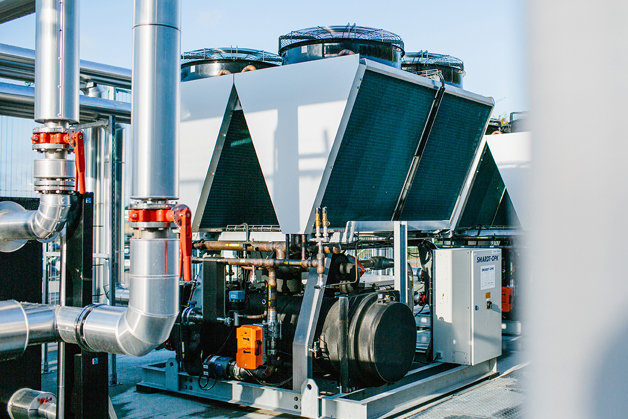
There are many ways in which it is possible to create greener data centers and to process data sustainably. Danfoss solutions help the full range of data centers reach high power usage effectiveness (PUE) and energy reuse factor, while supporting reliably high uptime. From data center cooling sources such as chillers, to piping distribution network, to cooling terminals, close control units, air-handling units (AHUs), fans and pumps, and electric heating to protect pipes, we offer a wide range of innovative solutions to deliver highly reliable cooling and reduce energy cost in a sustainable way.
What is the most efficient way to cool data centers?
IT cooling is vital because it protects equipment. By optimizing the capacity of IT equipment and preventing expensive downtime, Danfoss solutions create ideal thermal conditions around server installations, while optimizing PUE, keeping energy consumption and CO2 emissions at a minimum to generate more data more sustainably.
How Danfoss utilizes sector integration for greener data centers
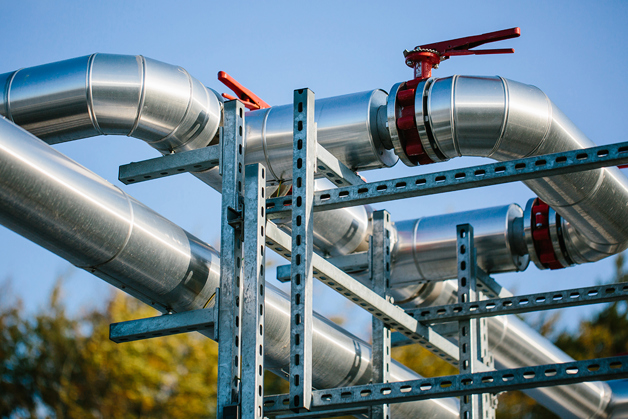
By using district heating and solutions for heat pumps, Danfoss provides reliable and innovative solutions for data center heat recovery and sector integration, which eventually leads to carbon neutrality and greener data centers.
How does energy storage contribute to sustainable data generation?
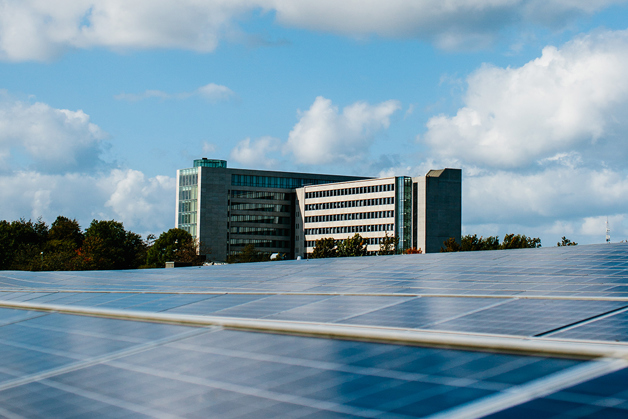
Integrated energy storage ensures a reliable supply to the data center, overcoming an unreliable grid or the intermittent nature of many renewable energy sources. Danfoss solutions ensure reliable power conversion for energy storage in smart distribution grids and enable peak shaving. This is where energy storage smooths the peaks and troughs, so the grid supply can operate consistently at the average power demand - which is usually relatively low.
Data center power consumption FAQ
Explore related articles