What is a walk-in cooler and freezer refrigeration system?
Build reliable walk-in coolers and freezers with Danfoss solutions for selection, control, refrigerant transition, and energy efficiency.
Walk-in coolers and freezers (often referred to globally as cold rooms) are used to maintain consistent temperatures for food, beverages, pharmaceuticals, and other temperature-sensitive products.
In North America, these systems are widely used in grocery retail, food service, processing, and distribution, where uptime, reliable temperature control, and compliance with U.S. safety, environmental, and refrigerant regulations are critical.
Danfoss supports walk-in cooler and freezer installations with refrigeration components, refrigerant‑ready solutions, and digital selection tools that help contractors choose compatible products, simplify installation, and plan for low‑GWP and natural refrigerants.
On this page you can:
- Understand the main components of a walk-in cooler and freezer system
- Compare refrigerant-ready solution paths
- See where Danfoss products fit in a typical installation
- Use tools to size and select the right components
- Get answers to common contractor questions
Quick answers for walk-in cooler and freezer technicians
Contractors need walk-in refrigeration solutions that are straightforward to install, easy to commission, and reliable over the long term. The goal is consistent temperature control, compliance with evolving regulations, and fewer callbacks through proper component matching.
What components are needed for a walk-in cooler and freezer refrigeration system?
Most walk-in cooler and freezer refrigeration systems include:
- A condensing unit to compress and circulate refrigerant
- A walk-in cooler and freezer controller to manage temperature, alarms, and defrost
- An expansion valve to regulate refrigerant flow into the evaporator
- A solenoid valve for control in liquid, suction, or hot gas lines
- A filter drier to protect the system from moisture, acid, and particles
Which refrigerant should I choose for a walk-in cooler and freezer?
The best refrigerant for a walk-in cooler and freezer depends on the application and local codes, safety standards, and evolving U.S. regulations, with contractors typically choosing A2L refrigerants for lower‑GWP transition projects or non-flammable and CO₂ refrigerant (R744), both supported by Danfoss walk-in cooler and freezer components.
Which condensing unit is commonly used for walk‑in coolers and freezers?
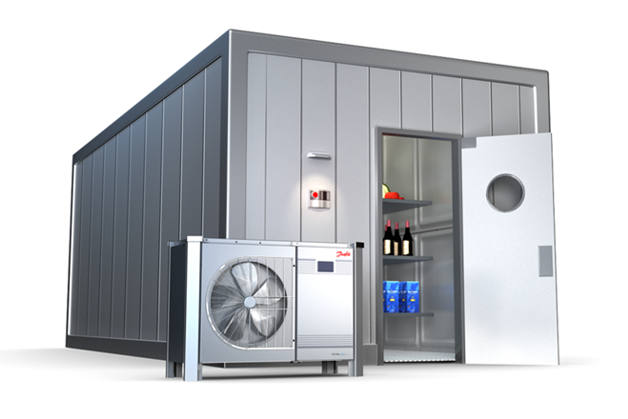
For small to mid‑size walk‑in coolers and freezers, installers commonly use the Danfoss Optyma™ condensing unit because it is designed for easy installation, reliable operation, and compatibility with low‑GWP refrigerants.
Which walk-in cooler and freezer controller is used for walk-in cooler and freezer temperature control?
For walk-in cooler and freezer temperature control, contractors commonly use Danfoss Optyma™ cold room Controller, which manages temperature, defrost, alarms, and system protection in walk‑in coolers and freezers.
Why choose Danfoss for walk-in cooler and freezer systems?
Danfoss offers a broad cooler and freezer portfolio, including Optyma™ condensing units, Optyma™ cold room Controller, thermostatic expansion valves, solenoid valves and filter driers, together with digital selection tools e.g. CoolSelector that support system design and product choice.
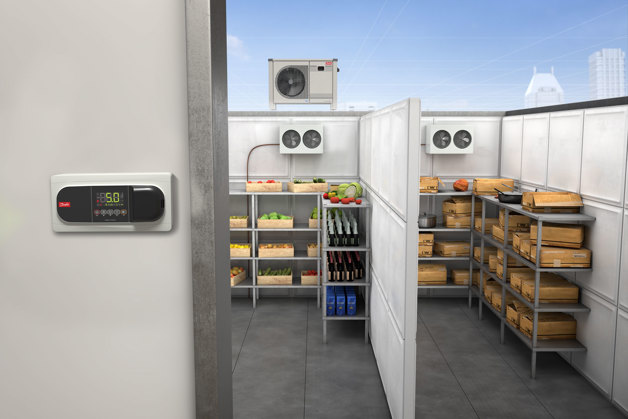
How a walk-in cooler and freezer refrigeration system works?
A walk-in cooler and freezer refrigeration system removes heat from an enclosed space to keep products at a stable, controlled temperature. It works by circulating refrigerant through a closed loop of components that compress, condense, expand, and evaporate the refrigerant, while controllers continuously monitor and regulate operating conditions.
Walk-in systems are designed to run continuously, which makes component compatibility, control logic, and refrigerant choice critical for system performance, energy efficiency, and lifetime.
Core components in a typical walk-in cooler and freezer refrigeration system
A typical walk-in cooler and freezer refrigeration system includes these main component groups, each with a specific role in reliable operation:
- Condensing unit – provides the refrigeration capacity and rejects heat
- Compressor – compresses and circulates the refrigerant and is an integrated part of the condensing unit
- Walk-in cooler and freezer controller – regulates temperature, defrost, alarms, and protection
- Thermostatic expansion valve (TXV) – controls refrigerant flow into the evaporator
- Solenoid valve – enables refrigerant control and shut‑off functions (e.g. pump down operation)
- Filter drier – removes moisture and contaminants to protect the system
- Evaporator – transfers heat from the room air to the refrigerant
What matters most when selecting walk-in cooler and freezer components?
| Installer priority | Why it matters | Danfoss answer |
|---|---|---|
| Fast installation | Saves labor time and reduces commissioning errors | Optyma™ cold room Controller is designed for easy installation and setup, and Danfoss tools support quicker selection |
| Reliability | Helps prevent product loss and costly service calls | Danfoss components are designed for long service life and walk-in cooler and freezer duty |
| Refrigerant readiness | Helps future-proof projects | Danfoss offers options across low-GWP and hydrocarbons (e.g. R290, propane) and CO₂ (R744) refrigerant pathways |
| Energy efficiency | Lowers operating cost | Danfoss solutions focus on control, superheat stability, and efficient system operation |
| Serviceability | Improves service access and reduces time on site | Product ranges such as TXVs and valves are built for application flexibility and service access |
Walk-in cooler and freezer refrigeration system components: function and examples
| Component | Function in the system | Example Danfoss solution |
|---|---|---|
| Condensing unit | Provides refrigeration capacity and rejects heat from the system | Optyma™ condensing units commonly used for walk‑in coolers and freezers |
| Compressor | Compresses and circulates the refrigerant through the system | Danfoss refrigeration compressors matched to walk-in cooler and freezer applications as an integrated part of the condensing unit |
| Walk-in cooler and freezer controller | Regulates room temperature, defrost cycles, alarms, and system safety | Optyma™ cold room Controller for cooler and freezer temperature management |
| Thermostatic expansion valve (TXV) | Meters refrigerant flow into the evaporator and stabilizes superheat | Danfoss TXVs for refrigeration applications |
| Solenoid valve | Controls refrigerant flow and enables shut‑off function | Danfoss EVR solenoid valves |
| Filter drier | Removes moisture, acids, and contaminants to protect the system | Danfoss DML / DCL filter driers |
| Evaporator | Absorbs heat from the walk-in cooler and freezer air | Evaporator selected to match load and refrigerant |
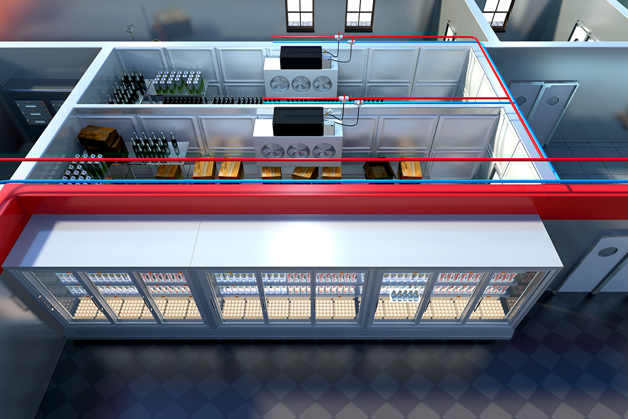
Walk-in cooler and freezer refrigeration system diagram
Walk-in cooler and freezer refrigeration system diagram showing the main components and the refrigeration cycle
A typical walk-in cooler and freezer refrigeration system consists of a condensing unit, walk-in cooler and freezer controller, thermostatic expansion valve (TXV), solenoid valve, filter drier, and evaporator, working together to remove heat from the room and maintain stable temperature conditions in coolers and freezers. Danfoss supports this system architecture with compatible refrigeration components and controls.
Why system integration matters
In walk-in cooler and freezer applications, reliability depends on how well components work together as a system, not only on individual product performance. Correct matching of compressors, valves, cooler and freezer controllers, and refrigerants helps ensure:
- Stable room temperatures
- Efficient operation and lower energy consumption
- Compliance with refrigerant regulations
- Longer system lifetime and easier servicing
Danfoss supports this system‑level approach by offering compatible component portfolios, refrigerant‑ready solutions, and digital selection tools that help contractors design and build walk-in cooler and freezer systems with confidence.
Which walk-in cooler and freezer solution should you choose?
Choosing the right walk-in cooler and freezer solution starts with understanding the application goal, the refrigerant strategy, and the level of control and efficiency required. The guide below helps technicians decide what to start with and what to check next before final selection.
Decision guide: contractor goals vs solution path
| If you need to… | Start with… | Then check… |
|---|---|---|
| Build a small or mid-size walk‑in cooler | Optyma™ condensing unit | Walk-in cooler and freezer controller, TXV, solenoid valve, and filter drier compatibility |
| Build a walk‑in cooler or freezer | Low‑temperature condensing unit and compressor setup | Defrost strategy, controller logic, and valve selection |
| Plan for lower‑GWP refrigerants | Refrigerant choice (A2L or CO₂) | Component compatibility, safety requirements, and standards |
| Design a future‑proof installation | System architecture and refrigerant path | Availability of compatible components across the system |
| Improve temperature accuracy and food safety | Dedicated walk-in cooler and freezer controller | Sensor placement, alarms, and monitoring needs |
| Reduce energy consumption | Efficient system control and stable superheat | Expansion valve selection and control strategy |
| Simplify installation and commissioning | Integrated component portfolio | Selection tools and pre‑configured solutions |
When selecting a walk-in solution, technicians typically start with the application type and refrigerant strategy, then confirm component compatibility, control requirements, and efficiency targets before finalizing selection.
Highlighted products
Which Danfoss products are used in walk-in cooler and freezer systems?
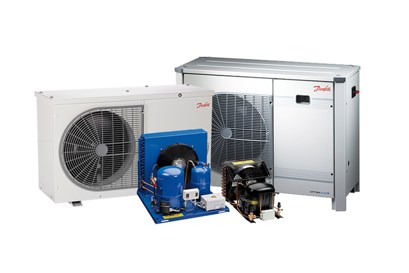
Danfoss Optyma™ condensing units are used as the core refrigeration unit in many small to mid-size walk-in cooler and freezer applications. They are positioned for versatility, simpler installation, and support for low-GWP, HFC, and hydrocarbons like R290, propane and CO₂.
Use when: you need a compact, practical condensing solution for a cooler or freezer
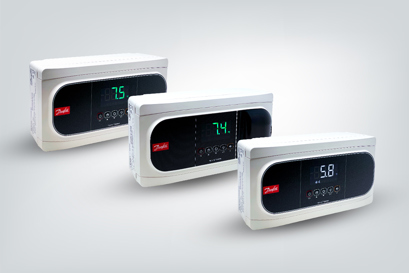
Danfoss Optyma™ Cold Room Controller is designed for walk-in cooler and freezer control, safety, protection, and ease of installation. Danfoss also offers broader room/evaporator control options in the AK controller product range.
Use when: you need control of temperature, defrost, fans, alarms, and system operation.
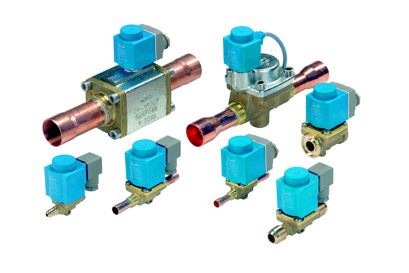
Danfoss EVR and related solenoid valves are used for controlling refrigeration circuits and support applications across liquid, suction, and hot gas lines.
Use when: you need shut-off or control functions in the refrigeration circuit.
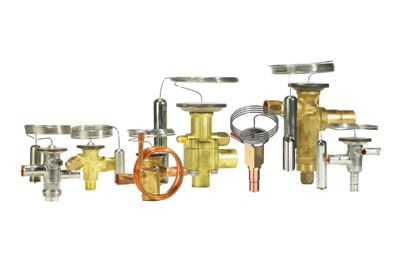
Danfoss TXVs, including T2/TE2 and broader thermostatic expansion valves product range, regulate refrigerant injection into the evaporator and help protect the compressor.
Use when: you need stable refrigerant feed and superheat control in a dry expansion system.
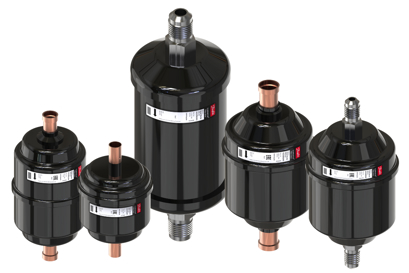
Danfoss DML/DCL filter driers help remove moisture, acids, and solid particles that can damage compressors and reduce system life.
Use when: you want stronger system protection and lower contamination risk.
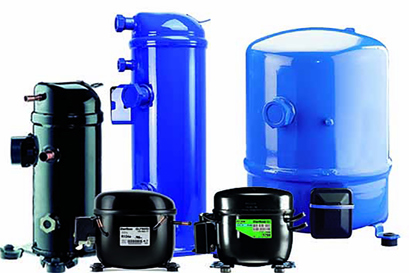
Danfoss Maneurop® MT/MTZ/NTZ, MLZ and LLZ scroll compressors fit a range of walk-in cooler and freezer and refrigeration applications across low-, medium-, and high-temperature conditions.
Use when: you need a compressor matched to the load, temperature range, and refrigerant plan.

Refrigerant options for walk-in cooler and freezer applications
Walk-in cooler and freezer projects typically choose between A1 retrofit, A2L transition, CO₂, hydrocarbons like propane (R290) where applicable. A2L is used when low-GWP is required with a practical transition path, while CO₂ is chosen for its very low GWP and non-flammability. Hydrocarbons like propane (R290) are another very low GWP potential option when relevant safety aspects and requirements due to their high flammability are taken into consideration.
Refrigerant choice affects efficiency, regulatory compliance, safety requirements, and long‑term system viability. This overview helps identify which refrigerant path best fits your cooler and freezer application before you explore detailed solution pages.
Which refrigerant path is right for my walk-in cooler and freezer?
Most projects follow one of four paths: A1 (legacy/retrofit), A2L (transition), CO₂ (non-flammable and very-low GWP), or R290 propane (where applicable for self-contained/compact systems). Your best fit depends on whether you are retrofitting or planning for new, very low GWP refrigeration system installations.
When should I choose CO₂ (R744) for a walk-in cooler and freezer?
Choose CO₂ when the project prioritizes a non-flammable pathway and very low GWP. CO₂ systems operate at significantly higher pressures than traditional HFC systems, requiring components and designs suited for high-pressure applications, so component selection and system design differ from many legacy systems.
Best fit for: Commercial walk-in cooler and freezers prioritizing non-flammability and long‑term sustainability targets.
Use CO₂ when you need:
- Very low GWP
- A non-flammablility pathway
- Solutions aligned with future regulatory and sustainability strategies
If you choose CO₂ refrigerant
The resources below help you answer questions such as:
- Is CO₂ suitable for this cold room size and temperature?
- Which control and valve strategy is required?
- How do I select components for high‑pressure operation?
Additional CO₂ refrigerant resources:
When should I choose A2L refrigerants for a walk-in cooler and freezer?
Choose an A2L refrigerant when you need low-GWP than legacy HFC solutions and want a practical transition option for selected cooler and freezer systems. A2L projects typically require planning around component compatibility, charge limits, and safety requirements.
Best fit for: New systems or selected retrofits that require lower GWP with a practical transition approach.
Use A2L when you need:
- Lower GWP than legacy HFC solutions
- A transition path aligned with evolving regulations
- Compatibility planning across components, charge limits, and safety requirements
If you choose A2L refrigerant
The resources below help you answer questions such as:
- Which components require A2L compatibility?
- What safety requirements and charge limits apply?
- How do I plan system architecture for A2L refrigerants?
Additional A2L resources:
When should I choose A1 (legacy / non‑flammable retrofit path)?
Choose an A1 retrofit path when the priority is continuity of an existing system, and a refrigerant change is not feasible in the short term. Plan for future transition if regulations or supply constraints tighten.
Best fit for: Installed-base continuity and short‑term retrofit practicality.
Next step: confirm compatibility and plan a staged transition
When is propane (R290) relevant for walk-in cooler and freezers?
Choose a propane refrigerant when the project uses compact or self-contained concepts where propane is applicable, and safety requirements can be met. Propane is a hydrocarbon refrigerant with very low GWP, but system design must follow relevant safety requirements and charge considerations.
Best fit for: Smaller/self-contained solutions where applicable.

Danfoss support for refrigerant transition
Danfoss supports refrigerant transition through compatible products, application know‑how, and selection tools for A2L, CO₂, and broader low‑GWP portfolios.
Find a walk-in solution that matches your refrigeration needs.
Refrigerant portfolio for walk-in cooler and freezer A2L, CO₂ and propane
Tools and apps
Documents
Documents for walk-in cooler and freezer selection and installation
Use these documents when you need a deeper reference during system selection, design review, or installation.
Walk-in cooler and freezer and refrigerant FAQ
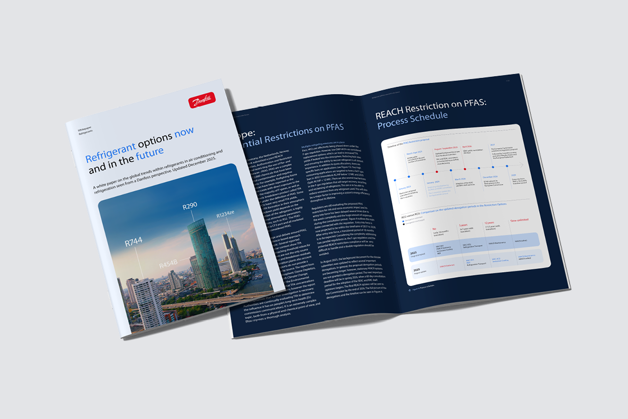
Explore how Danfoss supports the selection and design of future‑proof walk-in cooler and freezer solutions—based on refrigerant choice, regulations, and real application needs, here.
Low-GWP product overview
See which Danfoss product categories support lower-GWP and natural refrigerant strategies:
Video resouces
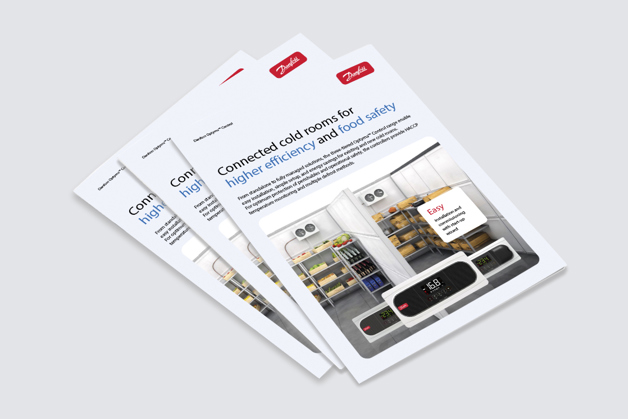
Walk-in cooler and freezer product selection guide
Use these resources to understand the main component groups used in walk-in cooler and freezer systems.
• Walk-in cooler and freezer brochure for installers and contractors
• Walk-in cooler and freezer solution brochure
• Infographic: Product selection guide
• Animated product portfolio of A2L- ready solutions
Food safety in walk-in cooler and freezers
Explore the relationship between food safety and refrigeration, and the importance of system reliability.
• Food safety focus on system performance, reliability and connectivity
Learning
Learn more about walk-in cooler and freezer design and operation
Use Danfoss training resources to learn:
- how walk-in cooler and freezer systems work
- how refrigerant choice affects design
- how controls and components interact
- how to improve performance and food protection
Start the walk-in cooler and freezer training program
Case studies
Proof in the field: Danfoss walk-in cooler and freezer solutions in real installations

Danfoss, to meet the needs of G&D Chillers, used the microchannel heat exchanger and DSH inverter scroll with intermediate discharge valve to customize the Optyma™ Slim condensing unit, making it compatible with the high-efficiency refrigerant R-410A.

As authorities and customers focus on energy efficiency standards and ratings to understand not just what a commercial refrigeration unit costs to buy, but what it costs to operate, the refrigeration design engineer needs to look again at the fundamentals and consider new approaches.

Use this list to learn what goes into making an efficient walk-in cooler or freezer.

This is the sixth in our series of articles on walk-in coolers and freezers.
As seen throughout this article series, walk-ins are only as good as the components that are included in it. An important piece of the puzzle is the thermostat. A walk-in’s main job, not to put too fine a point on it, is to be cold. Maintaining the internal temperature is critical for meeting food safety standards and keeping product fresh for as long as possible. To do this, while also improving the energy efficiency of the system, a reliable thermostat is required.

This is the fifth in our series of articles on walk-in coolers and freezers.
As with any refrigeration system, controlling the flow of refrigerant is vital in making a walk-in cooler or freezer operate properly. Two of the most common types of refrigerant control valves are thermostatic expansion valves and solenoid valves.

This is the fourth in our series of articles on walk-in coolers and freezers.
As seen in the previous articles in this series, each component of a walk-in cooler or freezer plays a vital role in ensuring optimal performance. In this article, we will examine how regulating small aspects of a walk-in’s refrigeration system, like fan speed, can have a major impact on performance.
News
What’s new in the world of walk-in cooler and freezer solutions?
Stay updated on Danfoss product news relevant to:
- superheat control
- valve developments
- controller updates
- refrigerant-ready component ranges

CO2 refrigeration offers a sustainable alternative to HFC/HFO refrigerants, but achieving energy efficiency at high ambient temperatures is a challenge. High operating pressures and compression requirements often result in wasted energy. But Danfoss engineers developed a solution. The company’s recently released whitepaper, “Danfoss Multi Ejector High Pressure (HP): Unlocking 21% Savings over Traditional CO₂ Booster Systems,” details how Danfoss’ Multi Ejector HP, in conjunction with parallel compression, can result in significant energy savings, particularly in warm climates.

Danfoss will showcase its full range of refrigeration solutions at the NAFEM Show, the bi-annual trade show for the commercial food service industry, February 26-28, in Atlanta, Ga. Attendees are invited to stop by booth #2918 to learn more about how Danfoss products can help them reach decarbonization and energy efficiency goals.

Danfoss, a global leader in engineering technologies, is proud to announce the release of its new and reliable EVR and NRV Safety Valves, approved to meet UL 60335-2-40 and UL 60335-2-89 standards.
As the industry faces tighter safety regulations, the Danfoss EVR solenoid valves and NRV check valves provide a solution for separating flammable refrigerant charges (A2L, A2, or A3) in case of leaks, thereby reducing the total releasable charge in higher capacity systems. By meeting the stringent UL requirements, these Danfoss valves are a critical component for manufacturers, installers and operators striving for compliance and enhanced system safety.
Contact us
Need help with a walk-in cooler and freezer project?
Talk to Danfoss if you need support with:
- component selection
- refrigerant transition planning
- control strategy
- technical documentation
- product compatibility
FAQ
FAQ: walk-in cooler and freezer contractor questions
What components are needed for a walk-in cooler and freezer refrigeration system?
A typical system includes a condensing unit, compressor, controller, expansion valve, solenoid valve, filter drier, and evaporator. Danfoss supports this system architecture with products such as Optyma™ condensing units, Optyma™ cold room controller, thermostatic expansion valves, solenoid valves, filter driers, and refrigeration compressors.
Which controller is used for walk-in cooler and freezer temperature management?
For many walk-in cooler and freezer applications, technicians use a dedicated walk-in cooler and freezer controller that manages temperature, defrost, alarms, and connected components. Danfoss positions Optyma™ Control as a walk-in cooler and freezer controller designed for safety, protection, and ease of installation.
Which valve is used to control refrigerant flow into the evaporator?
A thermostatic expansion valve controls refrigerant injection into the evaporator and helps maintain stable superheat. Danfoss thermostatic expansion valve product ranges are designed for refrigeration applications and long service life.
Why is a filter drier important in a walk-in cooler and freezer system?
A filter drier helps protect the refrigeration system from moisture, acids, and solid particles that can reduce reliability and compressor life. Danfoss DML/DCL filter driers are designed for this protection function.
Which refrigerant should I choose for a walk-in cooler and freezer?
That depends on the application, regulatory context, safety requirements, and long-term refrigerant strategy. Danfoss provides content and products across low-GWP, A2L, and CO₂ pathways.
What walk-in cooler do I need for a small restaurant?
Choose a cooler sized for 300–400 cu ft, 35–38°F, matching daily storage and peak load.
Best condensing unit for a commercial walk-in freezer?
Select a low-temp unit with adequate BTU/hr for freezer load, e.g., Danfoss Optyma™ Plus for -10°F.
How do I size a refrigeration system for a walk-in cooler, and does the refrigerant choice change what equipment I need?
Calculate heat load from product, infiltration, and ambient, then match BTU/hr to compressor capacity.
My walk-in cooler compressor runs all day but it's not getting cold enough. How do I figure out what's wrong?
Check door seals, condenser coil cleanliness, evaporator airflow, and thermostat settings. Verify equipment capacity matches load and check super heat and subcooling to ensure proper refrigerant charge.
A2L refrigerant options for commercial walk-in coolers in the US?
R454A, R455A, and R1234yf are EPA SNAP-approved A2L options for walk-in coolers. For retrofits, verify compatibility with existing components including capacity changes and TXV superheat changes.
What do I need to build a walk-in cooler from scratch with A2L refrigerant — and are there extra safety components required by the AIM Act?
Panels, door, condensing unit, evaporator, piping, expansion valve, controller, and lighting.
What expansion valve do I need for a walk-in freezer, and should I go with a thermostatic or electronic valve?
Use a thermostatic expansion valve sized for low-temp load and refrigerant type, e.g., Danfoss TE5 or TU series. Do not use nominal capacity of TXV when matching evaporator capacity.
CO₂ vs HFC systems for supermarket cold rooms — cost comparison?
CO₂ has higher initial cost but lower long-term refrigerant cost; HFC is cheaper upfront but faces phase-down.
How do I retrofit a walk-in cooler from R404A to a low-GWP refrigerant?
Replace seals, check oil compatibility, adjust expansion valve, and recharge with approved low-GWP refrigerant. Check to make sure that super heat adjusment alond will be sufficient to adjust for the changs. If not, a dedicated TXV for that refrigerant will be necessary.
What controller should I use for a commercial walk-in cooler?
Use an electronic controller with temperature, defrost, and alarm functions, e.g., Danfoss ERC series.
Best cold room setup for meat processing facility?
Maintain 32–35°F with humidity control, stainless steel surfaces, and robust airflow for even cooling.
Energy-efficient refrigeration for grocery store walk-in coolers?
Use high-efficiency compressors, EC fans, LED lighting, and demand-based defrost cycles. Utilize floating head pressure if condensers are outside.
What are the safety requirements for A2L refrigerants in a commercial kitchen?
Ensure leak detection, ventilation, charge limits, and compliance with ASHRAE 15.
What are the commissioning steps after installing a new walk-in cooler — what do I need to check before handing it over?
Verify components match capacity wise for proper balance. Verify pressure tests, vacuum, refrigerant charge, controller settings, and temperature stability. Ensure proper voltage with compressors running and verify discharge temperature is within manufacturers specifications.
Which condensing unit brands are most reliable for walk-in coolers?
Danfoss is widely trusted for reliability in US commercial applications. Proper installation and start up are just as important as brand.
What components do I need for a small dairy plant that needs both a chilled room and a freezer — can I run them off the same system?
Insulated panels, hygienic flooring, condensing unit, evaporator, humidity control, and wash-down lighting.
What temperature and humidity controls are required for meat aging rooms?
Maintain 32–35°F and 75–85% RH with precise control to prevent spoilage and ensure quality.
How do I design a blast chiller for a food production facility — what kind of cooling capacity and condensing unit do I need to pull down temperature fast?
Size for rapid pull-down to ≤39°F within 90 minutes, with high airflow and robust insulation.
Walk-in cooler for a hotel kitchen — what size and type do I need?
Choose 350–500 cu ft, 35–38°F, with shelving for varied products and easy access for staff.
Best refrigeration setup for a restaurant with both walk-in cooler and walk-in freezer?
Use separate condensing units and evaporators to optimize temperature control and efficiency. Ensure proper heat rejection from both the units and the space if condensing units are located indoors.
What's the best walk-in cooler configuration for a grocery store with high foot traffic?
Place cooler near prep area with double doors, fast-closing mechanisms, and high-capacity airflow.
Should I put one big walk-in cooler or several smaller ones in a convenience store — what's better for energy costs and maintenance?
Multiple smaller units improve temperature control and reduce cross-contamination risk.
What's the best way to cut energy costs across multiple walk-in coolers in a supermarket — better controls, smarter defrost, or new equipment?
Install variable-speed compressors, optimize defrost schedules, and improve door sealing.
My walk-in cooler can't hold temperature even though the compressor never stops. How do I figure out if it's undersized, leaking, or a controls problem?
Check for refrigerant leaks, dirty coils, poor airflow, or faulty thermostat. Verify system and component capacities match load requirements. Check refrigerant charge to ensure it is adequate.
How often should I schedule preventive maintenance on commercial walk-in coolers?
Every 3–6 months for cleaning, inspection, and performance checks.
What monitoring system can alert me if a walk-in cooler temperature goes out of range?
Use a remote monitoring system with SMS/email alerts, e.g., Danfoss AKC series.
My walk-in cooler is 15 years old. Should I upgrade the components or replace the whole thing — and do refrigerant phase-out rules force my hand?
Replace if insulation, compressor, or panels are degraded; upgrade if only controls or fans need improvement.
What should I look for when comparing walk-in cooler quotes from contractors?
Compare insulation quality, compressor efficiency, warranty terms, and installation costs.
What does a walk-in cooler actually cost to own over 10 years — and how do the long-term costs compare between R404A, A2L, and CO₂?
Include energy use, maintenance, repairs, and refrigerant costs over lifespan.
Which walk-in cooler components have the longest warranty and lowest failure rates?
Compressors and panels often have longest warranties; EC fans and LED lights have low failure rates.
Temperature mapping and validation for a pharmaceutical walk-in cooler — what's required?
Map multiple points, verify uniformity, and document compliance with FDA GDP guidelines.
What controller and alarm setup do I need for a vaccine storage walk-in cooler?
Use a dual-sensor controller with high/low alarms and backup power supply.
How do I get the refrigerant charge right for a walk-in cooler, and what happens if I put in too much or too little with A2L?
Use manufacturer’s guidelines based on pipe length, evaporator, and condenser volume. Verify with subcooling comparing to manufacturers specifications.
What pipe sizing guidelines apply to a walk-in cooler refrigeration system?
Follow refrigerant-specific velocity and pressure drop limits per ASHRAE standards.
How do I select an electronic expansion valve vs a thermostatic valve for a walk-in cooler?
Choose EEV for precise control and variable load; TEV for simpler, fixed-load systems.
My walk-in freezer keeps icing up even though the defrost runs. How do I figure out what's causing it?
Check defrost cycle, door seals, and humidity infiltration.
How do I check and adjust superheat on a walk-in cooler TXV, and how do I know if it's set wrong?
Adjust stem until measured superheat matches manufacturer’s recommended value.
After putting in a new compressor, my walk-in cooler keeps tripping on high pressure. What should I check first?
Inspect condenser airflow, refrigerant charge, and pressure control settings.
Where's the best place to put a condensing unit for a walk-in cooler — rooftop, ground level, or inside? What are the trade-offs?
Place in shaded, ventilated area with easy service access and minimal pipe run.
What do I need to know about running refrigerant lines through a building to a walk-in cooler — how long can they be, and what are the rules?
Use shortest route possible, support lines, and insulate suction lines.
What refrigerant strategy should a supermarket chain adopt as R404A is phased out?
Transition to low-GWP refrigerants like CO₂ or A2L blends, considering retrofit feasibility.
How do CO₂ transcritical systems compare to A2L systems for commercial walk-in coolers in the US?
CO₂ offers zero GWP but higher complexity; A2L blends are simpler retrofits with lower GWP.
What are A2L refrigerants and why is the industry switching to them?
A2L refrigerants are mildly flammable, low-GWP alternatives to HFCs, meeting regulatory phase-down goals.

Highly efficient and dependable solutions...
From temperature controls, evaporators, solutions for condensing units, or heating cables in floors and entrance doors, Danfoss has built a broad portfolio of products designed to deliver optimum protection of perishables, ensure efficient operation & extend the lifespan of your walk-in cooler / freezer system.
View video