
Ammonia in industrial refrigeration
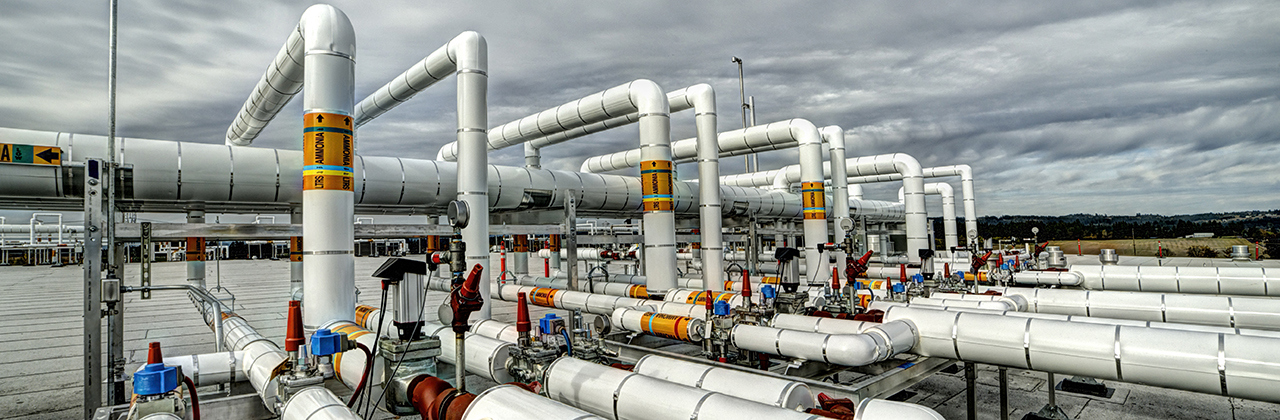
State-of-the-art components for ammonia refrigeration
Ammonia is the most trusted refrigerant right from the 19th century. All those who are involved in food preservation and industrial process plants know ammonia as refrigerant of choice due to its unmatched thermodynamic properties. Read more about this and the many other benefits when using ammonia.
Learn more
Environmental concerns and new F-gas regulation are forcing scientists and refrigeration technicians to take a serious look at natural refrigerants like air, water, ammonia, carbon dioxide and others as a long-term alternative for industrial refrigeration. Anyone involved in food preservation and industrial process plants already know ammonia as the refrigerant of choice due to its unmatched thermodynamic properties.
Having passed the test of time over more than a century as one of the best choices, ammonia is now receiving attention in areas of application where it was unthinkable earlier. Danfoss is a leader in ammonia refrigeration components, including manual, mechanic and electric valves. We are constantly working on developing components that enable safe and energy-efficient application of ammonia refrigeration.
Why ammonia in industrial refrigeration?

Ammonia is one of the most efficient applications out there, with the application range from high to low temperatures. With the ever increasing focus on energy consumption, ammonia systems are a safe and sustainable choice for the future. Typically a flooded ammonia system would be 15-20 % more efficient than a DX R404A counterpart. Recent developments of NH3 and CO2 combination contributed to increase the efficiency further. NH3/CO2 cascaded is extremely efficient for low and very low temperature applications (below -40’C), while NH3/CO2 brine systems are around 20% more efficient than traditional brines.

Ammonia is the most environmentally friendly refrigerant. It belongs to the group of so called “natural” refrigerants, and it has both GWP (Global Warming Potential) and ODP (Ozone Depletion Potential) equal to zero.

Ammonia is a toxic refrigerant, and it is also flammable at certain concentrations. That is why it has to be handled with care, and all ammonia systems have to be designed with safety in mind. At the same time, unlike most other refrigerants, it has a characteristic odor that can be detected by humans even at very low concentrations. That gives a warning sign even in case of minor ammonia leakages. In case it is necessary to reduce ammonia charge, combination of ammonia and CO2 (as cascade or as brine) could be a good and efficient option.

In both vapor and liquid phase ammonia requires smaller pipe diameters than most chemical refrigerants.

Ammonia has better heat transfer properties than most of chemical refrigerants and therefore allow for the use of equipment with a smaller heat transfer area. Thereby plant construction cost will be lower. But as these properties also benefit the thermodynamic efficiency in the system, it also reduces the operating costs of the system.

In many countries the cost of ammonia (per kg) is considerably lower than the cost of HFCs. This advantage is even multiplied by the fact that ammonia has a lower density in liquid phase. Furthermore as any leakage of ammonia will be detected very quickly due to the odor, hence any potential loss of refrigerant will also be lower.
Ammonia is not a universal refrigerant, and mainly suitable for industrial and heavy commercial applications. Ammonia’s toxicity, flammability and material compatibility have to be taken in to account. At the same time, there is a huge global population of ammonia systems where those challenges are successfully dealt with.