Multifunctional Thermostatic Circulation Valve for establishing safe and energy saving domestic hot water systems
The valves are installed in the circulation pipes from individual system risers and can be set to a temperature between 35 and 60 degrees Celsius. This will bring hydronic balance, short waiting times, water & energy savings and reduce the risk of legionella in tap and drinking water. The valve is made from lead-free brass and is produced in accordance with regulations of many international and national drinking water directives.
Disinfection modules
The MTCV can be equipped with an electronic (MTCV-C) disinfection module. When used the system temperature can temporarily be increased to circulate hot water with a temperature high enough to kill the legionella bacteria.
Electronic disinfection
CCR2+ is a simple but advanced electronic controller designed to optimize the electronic disinfection of DHW systems. The controller periodically flushes the system, riser per riser, with an increased water temperature to kill any bacteria's in the system.
It can control up to 20 risers or be expanded with a slave unit for another 16 extra risers. All the temperatures are stored for data logging and analysis.
The CCR2+ can be connected to a WiFi or cabled network and by that be accessed by a PC or mobile device. For further optimization it is also possible to connect it with a Building Management System (BMS), saving engineering efforts and BMS components that can possibly do the same job.
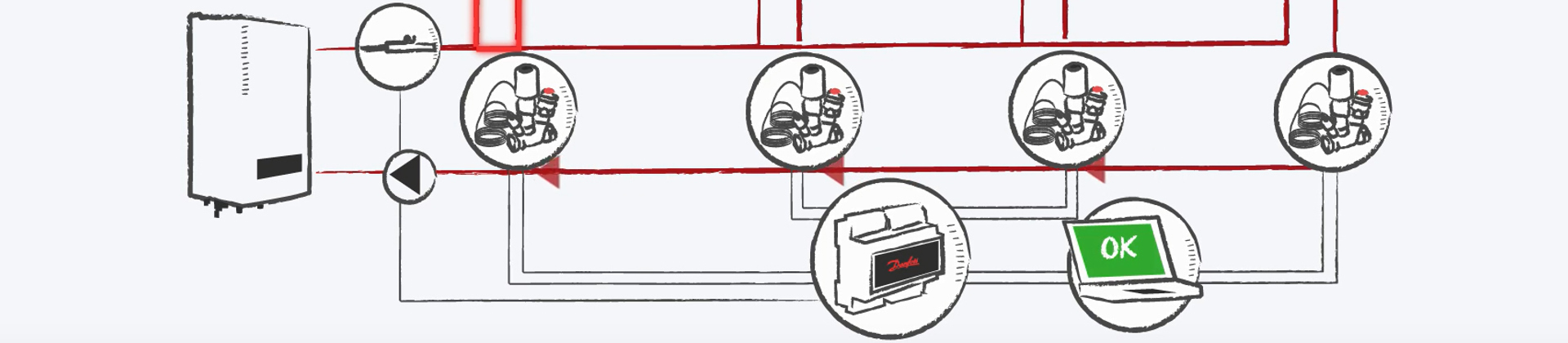
Abgleich von Trinkwarmwassersystemen
This animation describes the issues and challenges in domestic hot water systems in non-residential buildings, such as unwanted heat losses, energy inefficiency and risk of legionella.
Funktionen und Vorteile
-
Improve comfort
Residents will benefit from fast and equal waiting times when tapping for hot water
-
Save energy
The system will have a lot less heat losses and run more efficient. The costs for residents will be lower and allocated much more accurate.
-
Reduce water waste
With hot water at the right temperature available at all times, less water is wasted by waiting or mixing it with cold water to achieve the right consumption temperature.
-
Lower costs
The system runs more efficient and prevents lime and corrosion, potentially damaging the pipes
-
Reduce the risk of legionella growth
With the water temperatures being controlled on a level legionella cannot grow the risk for contamination reduces. Of course system construction factors such as long pipes without circulation also need to be prevented.
-
Short payback time
Typically the investment for installing thermal balancing valves are not that high and can be paid back in a short (1-2 years) period of time.
-
Lead-free brass
The valves are made from lead-free brass and are in accordance with the regulations of many Drinking Water Directives. The lead-free brass is a step towards improving the quality of the drinking water and meets the requirements of sustainability.
-
Meets individual needs
MTCV basic version (A) – provides a thermostatic balancing function within the temperature range of 35 to 60°C. For systems, where periodical thermal disinfection is required, the basic valve can easily be upgraded with a disinfection module – version C – for electronic, automatic, control of a periodic thermal disinfection process.
-
Automated disinfection
Establish the most safe DHW conditions with the highest possible efficiency and reduce time spent on monitoring and data logging.
Erfahren Sie, wie Legionellen in TWW-Systemen am besten verhindert werden können und gleichzeitig die Benutzersicherheit und den Komfort + die Energieeffizienz erhöht werden. In diesem Webinar erfahren Sie mehr über Danfoss als Anbieter von intelligenten Lösungen für den Trinkwarmwasser-Abgleich.
Registriere dich jetzt

Dokumente
| Typ | Name | Sprache | Gültig für | Aktualisiert | Download | Dateityp |
|---|---|---|---|---|---|---|
| Datenblatt | CCR2+ | Französisch | Mehrfach | 27 März, 2019 | 713.9 KB | |
| Datenblatt | CCR2+ | Englisch | Mehrfach | 28 Okt., 2018 | 682.2 KB | |
| Datenblatt | CCR2+ | Finnisch | Mehrfach | 30 Juni, 2019 | 702.7 KB | |
| Datenblatt | CCR2+ | Polnisch | Mehrfach | 19 Feb., 2019 | 749.6 KB | |
| Datenblatt | CCR2+ | Dänisch | Mehrfach | 11 Apr., 2019 | 710.5 KB | |
| Datenblatt | CCR2+ | Deutsch | Mehrfach | 08 Sept., 2020 | 703.9 KB | |
| Datenblatt | CCR2+ | Tschechisch | Mehrfach | 30 Juni, 2019 | 737.8 KB | |
| Datenblatt | CCR2+ | Spanisch, Kastilisch | Mehrfach | 30 Juni, 2019 | 709.8 KB | |
| Datenblatt | CCR2+ | Slowenisch | Mehrfach | 02 Dez., 2019 | 701.1 KB | |
| Datenblatt | CCR2+ | Litauisch | Mehrfach | 11 Apr., 2019 | 702.7 KB | |
| Broschüre | CCR2+ Electronic controller to prevent legionella in DHW systems | Slowenisch | Slowenien | 11 März, 2019 | 797.7 KB | |
| Broschüre | CCR2+ Electronic controller to prevent legionella in DHW systems | Englisch | Mehrfach | 20 Sept., 2018 | 1.0 MB | |
| Broschüre | CCR2+ Electronic controller to prevent legionella in DHW systems | Französisch | Frankreich | 24 März, 2019 | 799.8 KB | |
| Broschüre | CCR2+ Electronic controller to prevent legionella in DHW systems | Lettisch | Lettland | 10 Mai, 2021 | 1.7 MB | |
| Broschüre | Hydraulischer Abgleich und Regelung | MTCV - Optimierung der Leistung von Trinkwasser-Systemen | Deutsch | Mehrfach | 28 Feb., 2020 | 5.9 MB | |
| Broschüre | Intelligenter und energieeffizienter Legionellenschutz von Trinkwasser-Systemen | Deutsch | Mehrfach | 24 Feb., 2020 | 1.6 MB | |
| Datenblatt | MTCV | Italienisch | Mehrfach | 26 Juni, 2025 | 1.5 MB | |
| Datenblatt | MTCV | Polnisch | Mehrfach | 26 Juni, 2025 | 1.6 MB | |
| Datenblatt | MTCV | Französisch | Mehrfach | 26 Juni, 2025 | 1.5 MB | |
| Datenblatt | MTCV | Serbisch | Mehrfach | 26 Juni, 2025 | 1.5 MB | |
| Datenblatt | MTCV | Schwedisch | Mehrfach | 26 Juni, 2025 | 1.5 MB | |
| Datenblatt | MTCV | Dänisch | Mehrfach | 26 Juni, 2025 | 1.5 MB | |
| Datenblatt | MTCV | Tschechisch | Mehrfach | 26 Juni, 2025 | 1.5 MB | |
| Datenblatt | MTCV | Kroatisch | Mehrfach | 26 Juni, 2025 | 1.4 MB | |
| Datenblatt | MTCV | Rumänisch, Moldauisch, Moldawien | Mehrfach | 26 Juni, 2025 | 1.5 MB | |
| Datenblatt | MTCV | Slowakisch | Mehrfach | 26 Juni, 2025 | 1.5 MB | |
| Datenblatt | MTCV | Slowenisch | Mehrfach | 26 Juni, 2025 | 1.7 MB | |
| Datenblatt | MTCV | Lettisch | Mehrfach | 26 Juni, 2025 | 1.7 MB | |
| Datenblatt | MTCV | Ungarisch | Mehrfach | 26 Juni, 2025 | 1.6 MB | |
| Datenblatt | MTCV | Koreanisch | Mehrfach | 26 Juni, 2025 | 1.8 MB | |
| Datenblatt | MTCV | Deutsch | Mehrfach | 26 Juni, 2025 | 1.6 MB | |
| Datenblatt | MTCV | Portugiesisch | Mehrfach | 26 Juni, 2025 | 1.5 MB | |
| Datenblatt | MTCV | Bulgarisch | Mehrfach | 26 Juni, 2025 | 1.5 MB | |
| Datenblatt | MTCV | Niederländisch, Flämisch | Mehrfach | 26 Juni, 2025 | 1.5 MB | |
| Datenblatt | MTCV | Litauisch | Mehrfach | 26 Juni, 2025 | 1.5 MB | |
| Broschüre | MTCV - Optymalizacja działania instalacji ciepłej wody użytkowej | Polnisch | Polen | 30 Juni, 2019 | 416.6 KB | |
| Broschüre | MTCV Thermal balancing valves - Optimise the performance of domestic hot water systems | Englisch | Mehrfach | 20 Sept., 2018 | 1.4 MB | |
| Broschüre | MTCV Thermal balancing valves - Optimise the performance of domestic hot water systems | Französisch | Frankreich | 24 März, 2019 | 1.2 MB | |
| Broschüre | MTCV Thermal balancing valves - Optimise the performance of domestic hot water systems | Lettisch | Lettland | 28 Juli, 2021 | 7.3 MB | |
| Broschüre | Optimise performance in domestic hot water systems | Schwedisch | Schweden | 03 März, 2015 | 866.5 KB | |
| Broschüre | Optimise performance in domestic hot water systems | Dänisch | Dänemark | 05 Mai, 2019 | 662.3 KB | |
| Broschüre | Optimise performance in domestic hot water systems | Ungarisch | Ungarn | 31 Aug., 2014 | 841.4 KB | |
| Broschüre | Sterownik CCR2+ | Polnisch | Polen | 30 Juni, 2019 | 1.8 MB |
Software
Danfoss SET 365 Software
Unsere fortschrittliche Danfoss SET 365 3D-Designsoftware hilft Ihnen bei der Planung und Berechnung von HLK-Systemen mit Danfoss-Produkten. Ein 1-Jahres-Abonnement ist KOSTENLOS für Studenten, Designer und andere interessierte Fachleute verfügbar.
Support
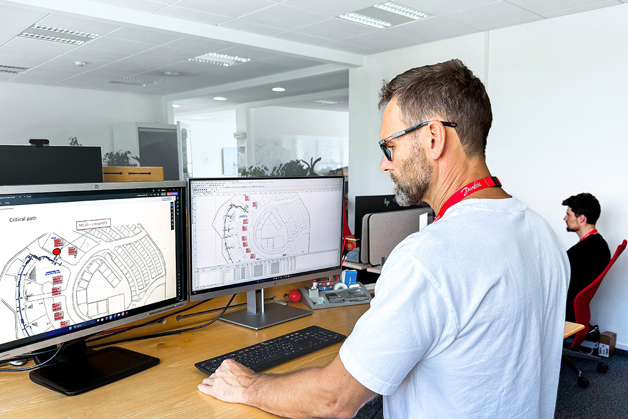
Design Support Center
Benötigen Sie Unterstützung bei der Planung eines energiesparenden Heiz- oder Kühlsystems? Fragen Sie Ihren Danfoss-Vertreter und stellen Sie ihm Bauzeichnungen (.dwg, .dxf) und Ihre Anforderungen zur Verfügung. Er kann das Danfoss Support Center bitten, die Daten zu analysieren und Ihnen einen detaillierten Systemvorschlag unterbreiten.
3D-Modelle und Zeichnungen

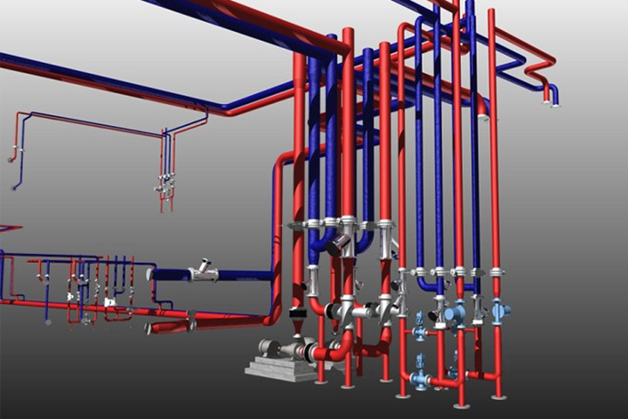
BIM-Bibliothek für TGA-Entwürfe
Holen Sie sich Ihre 3D-BIM-Objekte und beginnen Sie mit der Konstruktion sicherer Trinkwarmwassersysteme.
Mehr lesen und herunterladen
Ausschreibungstexte
Thermische Zirkulationsventile MTCV
Trinkwarmwasseranlagen sollten mit einem thermostatischen Zirkulationsventil für konstante Wassertemperatur im System mit folgenden Charakteristiken abgeglichen werden:
- Temperatureinstellbereich: 35–60 °C
- Die Temperatur-Voreinstellwerte werden auf einer digitalen Skala angezeigt.
- Die Einstellung sollte verborgen oder gesperrt werden können, um Änderungen durch Unbefugte zu verhindern (Inbusschlüssel)
- Das Thermostatmodul sollte integriert werden, um eine genaue Temperaturregelung zu gewährleisten.
- Optionale Aufrüstung mit thermischem Desinfektionsmodul zur Verhinderung von Legionellenbakterien in Warmwassersystemen: - automatische (selbsttätige) Desinfektion oder elektronisch gesteuerte Desinfektion (Regler mit thermischem Stellantrieb und Temperaturfühlern)Die Aufrüstung der Desinfektion kann während des Betriebs unter Druck erfolgen
- Das Thermoelement sollte der Einfachheit halber ausgetauscht werden können.
- Materialien, die mit Wasser in Berührung kommen, sollten die EU-Richtlinie zu bleifreiem Messing einhalten.
- Das Ventilgehäuse sollte aus Bronze gefertigt sein, um bessere Haltbarkeit und Korrosionsbeständigkeit zu gewährleisten.
- Die Wassertemperaturmessung sollte optional sein.
- Das Ventil sollte eine Durchflussanzeige haben.
- Robuste Verpackung für sicheren Transport und Handhabung
Produkteigenschaften
Nenndruckstufe: PN 10
- Maximale Mediumtemperatur: 90 °C[MP3]
- Anschlussweite: DN 15–20
- Anschlusstyp: Innengewinde ISO 7/1
- Maximaler Differenzdruck: 100 kPa
- Werkseinstellung: 50 °C
- Das Ventil sollte in der Zirkulationsleitung montiert werden.
Videos
News
In Kürze verfügbar...
In Kürze verfügbar...
Fallstudien
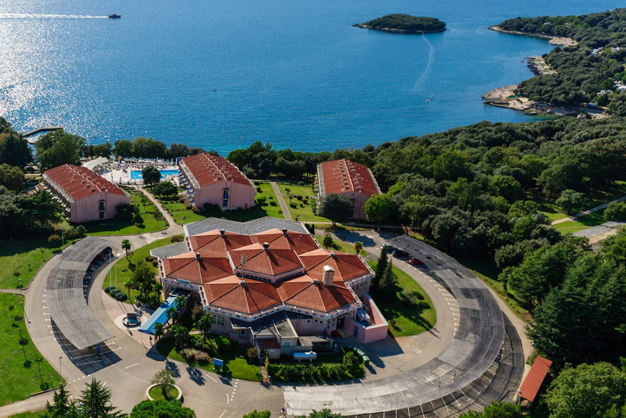
Gebäude: Hotel/Resort
Anwendung: Sanierung des Trinkwarmwassersystems (TWW) zur Stabilisierung der Wassertemperaturen
Herausforderung: Reduzieren Sie Warmwasser-Wartezeiten und verbessern Sie die Energieeffizienz
Lösung: Für den hydraulischen Abgleich wurden multifunktionale thermostatische Zirkulationsventile (MTCV) an den TWW-Strangen installiert.
Im Danfoss Design Support Center bieten wir fachkundige Beratungsdienstleistungen für den Aufbau und Aufbau von HLK-Systemen.
Erfahren Sie mehr