
Multifunctional Thermostatic Circulation Valve for establishing safe and energy saving domestic hot water systems
The valves are installed in the circulation pipes from individual system risers and can be set to a temperature between 35 and 60 degrees Celsius. This will bring hydronic balance, short waiting times, water & energy savings and reduce the risk of legionella in tap and drinking water. The valve is made from lead-free brass and is produced in accordance with regulations of many international and national drinking water directives.
Disinfection modules
The MTCV can be equipped with an electronic (MTCV-C) disinfection module. When used the system temperature can temporarily be increased to circulate hot water with a temperature high enough to kill the legionella bacteria.
Electronic disinfection
CCR2+ is a simple but advanced electronic controller designed to optimize the electronic disinfection of DHW systems. The controller periodically flushes the system, riser per riser, with an increased water temperature to kill any bacteria's in the system.
It can control up to 20 risers or be expanded with a slave unit for another 16 extra risers. All the temperatures are stored for data logging and analysis.
The CCR2+ can be connected to a WiFi or cabled network and by that be accessed by a PC or mobile device. For further optimization it is also possible to connect it with a Building Management System (BMS), saving engineering efforts and BMS components that can possibly do the same job.
Features and benefits
-
Improve comfort
Residents will benefit from fast and equal waiting times when tapping for hot water
-
Save energy
The system will have a lot less heat losses and run more efficient. The costs for residents will be lower and allocated much more accurate.
-
Reduce water waste
With hot water at the right temperature available at all times, less water is wasted by waiting or mixing it with cold water to achieve the right consumption temperature.
-
Lower costs
The system runs more efficient and prevents lime and corrosion, potentially damaging the pipes
-
Reduce the risk of legionella growth
With the water temperatures being controlled on a level legionella cannot grow the risk for contamination reduces. Of course system construction factors such as long pipes without circulation also need to be prevented.
-
Short payback time
Typically the investment for installing thermal balancing valves are not that high and can be paid back in a short (1-2 years) period of time.
-
Lead-free brass
The valves are made from lead-free brass and are in accordance with the regulations of many Drinking Water Directives. The lead-free brass is a step towards improving the quality of the drinking water and meets the requirements of sustainability.
-
Meets individual needs
MTCV basic version (A) – provides a thermostatic balancing function within the temperature range of 35 to 60°C. For systems, where periodical thermal disinfection is required, the basic valve can easily be upgraded with a disinfection module – version C – for electronic, automatic, control of a periodic thermal disinfection process.
-
Automated disinfection
Establish the most safe DHW conditions with the highest possible efficiency and reduce time spent on monitoring and data logging.
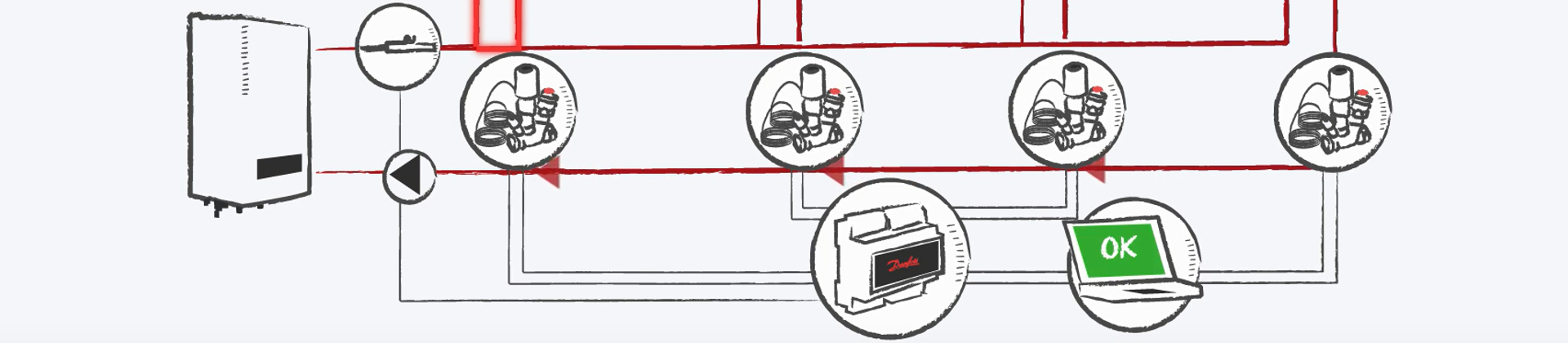
Balancing of domestic hot water systems
This animation describes the issues and challenges in domestic hot water systems in non-residential buildings, such as unwanted heat losses, energy inefficiency and risk of legionella.
Documents
| Type | Name | Language | Updated | Download | File type |
|---|
Tender texts
MTCV – Thermal balancing Valves
Domestic hot water installations should be balanced with thermostatic balancing valve for a constant water temperature in the system with following characteristics:
- Temperature setting range: 35 - 60 °C
- Temperature pre-setting values visible on a visual scale
- Setting should be hidden or lockable to prevent unauthorized change (Allen key)
- Thermostatic module should be integrated to ensure accurate temperature control
- Optional upgrade with thermal disinfection module to prevent Legionella bacteria in hot water systems: - automatic (self-acting) disinfection or electronically controlled disinfection (controller with thermal actuator and temperature sensors)Disinfection upgrade can be done during operation, under pressure
- Thermo element should be replaceble for easier
- Material in contact with water should be compliant with No Lead Brass EU directive
- Valve body should be made of Bronze for better durability and corrosion resistance
- Water temperature measurement should be optional
- Valve should have flow indication mark
- Reliable packaging for safe transport and handling
Product characteristics
Pressure class: PN 10
- Maximum medium temperature: 90°C[MP3]
- Connection size: DN 15-20
- Connection type: Internal thread ISO 7/1
- Maximum differential pressure: 100 kPa
- Factory pre-setting: 50 °C
- Installation: valve should be mounted in the circulation pipe
Support
Design Support Center
Do you need support with designing an energy efficient heating or cooling system? Ask your Danfoss representative and provide him building drawings (.dwg, .dxf) and your requirements. He can have the Danfoss Support Centre to take a look and prepare you a detailed system proposal.
News
Join our free webinar!
Learn more about our DHW hydronic balancing and smart disinfection solutions
Residential multi-family buildings, hotels, hospitals and other public buildings are sensitive for contamination with the dangerous legionella bacteria. With Thermal balancing valves and fully automated control of thermal disinfection the Legionella bacteria risk is significantly reduced.

For who: Everybody (technical or non-technical) involved in the specification, design, construction, maintenance or service in Domestic Hot Water systems.
Topics: You will be informed about the typical challenges to maintain both safe and energy efficient operation of DHW systems. After this introduction we will show you how to overcome these challenges and how to create a safe and energy efficient system.
Language: English
Date: October 12, 2018
Time: 9:00 – 10:00 AM, CET – Login from 8:50
How to join the webinar:
Step 1 – Create an account on Danfoss Learning platform. Besides this webinar you can find many Danfoss eLessons and other educational material, available 24/7.
Step 2 – Sign up for the webinar ‘How to reduce the risk of legionella contamination in Domestic Hot Water systems’.
After signing up you will receive a confirmation e-mail and you can save the webinar in your calendar.
We’re looking forward to your participation!