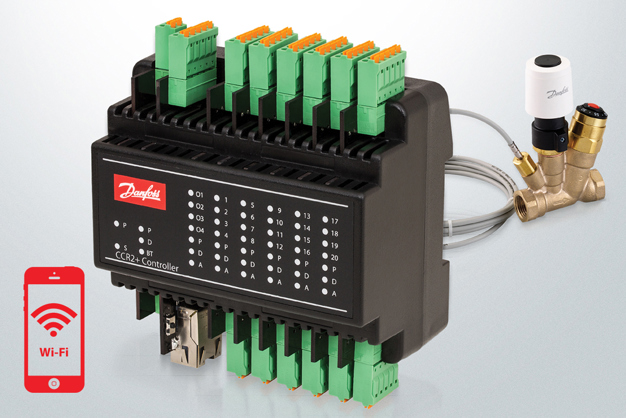

Engineering HVAC 4.0 for smart buildings
This is where HVAC 4.0 starts, The transition to HVAC 4.0 requires a close cooperation between many stakeholders. And in the end all of them benefit.
eBook Digital Hydronics™
Expand your HVAC 4.0 know-how
Download now
Features and benefits

Heating and cooling our buildings accounts for about 30% of the final energy consumption in the EU.
The optimization of HVAC systems in buildings requires more than simply improving the efficiency of the heating or cooling generation equipment (e.g. heat pumps, boilers, chillers).
It is also vital to look at how heating and cooling is distributed from the central generator to points of end use, the terminal units such as Fan Coil Units (FCUs) and radiant panels.
EU legislation, including the Energy Performance of Buildings Directive (EPBD) and Ecodesign, has put forward important provisions to optimize technical building systems. But these have not yet fully addressed market failures and therefore the potential of hydronic balancing remains largely unrealized.
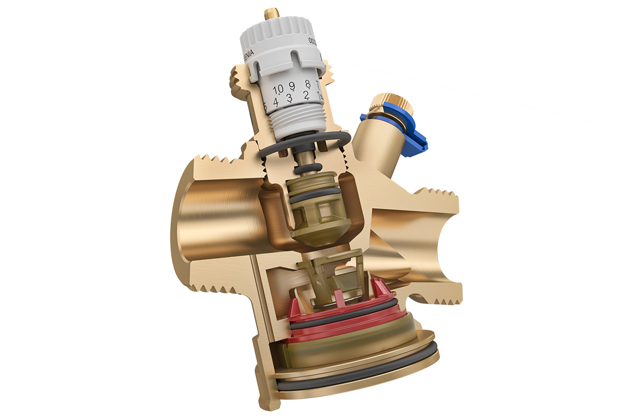
Danfoss AB-QM has been at the forefront of changing the market to more efficient solutions for balancing and controlling modern HVAC systems. The concept of combining a control valve and a built-in pressure controller has now been accepted as a standard in most markets worldwide.
The AB-QM PICV combines precise control with great convenience. It is simple to select, effortless to install and straightforward to set.
By combining multiple functions into one valve the AB-QM is also an extremely cost-efficient choice. Through shortening the design process, time saving during the commissioning stage and by efficiency gains during operation it is a financial no-brainer with either negative or extremely short pay-back times.
- Remote mass upload of designed flows via configuration tool / BMS (up to 64 actuators / valves at once)
- Setting and correction of the flow can be done centrally from the BMS / Computer
- Flushing and purging of the system centrally from BMS / Computer (all at once, one floor at a time, one valve at a time)
- Use of standard BACnet or ModBus bus-communication and pre-fabricated cables for easy BMS integration
- Full transparency of energy consumption in the building for heating / cooling using AB-QM and NovoCon
How to gather HVAC system data?
HVAC 4.0 systems are not just smart, they are clever. They know how to spot efficiency problems and how to reduce energy costs.
The key to success is actively using the information collected from building and HVAC data and stored in the Building Management System.
Digital IoT actuators provide substantial data and can be expanded with data from optional temperature and flow sensors.
This helps you to manage the energy flows and plan service and maintenance activities.
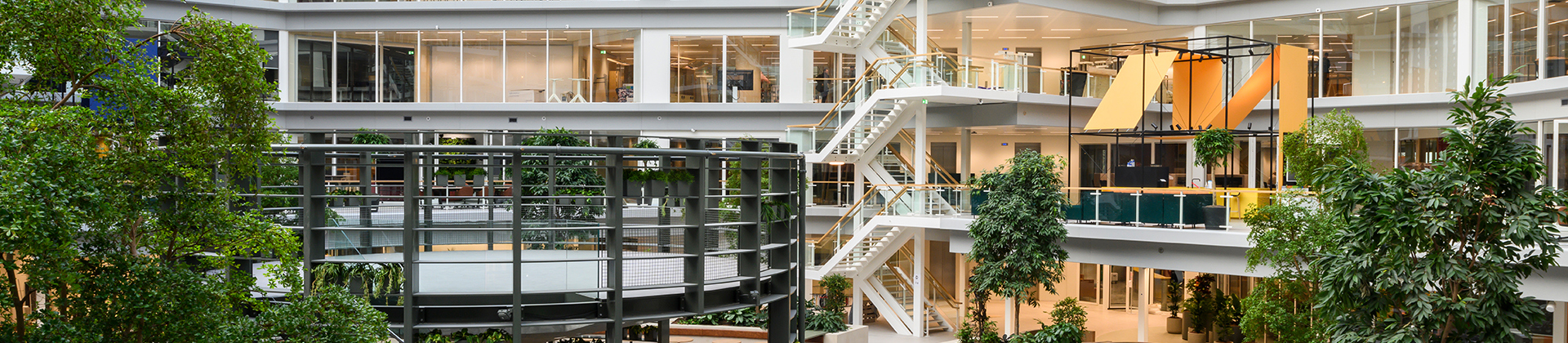
Image Copyright: Bert Teunissen/EDGE

Are you looking for solutions that contribute in reducing your buildings' carbon footprint?
Then have a look at our animation video about Danfoss Digital Hydronics.
Applications
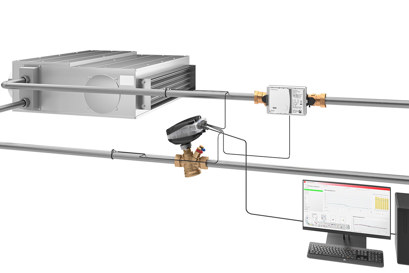
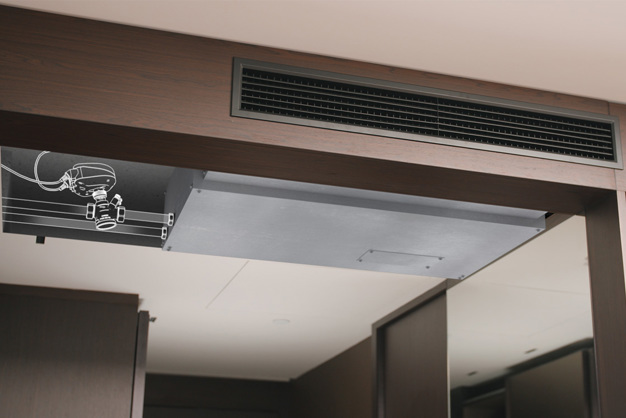
Terminal units such as fan coil units, chilled beams, or radiant panels, provide heating and/or cooling in each room of a building. They require hundreds or thousands of control valves and actuators for the temperature control. Using smart digital actuators and Pressure Independent balancing and Control Valves (PICVs)passes the buildings’ BMS real-time HVAC data while the dynamic hydronic balancing ensures optimal energy-efficiency.
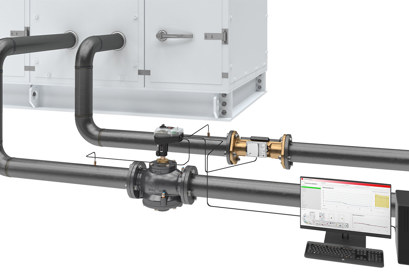
Air Handling Units provide the buildings with fresh air. The heating or cooling coils distribute a large amount of water. Optimizing the flows with large dimension PICVs equipped with smart digital control of supply and/or return temperatures, combined with AC-drives makes the units perform much more efficient.
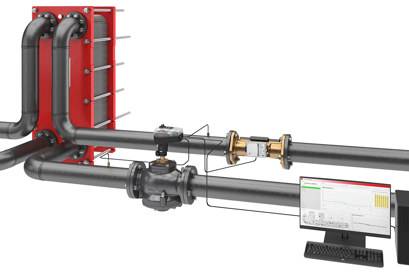
Domestic Hot Water systems are a challenge to keep safe from legionella. By monitoring the main flow and temperatures at the source and using Thermal balancing valves you provide a safe and reliable solution. Equipped with electronic disinfection controls and connected to buildings’ BMS the data is easy to use for remote monitoring and preventive actions.

Smart HVAC control solution for I-tower at WTC Amsterdam, the Netherlands
Reference case video about the modernization of the HVAC system in the I-tower of World Trade Center Amsterdam, the Netherlands.
Related products
Case studies
Contact us
Learning