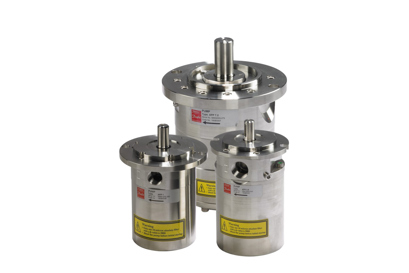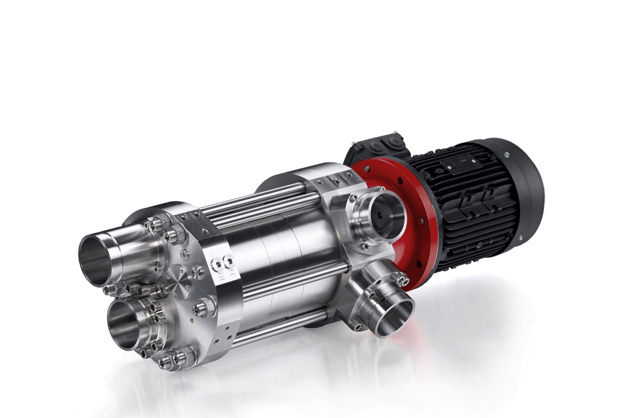
See how APP pumps achieve industry-leading efficiency and what it means for performance, energy use, and applications.
See how
Lower the lifecycle cost of RO water production
If your high-pressure pump operates at 80% efficiency, you are losing nearly 2.5 times as much energy as at 92%.
In RO systems, the energy required for high-pressure pumping is the primary driver of lifecycle cost. High-pressure pumping energy typically represents around 65% of total plant operating expenses, making pump efficiency critical to reducing total cost of ownership (TCO).
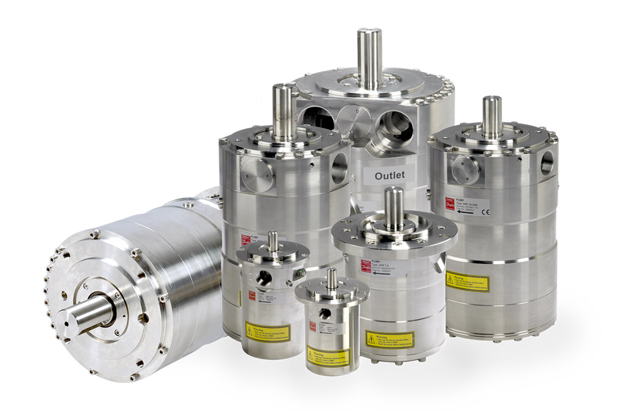
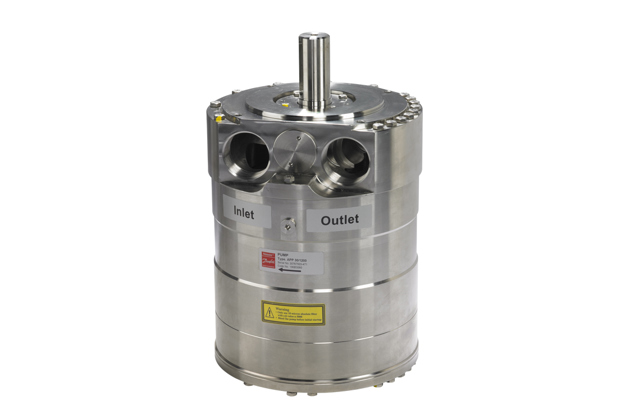
Danfoss APP high-pressure pumps deliver industry-leading efficiencies of up to 92%, sustained under real operational conditions over plant lifetime. The extensive product range is optimized for high-pressure membrane systems up to 50,000 m³/day in SWRO, water reuse, and brine valorization.
The higher your pump’s efficiency, the less energy you lose. The practical efficiency ceiling for high-pressure pumps is ~90–92%. Danfoss APP operates close to this ceiling at ~92% across variable operating conditions. Most SWRO plants have capacities ≤50,000 m³/day, where CF pumps typically operate at much lower efficiencies.
Engineered for reliable real-world operation: By decoupling pressure and flow, APP pumps provide consistently high efficiency despite variations in feed salinity, temperature and membrane condition. Their mechanically simple design, with fewer moving parts and long service intervals, ensures low-maintenance operation in demanding and remote environments. Compact APP pumps enable flexible plant designs that are ideal for everything from marine and containerized solutions to mid-sized, land-based plants.
Discover energy-efficient APP pumps and energy recovery devices for reverse osmosis. Explore the full Danfoss range, compare solutions, and access technical information, application guidance, and customer examples.
Learn more

Get more from every kWh
APP pumps reduce lifecycle cost in demanding RO applications worldwide. Connect with our experts to see how high- efficiency pumps can optimize your system.
Find contact
If you are not operating near ~92% efficiency, you are paying for avoidable energy losses every day.
An 80% efficient pump loses 20% of input energy. At 92% efficiency, losses drop to just 8%. That is not a 12% improvement – it is ~60% less energy wasted.
Because energy represents up to ~65% of plant operating cost, this difference compounds over time. The result is a fundamentally lower cost structure – typically millions in avoided energy spend over 20 years.
Danfoss APP reduces these losses at the source, delivering a structurally lower cost per m³ in real operation.

In many RO applications, water production is critical infrastructure where downtime is a direct operational risk.
Compared to conventional high-pressure pump systems, APP reduces maintenance complexity with fewer moving parts, no belts, and the pumped medium acting as the lubricant. This eliminates external lubrication and reduces wear.
Available in Duplex, Super Duplex, and ceramic materials, APP pumps are built for aggressive, high-pressure environments. Service intervals up to 8,000 hours and major overhauls up to 25,000 hours reduce interventions. Smaller, lighter units enable easy on-site service, lowering downtime risk and ensuring predictable operation.

RO systems rarely operate at a single design point. Flow, pressure, and demand vary over time. APP pumps decouple flow and pressure, maintaining high efficiency across real operating conditions.
Modular parallel APP arrays allow capacity to be staged up or down without efficiency loss. Compared to single large pump systems, this improves part-load performance, provides built-in redundancy, and enables continued operation during service.
Compact APP units have a small footprint and can be installed vertically or horizontally, simplifying layout in space-constrained containerized and marine systems. The result is a more flexible, scalable system with stable performance and lower lifecycle cost.
FAQ
Why can APP pumps be more energy-efficient than centrifugal pumps?
APP pumps belong to the positive-displacement pump family and use axial piston technology, which operates on a fundamentally different principle from centrifugal pumps. In an APP pump, flow is primarily determined by displacement and rotational speed, while pressure is generated according to system demand. This operating principle, combined with low internal leakage and low hydraulic and mechanical losses, enables APP pumps to achieve high pump efficiency
In addition to achieving higher peak efficiency, APP pumps maintain consistently high efficiency across varying conditions by decoupling pressure and flow. This helps reduce off-design energy losses and sustain lower SEC and operating cost over time.
In centrifugal pumps, pressure and flow are linked through the pump curve, and maximum efficiency is achieved only around the Best Efficiency Point (BEP).
Why is BEP (Best Efficiency Point) not enough to evaluate pump performance?
Pumps are often selected and compared at a single specified operating point, typically at or near the Best Efficiency Point (BEP). However, RO plants rarely operate continuously at that exact point. Feed salinity, temperature, membrane fouling and aging, and production demand all change the required pressure and flow over time.
Pump performance should therefore be evaluated across the complete expected operating range and annual operating profile. Because APP pumps maintain consistently high efficiency as operating conditions change, their actual energy savings compared with centrifugal pumps can be substantially greater than a single-point comparison would suggest.
The key question is not only “What is the maximum efficiency?” but “How much energy will the pump consume under actual operating conditions throughout the plant’s lifetime?”
Why do APP pumps remain highly relevant for most SWRO plants?
Most SWRO plants globally operate below ~50,000 m³/day and experience:
- Greater load variability
- More frequent staging and turndown
- Modular train architectures
- Space-constrained layouts
- Broader operating envelopes
Under these conditions, maintaining consistently high efficiency across varying operating conditions is key to minimizing specific energy consumption (SEC). At the same time, the compact size and installation flexibility of APP pumps simplify their integration into modular systems and space-constrained plant layouts.
Why are APP pumps well suited for high-pressure membrane applications beyond SWRO?
APP pumps are optimized for high-pressure membrane processes where stable pressure, high efficiency, and operational flexibility are critical.
Typical applications include:
- Land-based SWRO plants up to 50,000 m3/day
- Marine, containerized and decentralized SWRO plants
- RO systems for water and wastewater reuse, including Zero Liquid Discharge (ZLD) and Minimum Liquid Discharge (MLD) processes
- Brine concentration and valorization
- Multi-stage RO systems
Their ability to maintain high efficiency across a broad operating range makes APP particularly effective in applications where salinity, recovery rates, and production demands vary over time.
Why does pump efficiency have such a large impact on TCO?
Total cost of ownership (TCO) considers both the initial investment and the operating costs over the plant’s typical 20–30-year lifetime.
High-pressure pumps represent only around 4–5% of SWRO plant CAPEX and approximately 1% of its total lifetime TCO. However, they account for around 70% of the plant’s energy consumption which can represent 30–40% of its total TCO.
Even small differences in high-pressure pump efficiency can translate into substantial differences in energy consumption and operating costs over the plant’s lifetime. Selecting the right high-pressure pump technology is therefore critical to minimizing TCO while also supporting decarbonization and ESG targets.
How do APP pumps improve reliability and reduce maintenance complexity?
APP pumps use a compact, direct-drive and water-lubricated design, eliminating the need for gearboxes, belts and external oil lubrication systems. Their predictable service requirements and long service intervals support reliable operation and planned maintenance.
Maintenance can be carried out directly at the plant by trained plant personnel, without sending the pump to an external service center. Danfoss can provide the required training, enabling operators to plan maintenance around production needs, control downtime and maximize plant availability.
APP pumps also use standard low-voltage motors, which are widely available and generally easier to service than medium-voltage motors. They require less complex electrical equipment and maintenance procedures, further simplifying plant operation and spare-parts management.
This simplicity helps improve operational reliability, which has particular advantages in remote, decentralized, and mission-critical water treatment applications.
Why are APP pumps well suited for marine, containerized, and modular RO systems?
APP pumps combine high power density with a compact, lightweight design. Most models can be installed horizontally or vertically and operated in parallel to meet the flow requirements of larger RO trains Their relatively small footprint simplifies integration wherever space is at a premium:
- Marine desalination systems
- Containerized RO systems
- Mobile and decentralized treatment units
- Space-constrained plant layouts
Their compact size also simplifies transport, handling, installation and on-site service compared with larger centralized pumping equipment.
Why are APP pumps commonly operated in parallel pump arrays?
APP pumps are inherently suited for modular parallel operation. Multiple pumps can operate together within the same train to provide the required flow without relying on one large centralized pump.
Unlike traditional standby redundancy architectures, APP pump arrays distribute capacity across multiple operating pumps. If one pump is taken offline for maintenance or experiences a fault, the system can continue producing water at reduced capacity rather than shutting down the entire train.
Parallel arrays can also be adapted to different production and redundancy strategies by combining fixed-speed and VFD-controlled pumps or switching individual units on and off as required.
This architecture offers:
- Distributed redundancy and reduced single-point failure risk
- High efficiency across varying load conditions
- Modular turndown without major efficiency penalties
- Continued operation during maintenance or service
- Reduced downtime risk and increased plant availability
- Independent train control
- Simplified maintenance planning
- Easier scalability and future capacity expansion
This architecture is particularly valuable in SWRO, water reuse, and modular membrane systems where operating conditions and production demand vary over time.
Does every pump in a parallel APP array require a VFD?
No. In a parallel APP configuration, one pump can be operated with a low-voltage VFD, while the remaining pumps operate at fixed speed using soft starters or direct-on-line starting, where permitted.
Depending on the expected operating range, the broad flow-control range of one APP can allow a single VFD-controlled unit to accommodate the required flow variations. If a wider control range is needed, a second VFD can be incorporated. Alternatively, the control system could be designed and configured to stop one fixed-speed APP while the VFD-driven unit adjusts its speed to maintain the required total flow.
Compared with installing a VFD for every pump, this configuration means that only a proportion of the total installed motor power passes continuously through VFDs. This can reduce:
- Installed VFD capacity and initial investment
- Electrical conversion losses
- Heat generation and cooling requirements
- Overall system complexity and operating costs
These benefits become increasingly relevant as the number of APP pumps operating in parallel increases. The final configuration can be adapted to the plant’s required operating range, redundancy philosophy and control strategy.
How field-proven are APP pumps in desalination and high-pressure membrane applications?
APP pumps are a mature and widely deployed technology with more than 30,000 pumps installed globally across high-pressure membrane systems. Collectively, these installations are estimated to:
- Produce more than 2.3 billion m³ of water annually
- Save approximately €200 million in energy costs every year
- Avoid approximately 600,000 tons of CO₂ emissions annually compared to conventional high-pressure pumping systems
This installed base provides extensive operational validation across varying feedwater conditions, climates, duty cycles, and operating environments.
For plant owners and EPCs, installed base matters because long-term reliability, maintainability, and lifecycle performance are proven in actual operation – not only under laboratory or pilot conditions.
Product range

Discover our range of APP pumps for small train sizes between 14 and 250 m3/day. Choose between more sizes or configure in parallel to scale up flexibly. Visit our product store for more information and technical literature.
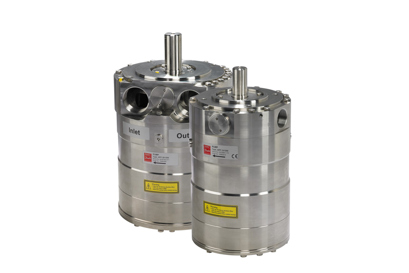
Discover our range of APP pumps for small to medium train sizes between 250 and 1,000 m3/day. Choose between more sizes or configure in parallel to scale up flexibly. Visit our product store for more information and technical literature.
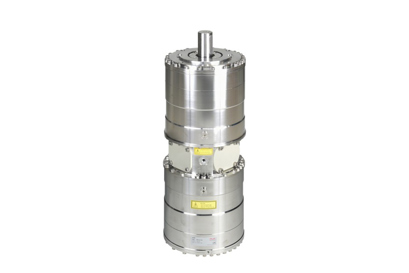
Discover our range of APP pumps for medium to large train sizes between 1,000 to 2,200 m3/day. Choose between more sizes or configure in parallel to scale up flexibly. Visit our product store for more information and technical literature.
Related products
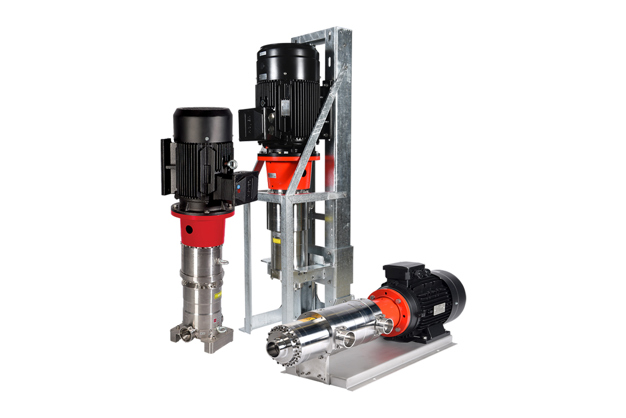
Field-proven APP efficiency and reliability, enhanced with ceramic components for the toughest feed conditions.
Learn more
Case studies

In a world-first, the large-scale, multi-stage plant integrates Hyrec’s osmotically assisted reverse osmosis (OARO) system after the seawater reverse osmosis (SWRO) system to significantly reduce the size and workload of its evaporator and crystallizer. Both stages rely on Danfoss APP pumps and iSave ERDs, minimizing CAPEX, OPEX and green house gas emissions.

When a Spanish engineering company needed one compact, reliable, and energy-efficient SWRO solution for three separate end users, Gefico’s engineers proposed a compact, modular train design that could be both containerized and built on skids. Danfoss’s ceramic APP pumps and iSave ERDs are at the heart of the seven trains that Gefico designed and produced.

When the owners of a hotel and commercial center complex situated on the historic harbor front decided to install their own SWRO plant to increase their water resilience, the brief was simple but demanding: maximize water output in as little space and as efficiently as possible. Danfoss high-pressure pumps and ERDs compact energy efficiency are at the heart of the solution.
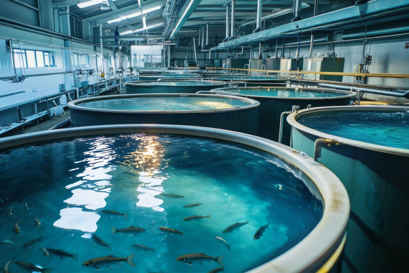
As land-based aquaculture continues to grow, the demand for energy-efficient and reliable seawater reverse osmosis (SWRO) is expanding rapidly. Norwater, a global leader in SWRO for aquaculture and marine applications, is meeting this need with modular systems built around high-performance components from Danfoss.

WatMan Engineering chose Danfoss high-pressure pumps and energy recovery devices as key components in the SWRO plants developed for Royal Caribbean’s Icon Class, the world’s largest cruise ships. Beginning with Icon of the Seas, the same four-train SWRO configuration has been implemented across the vessels in the series delivered to date and those currently under construction.
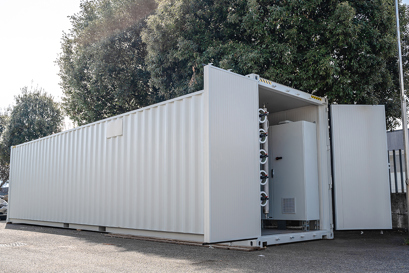
Metis Water chose Danfoss APP pumps and iSave ERDs for its mobile 1,000 m3/day SWRO plant. Designed to fit inside a 40 ft container, the plug-and-play solution can quickly be deployed to supply fresh water in emergency situations – reliably and energy efficiently.