

Jonas joined Danfoss in April 2018. In addition to his role at Danfoss, he is a passionate runner. Currently, Jonas is responsible for developing hydronic optimisation solutions in areas like software, district energy, and large heat pumps, sector integration, and development of new business models. Previously, Jonas worked with developing lighthouses and developed Danfoss’ position in new markets such as vertical farming and data centres. Jonas has gained experience in both fields and worked, among others, for the Danish Ministry of Environment & Food, Mazars Consulting, and General Electric (GE). Jonas holds a master’s degree in European Affairs from Sciences Po.
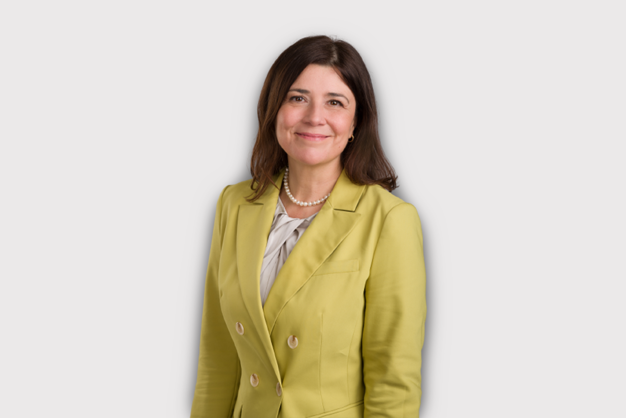
Saška Rihtaršič has been part of Danfoss for 24 years. As a mechanical engineer, she joined the company in 1999 as a supply chain coordinator, for the past few years she headed the development department, and this year she took up a new position as Vice president for district energy in the Danfoss Hydronics division. Saška is passionate about digitalisation, end-to-end optimisation, and modernisation of district heating technology, particularly the 4th generation of district heating, which enables and supports integration of variable energy resources, particularly renewables and waste energy.

Dmitry joined Danfoss in May 2000 and has been based in Slovenia since 2010. Football is his main passion outside of working hours. Currently, Dmitry is responsible for developing Danfoss' Stations business. His primary focus is traditional District Energy, with an emphasis on cooperation with DHUs. Additionally, he is responsible for identifying possible synergies within areas such as large heat pumps, sector integration, and waste heat utilisation. Throughout his 23 years at Danfoss, Dmitry has held various positions in Sales, Product Portfolio Management, and Business Development. Before assuming responsibility for Stations, he headed the Business Development department in District Energy. Dmitry holds an engineering degree in Industrial Heating Systems.

After 13 years working in fields of District Energy, Water Distribution and ESCO, Milan Jungic, joined Danfoss in 2016. Milan started as business developer in District Energy business, focused on software and digital solutions for monitoring & optimization. Today Milan is the Head of Controls & Meters Digital Portfolio in District Energy segment, honored to head a great & skilled team which is responsible for electronic & digital portfolio of control components and energy meters for District Energy systems. He is a Bachelor of Organisational Sciences - direction Information Technologies and now has 18 years of experience in field of District Energy automation and optimisation solutions. Outside his work, he's a partner, a father, "do it yourself" guy and enjoys being active as much as possible in several hobby activities.
Webinars

With fluctuating energy prices, CO2 and price pressure, and multiple district-energy sources, it’s no secret that every system is under pressure to run at its best. Join our live stream to discuss and debate how we can each optimise distributed heat production, operations and network design, without compromising on safety or comfort.

The integration of waste heat into district energy is being propelled by legislation, climate neutrality goals, and gas resilience. This is leaving professionals with questions. How can we design units for reliability? How can waste heat be managed alongside standard heat production units? How will these changes impact the network at large? Join our live webinar and contribute to the discussion.

Digitalisation is key to unlocking the potential of district energy, and professionals are looking to understand how. How to navigate operations within the electricity market? How digitalisation can help streamline network operations, and manage heat consumption in a more holistic way? How to handle non-commissioned stations? Join us as we break down these complex topics, discuss the possibilities, and debate the questions.
Relevant Articles
Relevant Whitepapers


Follow us to stay up with the latest cooling industry news, updates, announcements, and resources. Of course, we want to hear from you too - so jump in and join the conversation.