
Excess heat capture from the Warsaw metro can be integrated into the district heating system to heat homes, businesses, and domestic hot water in Warsaw.
Download the Special Issue paper now
Poland has the highest share of coal in total energy supply and demand of all International Energy Agency (IEA) member countries.To address this, the Polish government has adopted the Energy Policy of Poland until 2040 (EPP2040), a comprehensive agenda for creating a just transition to a zero-emission energy system. One key target is to reduce the country’s reliance on coal, aiming “to meet heating demand for all households in a zero- or low-emission manner.”Warsaw has the eyes of Europe upon it, and a golden opportunity to transform its energy system into a modernized, efficient system built for the era of renewables.
By signing up for our newsletter, you will receive updates on the latest insights on competitive decarbonization.
Every year, a combined 62 GWh of heat is wasted from the metro stations. This is the equivalent to the heating demand for the homes of over 14,000 Polish people for a year. However, the majority of this metro's excess heat can be recovered and integrated into the district heating system to heat the homes, businesses, and domestic hot water of Warsaw.
If Warsaw captures and uses the excess heat from the metro, the burning of fossil fuels from the Siekierki and Żerań power stations can be reduced. Now, the main purpose of these combined heat and power (CHP) stations is to produce electricity by burning fossil fuels. Much of the waste heat from this process is captured and distributed in the district heating grid.
Warsaw can save about 42,000 tons of CO2e per year by capturing the excess heat from the metro system if the electricity to power the heat pumps and supplement the reduced electricity production from the CHPs is provided with renewable energy. That is equivalent to the annual carbon footprint of about 6,300 Polish citizens.
One of the keys to broadening the capture of excess heat in Warsaw – or any city, for that matter – will be to address the economic, regulatory, and partnership barriers head-on.
To further improve energy effciency by using wasted energy, it is essential to remove both financial and legislative barriers. The current design of the energy market is, in many places, a barrier to sector integration technologies, either by hindering the participation of sector integration technologies in specific markets or by not internalizing all positive and negative externalities of respectively low- and carbon-intensive technologies.
Read more here.
Excess heat must be considered as a renewable energy resource instead of waste to be disposed of. Today, there are a number of barriers that prevent market players from leveraging the potential of reusing excess heat. Regulation can remove these barriers, for instance, by supporting an equal treatment of waste heat and renewable energy sources used in heat networks.
More systematic use of excess heat is, at its core, an exercise that spans sectors and stakeholders. Partnerships between local authorities, energy suppliers, and energy sources such as metro systems, supermarkets, data centers, wastewater facilities, and industries can help to maximize the full potential of excess heat.
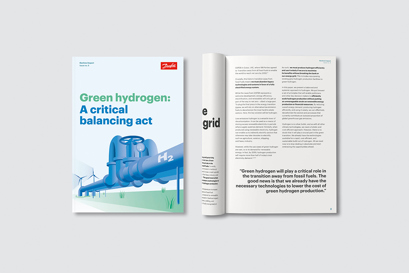
Green hydrogen will play a critical role in the transition away from fossil fuels and in decarbonizing hard-to-abate sectors, such as long-distance shipping and international aviation.
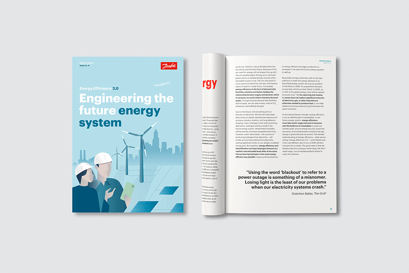
Energy efficiency, electrification, demand-side flexibility, conversion, storage, and sector integration are integral for a future energy system enabling an energy grid powered by renewables.
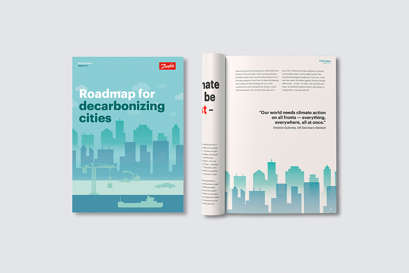
Our roadmap for decarbonizing cities outlines the technologies available to meet global climate goals and accelerate the green transition.