
Excess heat is a huge untapped energy source that can be captured and reused, accelerating the green transition.
Download the Impact paper now
In Europe, decision makers are still struggling to close the gap between energy supply and demand left by the cutoff from Russian gas. Countries are taking reactive emergency measures, such as firing up old coal-fired power stations, as well as signing new nuclear and liquefied natural gas (LNG) leases.Sadly, decision makers overlook that there is a readily available, greener, cheaper and safer alternative, namely, smarter use of the energy we already have. One way to do that is by using the vast amounts of energy that are currently wasted across sectors.Wasted energy often comes in the form of excess heat and is a byproduct of most industrial and commercial processes; factories, data centers, wastewater facilities, and supermarkets all produce vast amounts of excess heat. In the European Union (EU) alone, excess heat amounts to 2,860 TWh/y, almost corresponding to the EU’s total energy demand for heat and hot water in residential and service sector buildings. Much of this excess heat could instead be captured and used.We already have the solutions available today – what we need now is the political will to make it happen. The greenest, cheapest, and safest energy is the energy we don’t use.
In the EU alone, excess heat amounts to 2,860 TWh/y, almost corresponding to the EU’s total energy demand for heat and hot water in residential and service sector buildings. Much of this excess heat could instead be captured and reused.
Heat recovery technologies exist that can use excess heat from industries, wastewater facilities, data centers, supermarkets, metro stations and commercial buildings. Excess heat can be reused to supply a factory with heat and warm water or exported to neighboring homes and industries through a district energy system. This paper presents concrete policy measures to accelerate the use of excess heat across sectors, benefitting citizens and businesses with lower energy costs and accelerating the green transition.
A global push for higher efficiency can help avoid almost 30 million barrels of oil per day (that corresponds to triple Russia’s average production in 2021) and 650 bcm of natural gas per year – around four times what the EU imported from Russia in 2021.
Using gas or electricity for heating is like using a chainsaw to cut butter, as heating can easily be covered by low-value heating sources, such as excess heat.
By signing up for our newsletter, you will receive updates on the latest insights on competitive decarbonization.
Many countries and cities are ripe to take advantage of the energy wasted in their backyard. Not least those with an energy demand intensity, a district energy system, and large sources of excess heat. In a time of exploding energy prices, gas shortages, and climate crisis, it would be a policy failure of immense proportions if decision makers across the continent fail to take advantage of excess heat.
Adding to this, the role of excess heat in the future energy system will only grow. The technology for using low temperature excess heat (for instance, generation of district energy) is maturing and, in the future energy system, excess heat sources such as Power to X facilities will grow significantly. It is crucial that decision makers are aware of this potential when conducting urban planning and designing the financial and regulatory framework for the future energy market.
In general, excess heat must be considered as an energy resource instead of waste to be disposed of. Today, there are a number of market barriers that prevent market players from leveraging the potential of reusing excess heat. Regulation can remove these barriers, for instance, by supporting an equal treatment of waste heat and renewable energy sources used in heat networks. Regulation can also push for greater use of excess energy by making it mandatory for entities such as data centers or industries to make a plan for exploiting the excess heat.
Read more here.
To further improve energy efficiency by using wasted energy, it is essential to remove both financial and legislative barriers. The current design of the energy market is, in many places, a barrier to sector integration technologies. It either hinders the participation of sector integration technologies in specific markets, or it fails to internalize all positive and negative externalities of respectively low- and carbon-intensive technologies. It is crucial that tax legislation is in favor of using surplus heat, and that appropriate network tariff structures should be considered. Additionally, administrative barriers need to be removed to incentivize users to connect to district heating networks, which will also encourage district heating utilities to boost their efficiency.
More systematic use of excess heat is, at its core, an exercise that spans sectors and stakeholders. Partnerships between local authorities, energy suppliers, and energy sources such as supermarkets, data centers, wastewater facilities, and industries can help to maximize excess heat's full potential.
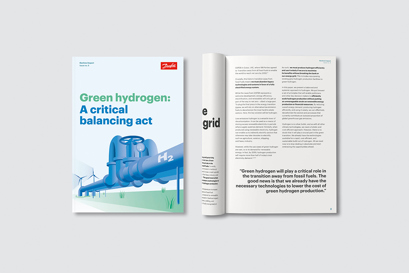
Green hydrogen will play a critical role in the transition away from fossil fuels and in decarbonizing hard-to-abate sectors, such as long-distance shipping and international aviation.
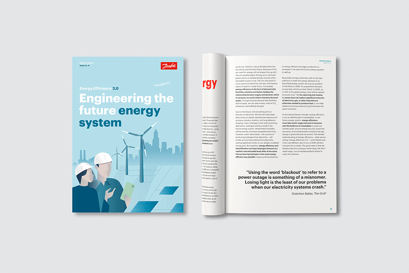
Energy efficiency, electrification, demand-side flexibility, conversion, storage, and sector integration are integral for a future energy system enabling an energy grid powered by renewables.
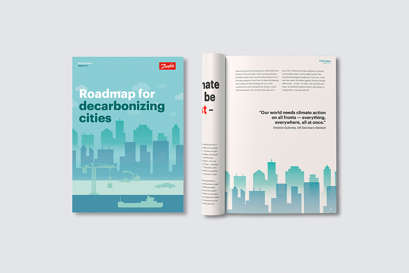
Our roadmap for decarbonizing cities outlines the technologies available to meet global climate goals and accelerate the green transition.