Danfoss highlights the urgent action to address the growing demand for energy.
Download the Impact paper now
Human-induced global warming has reached approximately 1.2 degrees above pre-industrial levels, and with current policies, warming will hit around 2.8°C by the end of the century. 2022 was the year of sustained droughts resulting in widespread wildfires, declines in food production, and heatwaves from the United States and Africa, to China and Europe. Glaciers are melting in the Andes and the Himalayas, taking with them the source of drinking and irrigation water for thousands of people. And in the Arctic, sea ice is melting much faster than scientists predicted. Climate change is an immediate, not a future, crisis.Paradoxically, as a group of leading climate scientists including Kathrine Richardson, professor in Biological Oceanography and leader of the Sustainability Science Centre at Copenhagen University, pointed out in June 2022, the political responses to the crisis have so far been centred around long-term climate goals and, to a lesser extent, immediate action. We need to close the gap between promises and action.The good news is that we have the solutions at hand, and we don’t need to wait. In fact, most of the global reductions in carbon emissions through 2030 needed for the Net Zero by 2050 Scenario developed by the International Energy Agency (IEA) come from technologies readily available today. We are seeing a massive build-out of renewable energy to tackle the supply side of the green equation. This is indeed necessary, and we need even more. But if we don’t, at the same time, pay attention to the demand side of the green equation (the acceleration in energy consumption), the build-out of renewables won’t be even near sufficient.As the IEA has pointed out, energy efficiency can take us one-third of the way to net zero. Energy efficiency simply means using less energy to perform the same task – that is, eliminating energy waste. In this paper, we explore why energy efficiency plays such a significant, yet politically overlooked, role in the battle against climate change. By using our energy smarter and electrifying everything across industry, transport, and buildings, we can curb emissions now, make our economies more resilient, and create millions of green jobs. The greenest, safest, and cheapest energy is the energy we don’t use.

Without urgent action, energy demand will grow significantly, getting us off track to meet global climate goals. Instead, according to the IEA, a collective push for energy efficiency can deliver one-third of the total emissions reductions needed to reach net zero.
Cooling is a global blind spot in climate change mitigation. As economies grow and adapt to a warmer climate, especially in the Global South, demand for cooling will make the second-largest contribution to the overall rise in global electricity demand over the coming decades.
To grow the role of electricity in the energy mix, it is a fundamental, yet overlooked, fact that we need to reduce energy demand first. An early analysis found that for every dollar spent on energy efficiency, we can avoid spending more than 2 dollars on energy supply.
Most of the global reductions in carbon emissions through 2030 needed for net zero come from technologies readily available today. This paper presents concrete policy measures to increase energy efficiency across sectors.
By using our energy smarter and electrifying everything across industry, transport, and buildings, we can curb emissions now, make our economies more resilient, and create millions of green jobs.
By signing up for our newsletter, you will receive updates on the latest insights on competitive decarbonization.
Save energy and electrify everything across transport, industries, and buildings.
Look at the energy system holistically and push for more systematic use of wasted energy.
Read more here.
On an overall level, set targets for energy efficiency in buildings, including renovation rates. Set building energy codes for new buildings and retrofits to accelerate the transition to zero-carbon-ready buildings. Set minimum standards for energy-efficient cooling, heating, ventilation, pumps and fans, and energy-efficient appliances such as refrigerators and washing machines. For instance, efficiency standards are a key measure to avoid the lock-in of inefficient air conditioning units in the coming decades. While highly efficient air conditioning units are available on the market, most efficiency standards – and consequently the units purchased by consumers – have two to three times lower efficiencies than those of the best available technologies.
Set minimum energy performance standards for key equipment, such as motors and pumps, that can drive up overall industrial efficiency levels. Make sure that taxes and fiscal policy push industries towards becoming more energy efficient, such as by utilizing carrot-and-stick policies that encourage action (for instance, carbon pricing) and address or alleviate barriers.
As the global sale of passenger EVs is gathering pace, the technology for the full electrification of buses, construction machinery, city boats, and ferries already exists. Create a market for these technologies by setting high carbon intensity standards for new machinery and vehicles. Vehicle taxation and duties can be structured to incentivize the purchase of more efficient vehicles. For the vehicles and ships that have a long lifetime, make sure that legislation and tax regimes provide incentives to retrofit existing diesel engines to enhance energy efficiency. This can be done by setting high carbon intensity standards and making sure not to create short-sighted incentives – for instance, to electrify systems that are only 30% efficient.
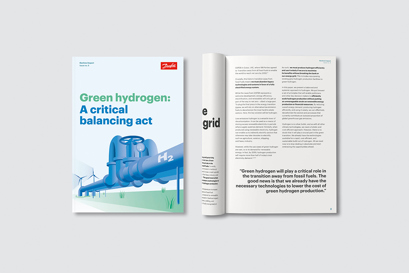
Green hydrogen will play a critical role in the transition away from fossil fuels and in decarbonizing hard-to-abate sectors, such as long-distance shipping and international aviation.
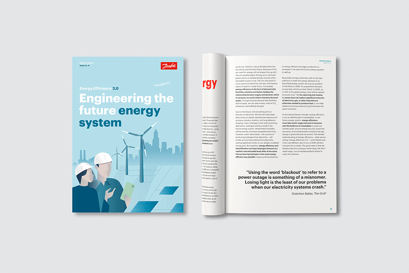
Energy efficiency, electrification, demand-side flexibility, conversion, storage, and sector integration are integral for a future energy system enabling an energy grid powered by renewables.
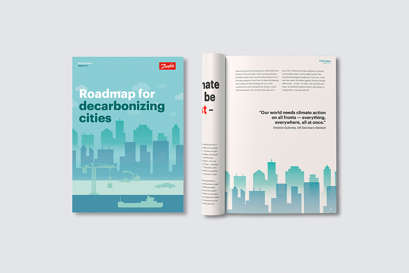
Our roadmap for decarbonizing cities outlines the technologies available to meet global climate goals and accelerate the green transition.